


Bathroom Remodel Cost: What to Budget in 2026

Bathroom remodel cost can range from a few hundred dollars for a focused upgrade to tens of thousands for a new bathroom. In Orange County, tile may cost $5 to $10 per square foot, while a full bathroom addition can reach $75,000. Use the steps below to set a scope, price the major work, and request a plumbing quote that matches your plan.
Table of Contents
Step 1: Define the Bathroom Remodel Scope
Start by defining the scope before you compare bathroom remodel cost estimates. The first decision is simple: will the bathroom keep its current layout?
Keeping the toilet, sink, and shower in place usually limits plumbing work to valve updates, drain connections, supply lines, and fixture hookups. A layout change is different. Moving one fixture can require access through a wall or floor. Moving several fixtures may mean new drain routes, vent work, or slab cutting.
Write down the work you want in four groups:
Surface work, such as paint, trim, mirrors, and hardware.
Fixture work, such as a toilet, vanity, tub, or shower.
Plumbing work, including rerouting, leak detection, drain repair, or new valves.
Structural work, such as wall changes, floor repair, or a new bathroom addition.
Then mark each item as required, preferred, or optional. This keeps a new shower from quietly becoming a full gut remodel. It also gives Primewest Plumbing a clear starting point when you request a plumbing-heavy remodel quote. Its service scope includes fixture plumbing, leak detection, drain and sewer work, and water line repairs.
A bathroom addition needs a separate budget. HomeAdvisor data places an overall addition between $5,000 and $75,000, with an average of $35,000. That figure reflects a much larger project than replacing fixtures in an existing room.
For help with the plumbing side of the planning stage, review Primewest Plumbing's bathroom remodel plumber services in Orange County . Keep the design scope and the plumbing scope on the same written plan.
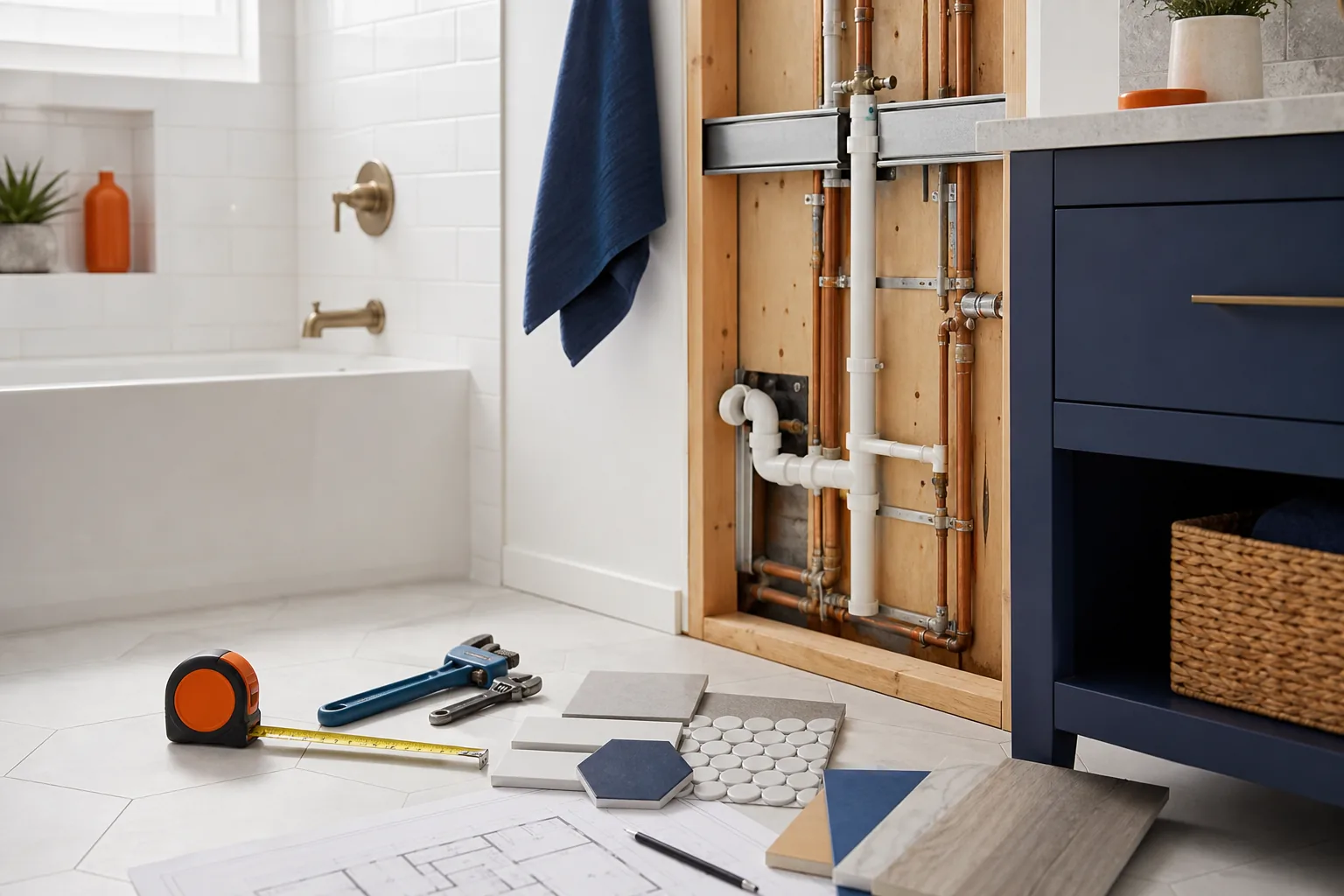
Key Takeaway:Keeping the existing fixture layout is usually the first cost control decision. Confirm that choice before selecting tile or finishes.
Step 2: Estimate Permits, Demolition, and Plumbing
Permits, demolition, and plumbing can change the bathroom remodel cost more than finish choices. Price these items before you set a final fixture budget.
HomeAdvisor lists building permits at $50 to $2,000. The fee depends on the location and project scope. Electrical, framing, drywall, plumbing, and some finish work may require permits. Requirements vary by city, so check with the local building department before work starts.
Primewest Plumbing's guide to plumbing permits for an Orange County remodel can help you identify the work that may need review. Do not assume that a fixture swap and a drain relocation receive the same treatment.
Demolition and haul-away often sit near the front of the project. The researched range is $300 to $500. Moving the shower or changing plumbing can add $600 to $3,500 because the crew must open more of the room and rebuild the affected area.
Plumbing has the widest spread. HomeAdvisor lists plumbing rough-in at $3,000 to $20,000. Plumbing installation ranges from $1,000 to $10,000. A new bathroom located far from the existing plumbing lines usually costs more than a remodel that keeps its wet wall.
Project choice | Likely cost pressure | Question to ask before approval |
Keep the current layout | Lower access and reroute risk | Can the existing drain and vent connections be reused? |
Move one fixture | Wall or floor access may be needed | How far must the supply and drain lines move? |
Move several fixtures | New rough-in work can dominate the budget | Will the new layout need a vent or slab cut? |
Add a bathroom | New lines, connections, and permit review | How close is the room to the existing plumbing stack? |
Remodel after a leak | Hidden damage may appear after demolition | Has the source of the leak been found and repaired? |
For context, rough-in work takes place behind walls and below floors. It includes supply pipes, drains, vent connections, and fixture stubs. Finish plumbing comes later, when the installer connects the actual fixtures.
That order matters. Tile should not cover an untested drain route. A vanity should not block access to a shut-off valve. Ask for a written scope that states what is included in rough-in work and what is included in final hookups.
Bathroom plumbing costs vary because the word plumbing can describe a small valve change or a full reroute. The basic definition of plumbing covers systems that convey fluids, but your quote should state the exact work in plain language.
Pro Tip:Ask the plumber to separate rough-in work, fixture installation, testing, and repair allowances on the estimate. One combined line can hide the cost of a layout change.
Step 3: Price the Shower, Tile, and Fixtures
Shower, tile, and fixture choices can shift bathroom remodel cost quickly. Price the wet area first because it combines plumbing access with finish labor.
HomeAdvisor lists a completely new shower unit at $600 to $12,000. The range is wide because a basic unit and a custom shower have very different scopes. A typical shower remodel in the research data averages $7,000, with a reported range of $2,000 to $9,000.
Shower enclosure choices also affect the budget:
Framed enclosures range from $350 to $830, with an average of $590.
Semi-frameless enclosures range from $820 to $2,000, with an average of $1,400.
Frameless showers range from $1,000 to $3,300, with an average of $2,000.
Corner showers range from $1,400 to $3,300, with an average of $2,350.
Double showers range from $800 to $5,000 or more, with an average of $2,700.
Tile is listed at $5 to $10 per square foot. That figure does not tell you the full installed cost of a tiled shower. The surface area may include walls, niches, benches, and the floor. Labor also rises when the design has many cuts or requires careful waterproofing.
Keep plumbing access in mind when you choose a shower valve. A premium trim kit does not fix a damaged valve body behind the wall. Primewest Plumbing can inspect the valve, supply lines, drain connection, and nearby leak points before the finish work closes access.
Fixtures deserve the same treatment. List the exact number of sinks, toilets, shower outlets, and water connections. A second sink may need more supply work. A new toilet location may need a new drain route. A shower with several outlets may need a review of supply capacity.
Separate product cost from installation cost. A fixture allowance tells you what the item costs. Installation covers labor, connections, testing, and any access work. If those lines are blended, a change in fixture selection can make the quote hard to track.
HomeAdvisor also lists tile installers at $30 to $120 and plumbers at $45 to $200 in its shower-remodel cost data. These are planning ranges, not a promise for an Orange County job. Request a site-specific quote instead.
Use the shower selection to set a ceiling for the wet-area budget. Then confirm that the plumbing scope can support the design before you order materials.
Step 4: Add Water Damage, Mold, and Repair Costs
Water damage and hidden repairs are common reasons a bathroom remodel cost estimate changes after demolition. Add a repair allowance before the first wall or floor is opened.
HomeAdvisor lists bathroom repairs at $300 to $5,500. Mold and mildew removal starts at $500 in the researched data. Water damage repair ranges from $1,000 to $3,000. These figures cover different conditions, so they should not be added together automatically.
First, find the source. A stained ceiling may come from a supply line, drain, shower seal, toilet connection, or pipe inside the wall. Cosmetic repair before source repair can leave the same damage in place.
Primewest Plumbing can help with leak detection and plumbing repair before the remodel crew closes the wall. That is especially useful when the leak is not visible at the fixture.
Next, separate mitigation from replacement. Drying a wet area is different from replacing warped drywall, damaged subfloor, or swollen cabinetry. A slow leak may also affect materials behind the visible stain.
The standard definition of mold describes it as a fungus that grows in multicellular structures. In a home, the useful budget question is simpler: what stayed wet, how long it stayed wet, and what material must be removed?
Do not approve a remodel change order based on a vague phrase such as water damage found. Ask for the affected area, the source, the proposed repair, and the test that confirms the repair is complete.
A small reserve can protect the finish schedule. If demolition finds no damage, the money remains available for approved finish work. If it finds a failed drain or wet subfloor, you have a plan for the surprise.
Step 5: Build an Orange County Budget and Get Plumbing Quotes
Build the bathroom remodel cost budget in layers. Start with fixed scope. Then add allowances for access, repair, and finish changes.
Use this order:
Write the room size and current fixture layout.
Mark each fixture that will stay, move, or be replaced.
List permit questions for the city where the property sits.
Price demolition and haul-away.
Request a plumbing scope before choosing a final shower design.
Add tile, enclosure, fixture, electrical, drywall, and finish allowances.
Set aside money for concealed damage and approved changes.
Compare quotes by scope rather than by the lowest total. One quote may include fixture hookups but exclude wall access. Another may include demolition but leave haul-away to the homeowner.
Ask each plumber to state whether the quote includes:
Leak detection before demolition.
Drain and supply line inspection.
Fixture relocation.
Shower valve and drain work.
Permit support or permit exclusions.
Testing after installation.
Repair of opened walls or floors.
Primewest Plumbing is a suitable local point of contact for plumbing-heavy work in Orange County. Its services include leak detection, fixture repairs, drain and sewer service, hydro-jetting, trenchless solutions, and water heater work. A detailed site quote can show whether the project needs a small fixture update or a deeper plumbing repair.
Give the plumber the same drawings and fixture list that you give the remodel contractor. Ask for written assumptions. For example, the quote should say whether it assumes an accessible crawl space, an open wall, or an existing vent connection.
HomeAdvisor's researched data shows why this level of detail matters. The 26 cost items span from $5 per square foot for tile to $75,000 for a full addition. The average low-range figure is $1,217, while the median is $600. A few high-cost projects pull the average upward, so a simple average does not predict your room.
Labor is another major factor. One data point places labor at 55 percent of total remodel cost. Treat that as a planning signal, not a universal rule. Access, city requirements, finish grade, and layout changes can move the share higher or lower.
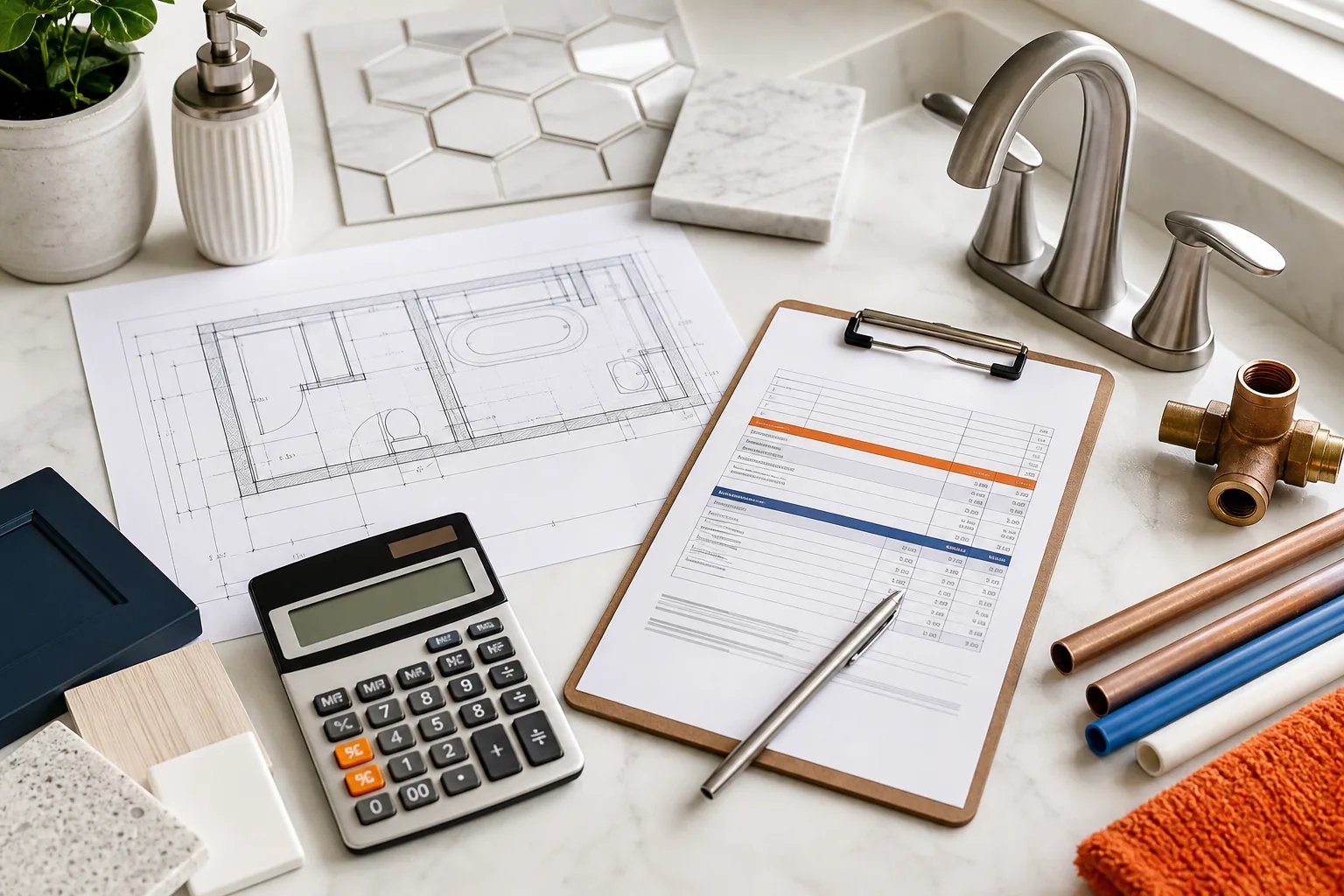
Key Takeaway:The best quote is the one that states what happens behind the wall, not only what the finished bathroom will look like.
Bathroom Remodel Cost FAQ
How much does a bathroom remodel cost in Orange County?
Bathroom remodel cost in Orange County depends on the layout, access, finishes, and hidden repairs. Research used for this guide places a typical shower remodel at about $7,000. A full bathroom addition ranges from $5,000 to $75,000, with an average of $35,000. Existing plumbing access can make the largest difference.
What is the most expensive part of a bathroom remodel?
Plumbing and labor are often the most expensive parts of a bathroom remodel. Rough-in plumbing can range from $3,000 to $20,000 in the researched data. Labor accounts for about 55 percent in one reported data point. Moving fixtures, cutting a slab, or adding a bathroom can raise the total quickly.
Does moving a toilet increase bathroom remodel cost?
Moving a toilet usually increases bathroom remodel cost because the drain and supply lines must change. The work may require access through the floor or wall. The distance matters. A new location can also affect drain slope, vent connections, flooring, and permit needs. Ask for a separate relocation line in the plumbing quote.
How much should I budget for water damage during a bathroom remodel?
Budget at least a repair allowance for water damage because demolition may expose wet framing, drywall, or subfloor. The researched range for water damage repair is $1,000 to $3,000. Bathroom repairs overall range from $300 to $5,500. The source of the leak must be repaired before finish materials go back in.
Should I get a plumber quote before choosing bathroom fixtures?
Yes, get a plumber quote before you finalize fixtures when the layout may change. The plumber can confirm valve access, drain locations, supply needs, and connection limits. This keeps a selected shower or vanity from forcing an expensive redesign. Primewest Plumbing can review the plumbing scope before the finish order is placed.
Conclusion
Set the scope first, then price plumbing access before you commit to tile or fixtures. For an Orange County project, ask Primewest Plumbing for a written plumbing assessment that separates rough-in work, fixture connections, testing, and possible repairs. Give that scope to the remodel contractor so your final budget is based on the actual room, not a broad average.


Comments