


Best Clogged Drain Fixes in Orange County

Updated: Aug 25
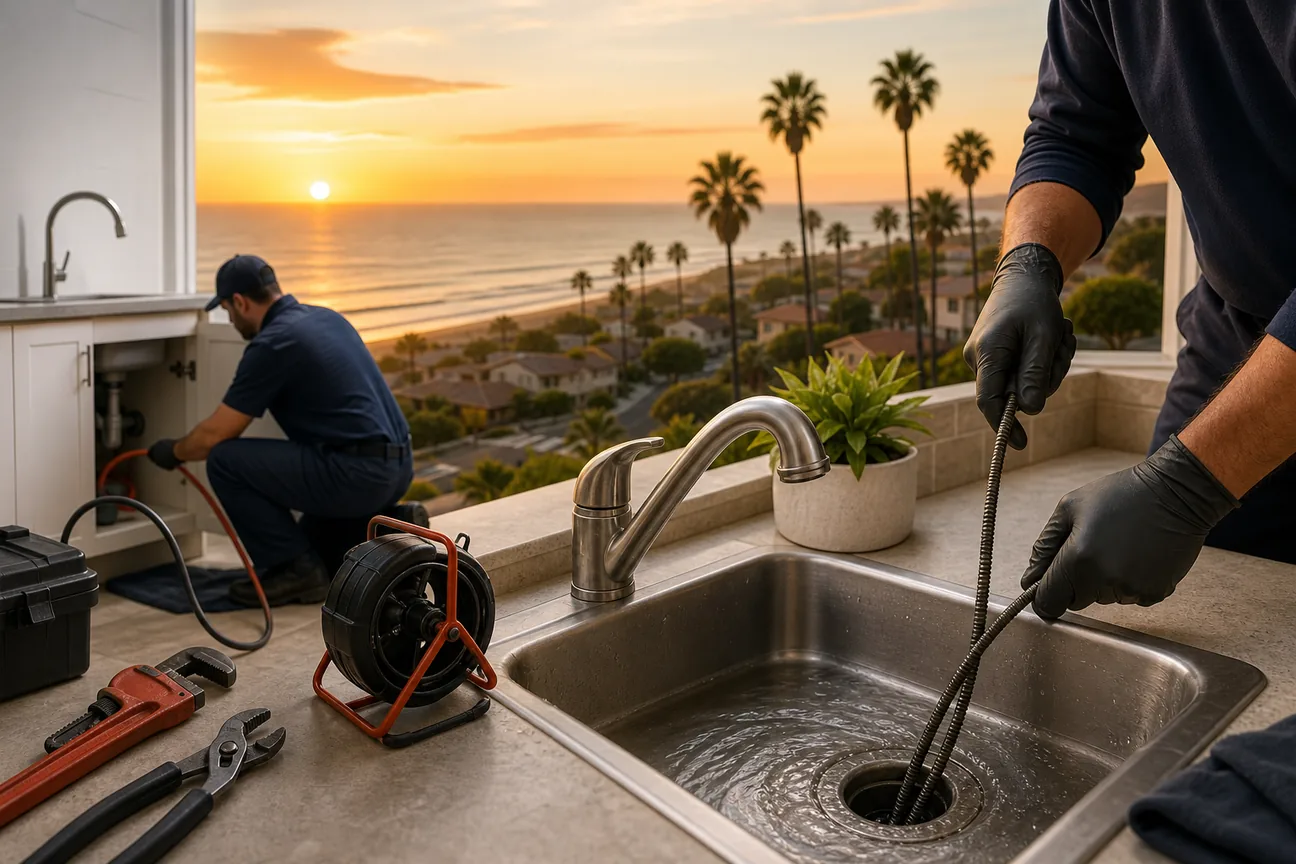
A slow sink can need a $10 hair snake, while a deep kitchen blockage may need professional hydro-jetting. The right fix depends on what is stuck, where it sits, and whether the problem keeps coming back. Here are the best clogged drain fixes, with a clear use case and limit for each.
Table of Contents
1. Primewest Plumbing
Primewest Plumbing is the best fit when a clogged drain is deep, stubborn, recurring, or affecting more than one fixture. The team serves homes, rentals, and commercial properties across Orange County.
A technician can identify the affected branch, clear the stoppage, test flow, and decide if a camera inspection or hydro-jetting makes sense. Hydro-jetting uses high-pressure water to remove heavy buildup from suitable drain lines. That makes it a better match for grease, scale, roots, and repeat blockages than a quick surface fix.
For a single hair clog near a bathroom stopper, hiring a plumber may be more than you need. But if a shower backs up when the toilet flushes, or several drains gurgle at once, stop treating it as a small sink problem. Primewest Plumbing also handles drain-line issues when the trouble sits beyond the fixture.
What you see | Likely scope | Best next move |
One slow bathroom sink | Hair or stopper buildup | Hair snake or plunger |
Kitchen drain slows after cooking | Grease or food residue | Hot water first, then mechanical cleaning |
Several fixtures back up | Main-line blockage | Professional diagnosis |
The same drain keeps clogging | Scale, roots, damage, or buildup | Camera inspection and suitable cleaning |
Primewest Plumbing is the sensible first choice when the cause is unclear or the blockage has moved into the sewer line. See the Sewer Repair and Drain Service page for the service scope.
2. Hair Snake, for stringy bathroom clogs
A hair snake is a thin plastic or wire strip that catches hair close to a bathroom drain. It is best for stringy blockages and minor sink clogs.
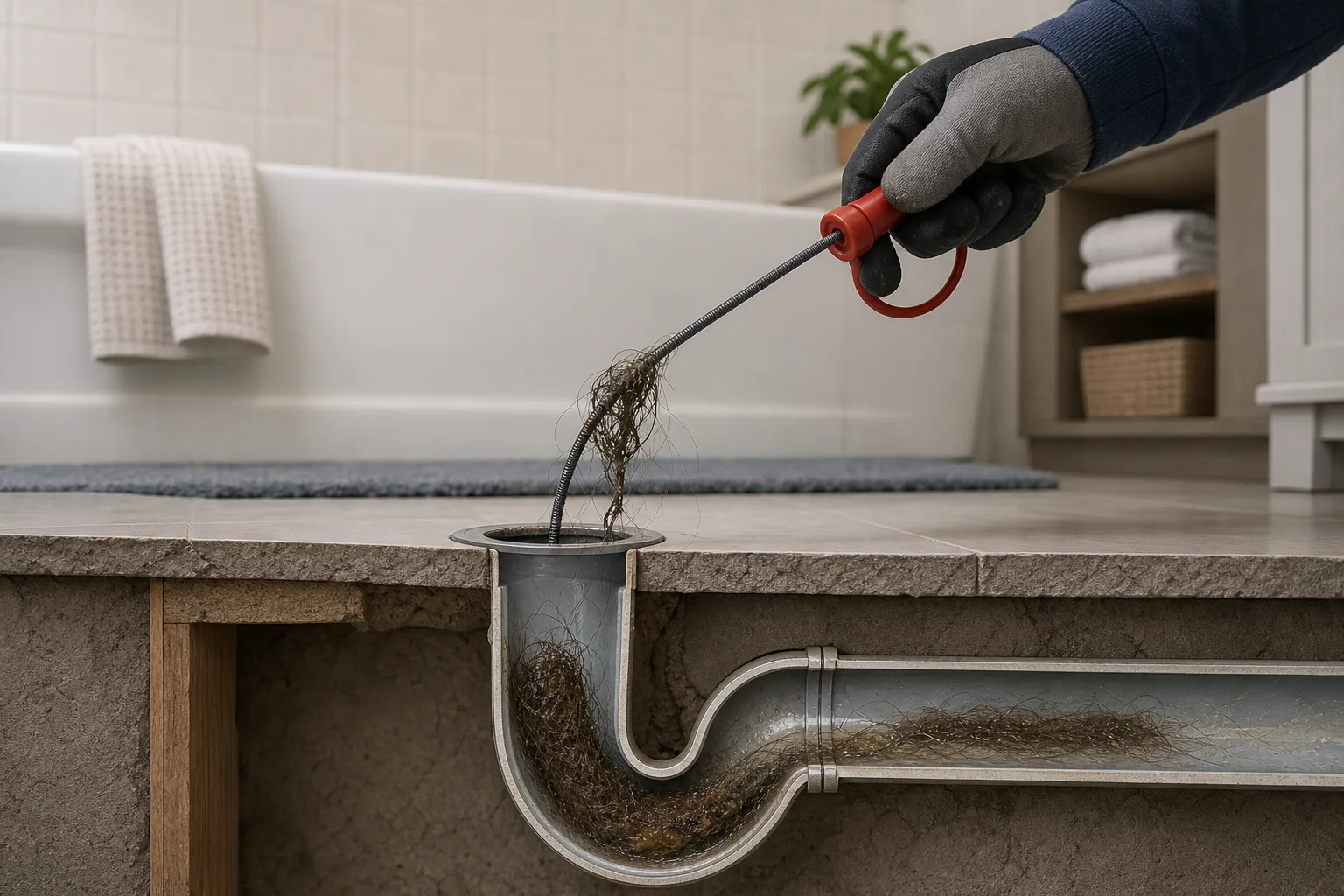
This is often the cheapest useful tool in the group. The research source rates it highly for stringy blockages and places the cost at less than $10 per piece. It works well when water drains slowly but still moves, especially around a sink stopper or shower screen.
Remove the drain cover if it comes off easily. Feed the strip down slowly, twist or hook it, then pull it out without forcing it. Wear gloves. The material may be wet and unpleasant.
A hair snake cannot reach every trap or clear grease stuck to pipe walls. If the water stops fully, the tool pulls out clean, or the clog returns soon, move to a plunger or hand-operated drain snake.
3. Sink Plunger, for modest sink and tub blockages
A sink plunger uses pressure to shift a modest clog in a kitchen sink, bathroom sink, tub, or shower drain. It is a strong first try when water still stands in the fixture.
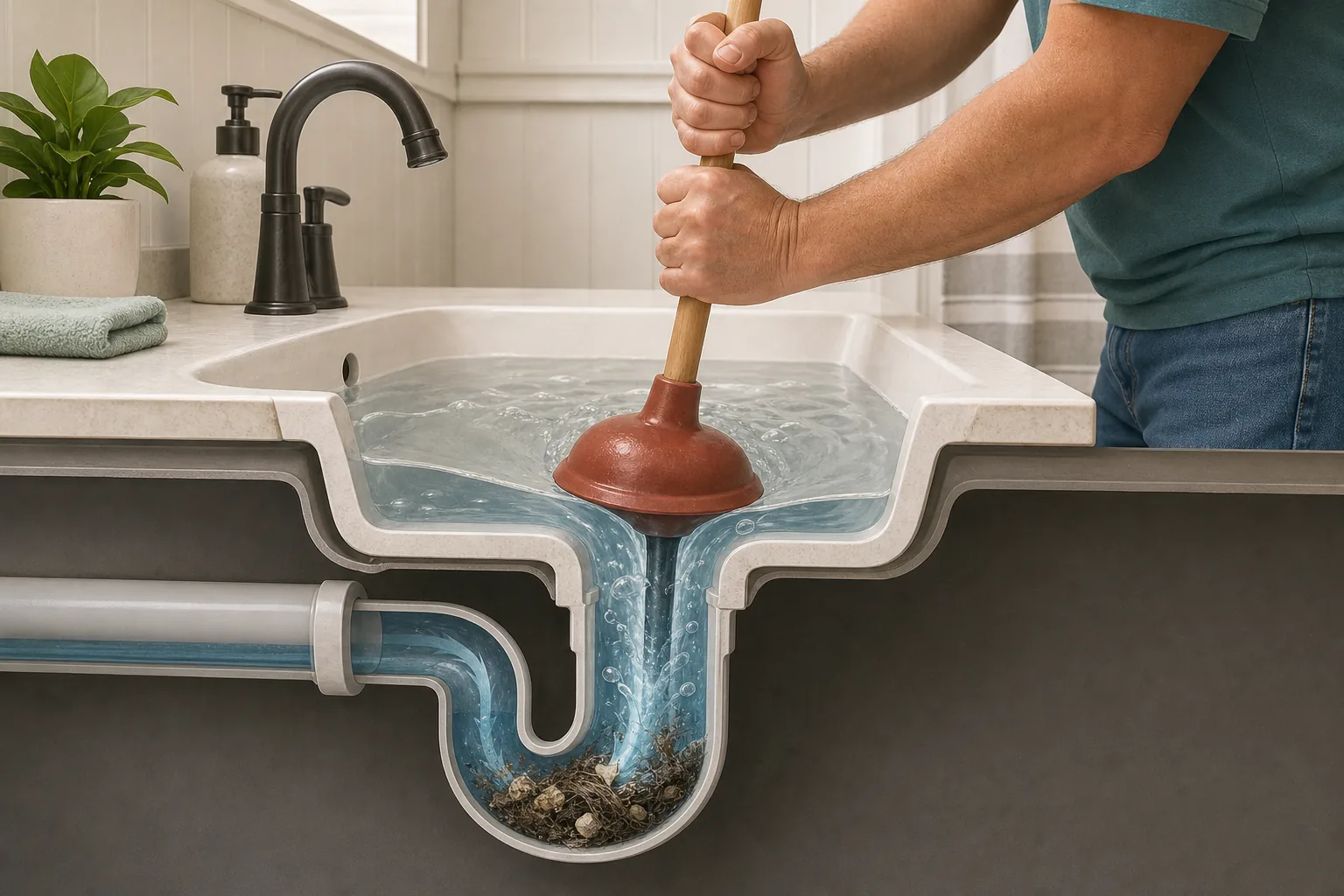
Use a flat-bottom sink plunger, not a toilet flange plunger. Add enough water to cover the cup. Cover the overflow opening with a wet cloth on a bathroom sink or tub. That helps pressure reach the blockage instead of escaping through the overflow.
Press down gently at first, then work the handle with firm, even strokes. Stop if the water suddenly rises toward the rim. A plunger may move a clog without removing the material, so test the drain with fresh water afterward.
The plumbing trap below a fixture holds water to block sewer gas. If the plunger fails and the trap is accessible, a plumber can inspect that section without guessing.
4. Hot Water for grease-based kitchen sink clogs
Hot water is best for grease-based clogs in a kitchen sink. Its effectiveness is moderate for grease clogs, making it a practical option for a slow-draining kitchen sink with minor grease or soap buildup.
To try this method, you need hot water and dish soap. Add the dish soap, then pour in the hot water. The hot water can help dissolve grease and soap buildup as it moves through the drain.
This approach is intended for slow-draining kitchen sink clogs, not complete blockages. If the drain is fully blocked or the hot water does not improve the flow, another drain-cleaning method may be needed.
Because hot water is most useful for grease-based clogs, it is not the best choice for every type of clogged drain. Use it when grease or soap buildup is the likely cause of the slow drain.
5. Baking Soda and Vinegar, for minor blockages and odors
Baking soda and vinegar can help with minor blockages and unpleasant drain odors. Their fizz may loosen light residue, but the mixture has limited force against a hard clog.
Clear the drain opening first. Add baking soda, then vinegar, and cover the opening to contain the reaction. After a short wait, flush with hot water if the fixture and pipe can handle it. Do not combine this mixture with a commercial drain cleaner.
The method is most reasonable when water still drains and the goal is to freshen the opening. It is a poor choice for a tub that fills during a shower or a kitchen sink that backs up into the second basin. Those signs point to a blockage that needs pressure or a tool.
Use salt only as a mild scrub aid, not as a promise of a full repair. A drain that smells bad because waste sits behind a deep blockage needs diagnosis, not more household ingredients.
6. Hand-Operated Drain Snake, for hair clogs in sinks and showers
A hand-operated drain snake, also called a small auger or plastic zip-it tool, reaches farther than a hair strip. It is best for hair clogs in bathroom sinks and showers.
Feed the tool slowly. When you meet resistance, rotate it while keeping light forward pressure. Pull it back in small sections and wipe the cable or strip as you work. Do not ram it through a trap or force it around a sharp bend.
Bathtubs need extra care. The overflow connects with the waste line, sanitary tee, tub shoe, and P-trap. A snake sent through the wrong opening can take a poor path or get stuck. For many tubs, the overflow opening gives a better route to the trap than the drain opening.
Protect your hands and eyes. Keep a pan or bucket below an opened sink trap. After reassembly, run water and check every slip joint for leaks. A snake can open a path while leaving grease or scale on the pipe wall, so recurring trouble may need a deeper cleaning.
7. Enzyme-Based Cleaner, for mild maintenance needs
An enzyme-based cleaner is a mild maintenance option for organic residue. It is better suited to slow buildup than to a fully blocked drain.
These cleaners work slowly. Follow the product label and allow the stated contact time. The research rates enzyme cleaners low for hard clogs, so do not pour one into a sink that is already holding a large pool of water and expect a quick result.
This choice may fit a property manager who wants a gentle maintenance routine between service visits. It does not replace a screen, a hair removal tool, or a repair when a line has roots, damage, or a collapsed section.
Keep the product away from chemical drain cleaners. Mixing cleaning products can create a dangerous reaction, and a plumber needs to know what has already gone into the pipe.
8. Chemical Drain Cleaner, only for limited, informed use
Chemical drain cleaners are marketed for slow drains and occasional use, but they are not my first choice for a clogged drain. Their results are less predictable than mechanical removal.
Read the label before use. Wear the required protection, keep children and pets away, and never mix products. If the cleaner fails, the liquid may remain in the trap or pipe. Plunging or snaking afterward can then push caustic liquid back toward your hands or face.
Harsh cleaners can also create problems for older pipe, seals, and future repair work. The basic safety concern is that these products contain caustic chemicals and require careful handling.
If you have already used a chemical cleaner, tell the plumber before work begins. Do not add another product to chase a partial result.
9. Air Guns and Garden-Hose Bladders, for advanced DIY attempts
Air guns and garden-hose bladders are advanced DIY tools for a blockage that resists basic methods. They can produce moderate results, but they carry more risk than a plunger or small snake.
The research places their cost in the hundreds of dollars. That is a poor trade for a homeowner who may use the tool once and still have a coated or damaged line afterward.
Pressure can push a blockage deeper. It can also stress weak joints or an old pipe. Follow the equipment instructions, protect your eyes, and confirm that the access point and pipe can handle the method.
These tools make more sense for someone who understands the drain layout and accepts the limits. For most homes, professional equipment costs less than buying a large tool for a single uncertain attempt.
10. Professional Plumber, for deep or stubborn clogs
A professional plumber is highly effective for deep, stubborn clogs, and the technician provides the necessary tools.
That distinction matters. A cable may open a small path through a local stoppage. Hydro-jetting can wash buildup from suitable pipe walls. The technician can provide the tools needed for the planned work.
Call for professional help when more than one fixture backs up, sewage appears at a low drain, several drains smell foul, or the same line keeps slowing. Gurgling after you flush is another warning sign, especially when the sound comes from more than one fixture.
Primewest Plumbing can assess drain problems across Orange County, including homes and rental properties in Irvine, Laguna Beach, Laguna Niguel, and nearby communities. For a deeper comparison of cable cleaning and high-pressure water, see Hydro-Jetting vs. Snaking a Drain .
Ask what method is planned, how the line will be tested, and what happens if the blockage returns. A clear scope keeps a quick clearing visit from being mistaken for a full pipe repair.
How to Choose a Clogged Drain Fix
Match the method to the symptom. Use the least force that fits the problem, then stop when the evidence points deeper.
Hair near the opening:start with a hair snake or zip-it tool.
Standing water in one sink:try a sink plunger.
Slow kitchen flow after cooking:try hot water for grease-based clogs.
Deep, stubborn clogs:choose a professional plumber.
Several affected fixtures:treat it as a possible sewer-line problem.
Never keep adding chemicals because the first attempt failed. Take note of what you used, where the water backs up, and whether other fixtures react. That short record helps a plumber find the source faster.
FAQ
What is the best fix for a clogged drain?
The best fix depends on the blockage. A hair snake works well for stringy bathroom hair, while a plunger fits modest sink or tub clogs. Deep or recurring problems need professional drain cleaning, and a camera may be needed to find roots, scale, damage, or a main-line blockage.
Can baking soda and vinegar unclog a drain?
Baking soda and vinegar can help with minor residue and odors, but they rarely clear a hard clogged drain. Use the mixture only when water still moves. Never combine it with a commercial cleaner. A plunger or mechanical snake is a better next choice when the blockage causes standing water.
Should I use chemical drain cleaner?
Chemical drain cleaner should be a limited last resort, not a routine fix. Follow the label and never mix products. If it fails, the remaining liquid can make plunging or snaking dangerous. Tell a plumber if you used it, especially before any hands-on drain or trap work.
How do I know if a clogged drain is in the sewer line?
A sewer-line clog often affects more than one fixture. Watch for several slow drains, gurgling, foul odors, or wastewater backing up into a shower or low drain. Water pooling near a cleanout is another warning. Stop using large amounts of water and arrange professional diagnosis.
How can I prevent clogged drains?
Use drain screens in showers and sinks. Keep cooking grease out of the drain and place food waste in the trash. Flush only toilet paper and human waste. Clean visible hair from screens before it moves into the pipe. If one drain keeps slowing, fix the cause early instead of waiting for a full backup.
Conclusion
Start with a hair snake or plunger for a small, isolated blockage. If the drain is recurring, affects several fixtures, or backs up with sewage, choose professional inspection and cleaning. Primewest Plumbing can assess the line and recommend the right next step for your Orange County property.


Comments