


Best Tankless Heater Installation Costs in Orange County
- Primewest Plumbing
- Jul 13
- 6 min read

Orange County homeowners see a surprising low entry price for tankless water heater upgrades, with rates often starting at a few hundred dollars depending on the unit and installation. Below is a curated shortlist of the ten most usable routes you can take, from full‑service pros to DIY kits.
1. Primewest Plumbing (Our Top Pick) , Full‑service, licensed OC experts
Primewest Plumbing offers complete residential and commercial tankless water heater installations across Orange County. Homeowners who value a single point of contact and code‑compliant work find it a perfect fit.
Primewest publishes a transparent pricing model, starting at $800, and tailors the quote to your home’s flow needs, gas line size, and venting requirements. The company’s licensed crew handles permits, gas upgrades, and the final inspection, removing the guesswork for the homeowner. Their service area includes Irvine, Newport Beach, and Dana Point, ensuring quick response times.
Because the firm serves both residential and commercial projects, larger multi‑unit properties can rely on the same trusted team. The only downside is that custom work can push the price above the base $800, but the added assurance of warranty compliance often outweighs the extra cost.
Primewest Plumbing services cover leak detection, hydro‑jetting, and water‑heater repairs, so you get a full plumbing partner, not just an installer.
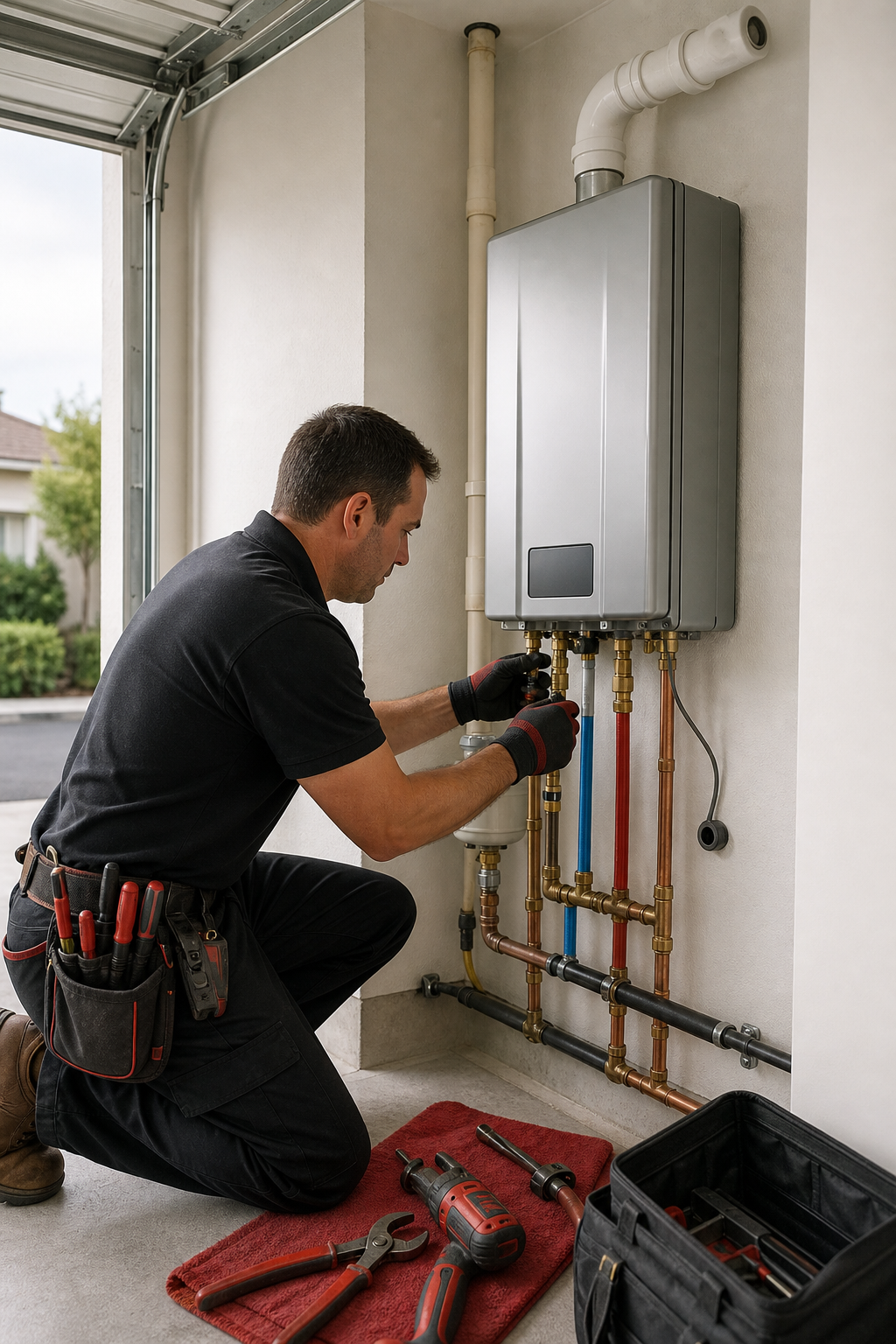
2. Gas‑Fired Tankless Water Heater Installers, Best for high‑flow households
These installers focus on gas‑fired units that can deliver 4‑5 gallons per minute, ideal for families with multiple showers running at once.
They usually operate as small, locally owned businesses that hold recognized gas‑line certifications. Their expertise lies in sizing the gas line and venting correctly, which prevents the common issue of units shutting off under load.
A typical installation includes a new venting system, a larger gas pipe, and a T&P relief valve. The trade‑off is that you may need to schedule a separate permit inspection, adding a few days to the timeline.
Because these installers concentrate on gas units, they might not offer electric or propane options, so check your home’s fuel availability first.
Residential plumbing solutions can be a useful reference if you need to compare gas line work.
3. Electric Tankless Installations, Low‑maintenance, easy‑venting
Electric‑only tankless units avoid gas line upgrades and use simple PVC venting, which cuts installation time.
These installations often recommend models that run on a dedicated 240 V circuit, which many Orange County homes already have for appliances like dryers. The electric approach eliminates the need for combustion air, making the installation safer in tight spaces.
Electric tankless systems must include a listed disconnect and meet specific grounding requirements, adding a layer of protection for the homeowner.
The main limitation is that large families may hit the unit’s flow ceiling during simultaneous use, leading to a noticeable temperature dip.
Below is a quick look at a typical electric installation.
4. Standard Tankless Water Heater Installations
Tankless water heaters can be installed in neighborhoods that lack a municipal gas line, such as some parts of Laguna Niguel and Aliso Viejo.
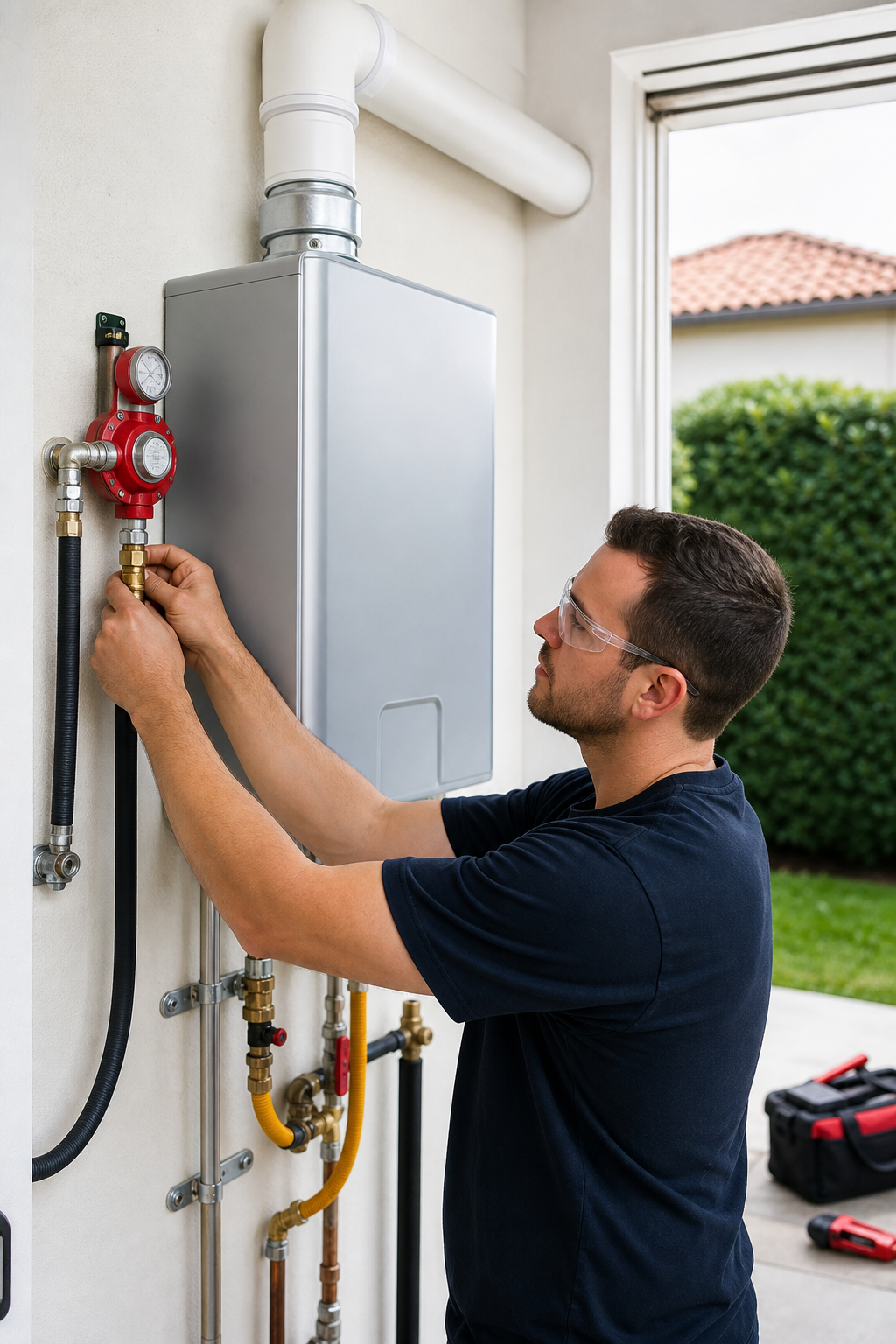
Installers follow California building codes for tankless units, which may require specific clearances around vent pipes and appropriate fuel regulators.
Alternative fuel systems can reduce the upfront cost compared to extending a natural‑gas line, though ongoing fuel delivery costs should be considered.
Proper venting is essential to handle exhaust temperatures, so a professional venting kit is recommended.
5. Plumbing System Enhancements
System enhancements can add a circulation pump and insulated piping to keep hot water moving through the home, reducing wait times at distant fixtures.
These upgrades pair well with tankless units because they preserve the on‑demand advantage without the initial cold‑water surge when a faucet is first opened.
Installation typically includes a pump, a check valve, and a control device that runs the pump only when needed.
Homeowners with long pipe runs, such as those with a two‑story layout or a detached garage, benefit the most. A minor drawback is the slight increase in electricity use for the pump.
6. Water‑Softening Options for Hard Water
Orange County’s water hardness averages around 13 grains per gallon, which can cause scale buildup on tankless heat exchangers.
Integrating a water‑softener before the tankless unit extends the unit’s life and keeps the flow rate consistent. Softener systems typically use ion‑exchange resin and require periodic salt replenishment.
These installations add a pre‑filter, a softener tank, and a control valve, which may increase project costs. The benefit is reduced maintenance visits and better energy efficiency.
If you already have a whole‑house filtration system, you may not need a dedicated softener, but a professional evaluation helps you decide.
7. Standard Tankless Water Heater Installations
Standard tankless heaters let you view real‑time usage, set schedules, and receive alerts on a mobile app.
Smart controls can shave a few percent off annual energy use by preventing unnecessary heating cycles.
The installation adds a Wi‑Fi module and may require a short run of low‑voltage wiring to the router. Most models work with standard 120 V outlets, but larger units need a 240 V circuit.
The downside is the need for a stable internet connection and occasional firmware updates. For tech‑savvy households, the added insight outweighs the minor hassle.
8. Multi‑Unit Installations for Small Businesses & Multifamily
Installers who handle multiple units in a single building, such as apartment complexes or boutique hotels, can provide tankless water heater solutions tailored to larger properties.
They work with local building inspectors to ensure each unit complies with Orange County fire‑code and ventilation standards. Ordering units in bulk often reduces the per‑unit cost.
Many offer maintenance contracts that include annual descaling and performance checks, which can be vital for high‑traffic properties.
The primary limitation is the higher upfront investment and longer scheduling window due to the scale of work.
9. DIY Installation Options, For confident homeowners (not recommended for permits)
DIY kits bundle the heater, venting components, and basic installation instructions. They appeal to handy homeowners who want to cut labor costs.
While the kit price can be attractive, most Orange County municipalities require a licensed plumber to pull permits and sign off on the work. Skipping this step can lead to fines or insurance issues.
Additionally, improper venting or gas‑line sizing can create safety hazards. For most residents, the risk outweighs the savings.
If you have prior experience with gas appliances and can arrange a third‑party inspection, a DIY kit might make sense.
10. Financing Options
Some local plumbing firms partner with financing companies to let you spread the cost of a tankless installation over 12‑36 months.
These plans often carry low or zero interest if you qualify, and the lender may cover permit fees as part of the loan.
Primewest Plumbing works with several lenders to offer flexible payment plans, so you can start saving on energy bills right away without a large upfront outlay.
The catch is that you’ll pay interest if you extend beyond the promotional period, so it’s best to budget for a quick payoff.
Primewest Plumbing blog frequently shares tips on financing options.
Pro Tip:Ready to cut your water‑heating bill? Try Primewest Plumbing free →
How to Choose the Right Tankless Option for Your Home
Start by measuring your peak hot‑water demand , add up the gallons per minute (GPM) of all fixtures you might run at once. Then compare that number to the flow rating of each unit type.
If you have natural gas on site, a gas‑fired model usually gives the highest flow. Homes with limited electrical capacity should look at electric or propane options.
Check local building codes for venting requirements , the DOE guide outlines the minimum clearances and exhaust materials.
Finally, factor in water hardness. In Orange County, a softener can protect the heat exchanger and keep performance steady.
Quick Comparison of the 10 Options
Option | Type | Best For | Typical Cost Range |
Primewest Plumbing | Full‑service | Homeowners who want a hassle‑free, code‑compliant install | $800‑$1,500 |
Gas Tankless Installation | Gas | Homes requiring high flow hot water | Pricing varies by unit and installation complexity |
Electric Tankless Installation | Electric | Low‑maintenance homes with easy venting | Pricing varies |
Propane Tankless Installation | Propane | Properties without natural gas service | Pricing varies |
Whole‑Home Recirculation System | Recirculation | Large or multi‑story homes | Additional cost may apply |
Water‑Softener Integrated Tankless System | Softener Integration | Homes in hard‑water areas | Additional cost may apply |
Smart‑Control Tankless Unit | Smart | Tech‑savvy homeowners | Pricing varies |
Commercial Tankless Installation | Commercial | Small businesses and multifamily properties | Pricing varies |
DIY Tankless Installation Kit | DIY Kit | Confident DIY homeowners | Cost of kit varies; labor not included |
Financing Options for Tankless Installation | Financing | Budget‑conscious customers | Financing terms vary |
FAQ
What is the average cost to install a tankless water heater in Orange County?
The base price starts around $800, but most installations fall between $1,200 and $2,500 once you add permits, venting, and any necessary gas‑line upgrades.
Do I need a permit for a tankless water heater install?
Yes, Orange County requires a plumbing permit for any new water‑heater installation, and a mechanical permit if you’re adding new gas or venting work.
Can I install a tankless water heater myself?
DIY installation is possible for electric units, but local code still demands a licensed plumber to pull the permit and sign off on the work, especially for gas or propane models.
How much does it cost to add a recirculation pump?
Adding a recirculation pump typically adds $300‑$500 to the total job, plus a small increase in electricity usage.
Are there rebates or tax credits for tankless water heaters in California?
California utilities and the state offer rebates that can cover up to $500 of equipment cost, and the federal tax credit for heat‑pump water heaters is still available through 2026.
Conclusion
For most Orange County homeowners, Primewest Plumbing offers the safest, most transparent path to a tankless upgrade. Contact Primewest today for a free, customized quote and start saving on hot‑water bills.


Comments