


Best Water Pressure Regulator for Home: Install Guide

A loud bang after a faucet shuts off can point to water pressure that is too high. A pressure reducing valve, or PRV, lowers incoming pressure before it reaches your fixtures and appliances. This guide explains how Primewest Plumbing approaches the job, how to choose the right valve, and when installation should be left to a licensed plumber.
Table of Contents
1. Primewest Plumbing (Our Top Pick)
Primewest Plumbing is the top choice when you need the best water pressure regulator for home use installed in Orange County. The company can test the pressure, inspect the main supply, check the valve location, and determine whether the system needs an expansion tank.
A PRV is often installed after the water meter and main shutoff. That location lets it control pressure before water reaches the home's branch lines. The exact layout can change when an irrigation line branches off near the meter or when the existing pipe has little room for a new valve.
Primewest Plumbing looks at those details before cutting pipe. That matters because a regulator must match the pipe size and connection type. A replacement also needs enough straight length for unions, gauges, or a drain point when the layout calls for them.
High pressure can show up as banging pipes, leaking fixtures, short-lived appliance valves, or water that sprays around an aerator. Primewest Plumbing also checks for related leaks when the pressure problem has already damaged a fitting. Its residential plumbing service in Orange County is the right starting point when the valve sits in a tight or hard-to-reach area.
There is a safety issue here. Cutting a pressurized main line can release a large volume of water. Soldering near a wall or wood framing adds a fire risk. If the main shutoff does not close fully, the work may need a different plan.
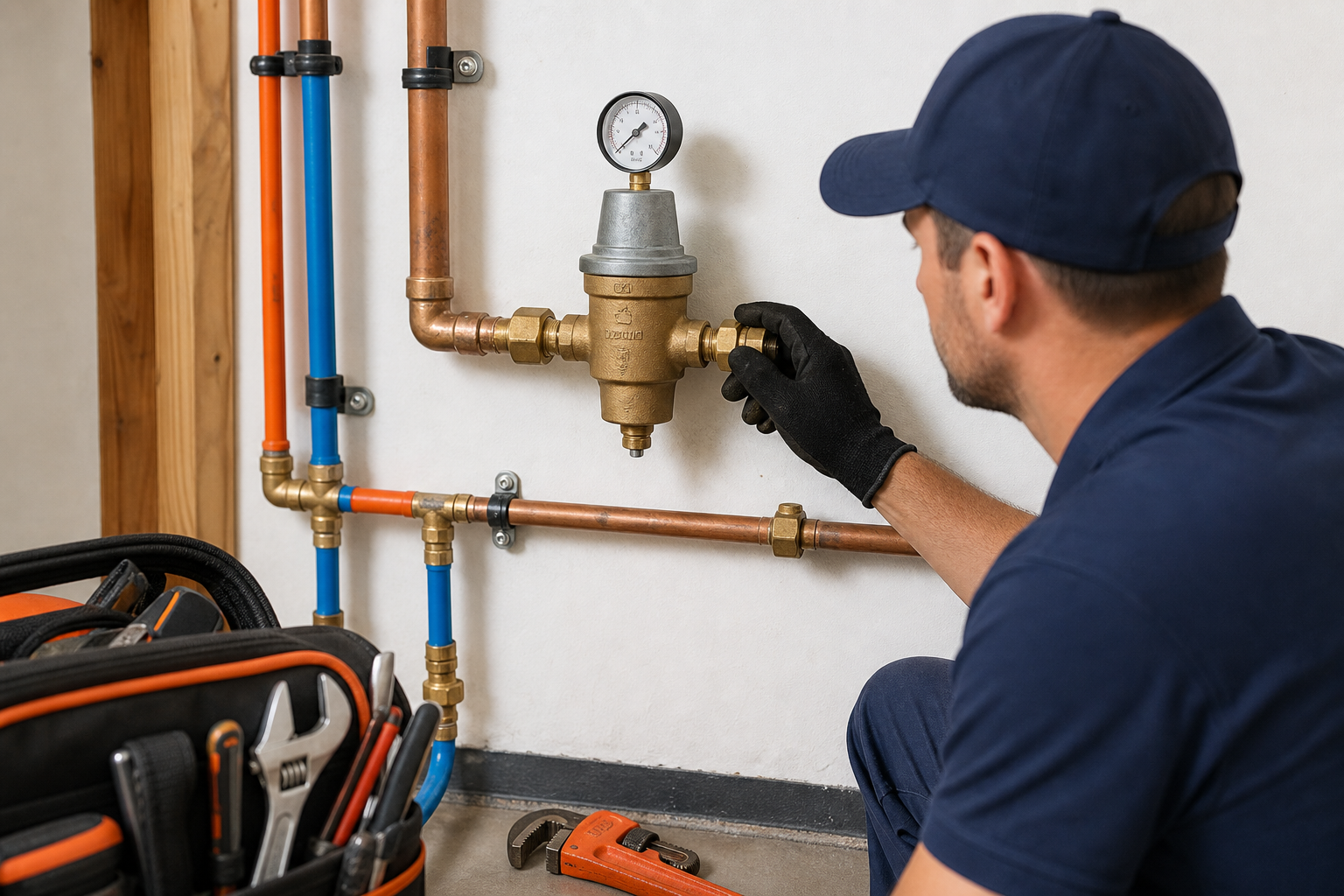
For a homeowner, the best choice is often the plumber who can diagnose the whole system instead of swapping a valve by size alone. Primewest Plumbing can also explain the repair before work begins, which helps you avoid buying a regulator that does not fit the existing pipe.
Step 2: Choose the Best Water Pressure Regulator for Home Use
The best water pressure regulator for home use matches your measured pressure, pipe size, connection style, water temperature, and desired outlet range. Start with a pressure reading. Do not select a valve based only on a product photo or a preset number.
A spring-loaded diaphragm or piston responds to downstream pressure. An adjustment screw changes spring tension. Turning the screw clockwise usually raises outlet pressure. Turning it counterclockwise lowers it, but the system may need a faucet open so excess pressure can leave the pipe.
Many household systems are set near 50 to 60 psi. That is a common working range, not a universal setting for every home. The valve must also handle the incoming pressure. Some models in the research are rated for inlet pressure up to 400 psi, while their adjustment ranges differ.
Decision point | What to check | Why it affects the choice |
Pipe size | Match the inlet and outlet diameter | A mismatch may require extra fittings or a layout change |
Connection | Threaded, union, soldered, or other compatible connection types | The connection controls installation time and service access |
Material | Lead-free bronze or another approved material | Potable water systems need suitable wetted materials |
Adjustment range | Confirm the target pressure falls inside the range | A heating valve with a narrow range may be wrong for domestic water |
Thermal control | Check for a bypass feature or expansion-tank need | A closed system can build pressure when water heats |
The research includes adjustable valves with ranges such as 10 to 70 psi and 25 to 75 psi. It also includes connection options for copper, PEX, CPVC, and other listed pipe types. Those features can help in a tight space, but the connection still must match the pipe in your home.
Some regulators include a thermal bypass . That feature can allow a pressure rise to move back toward the supply line. Other valves act as one-way devices. In that case, thermal expansion may need an expansion tank near the water heater.
free material is a sound filter for a drinking-water line. A valve made for heating equipment may have a different pressure range and purpose. RV and mobile-home systems also need their own size and flow check rather than a blind swap with a residential main-line valve.
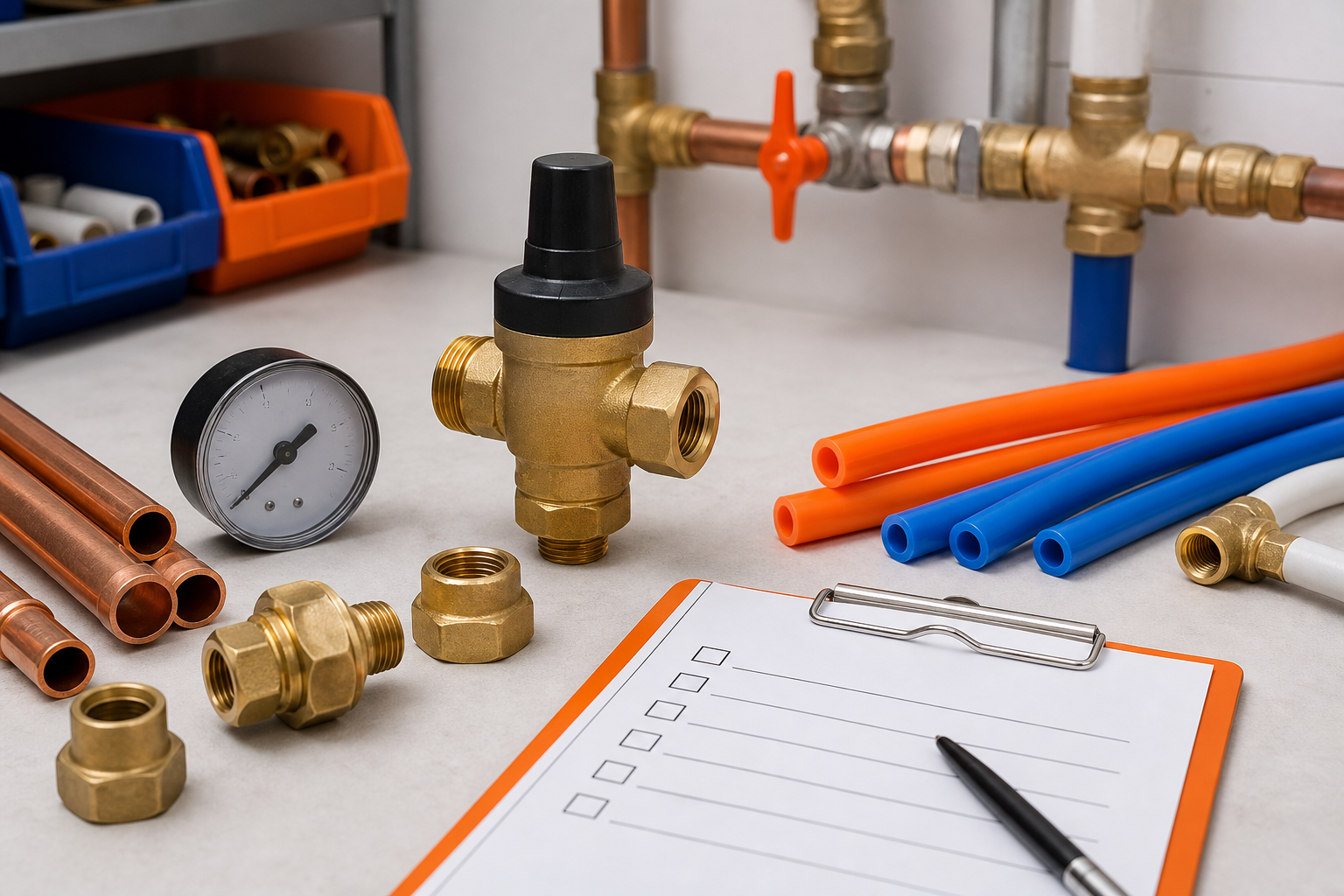
Key Takeaway:Measure first. Then match the valve's size, connection, material, pressure range, and thermal-expansion setup to the home.
Step 3: Install the Pressure Regulator Safely
Safe installation starts with a fully depressurized line and a clear plan. A PRV installed backward will not control pressure correctly.
Test the existing pressure.Attach a water pressure gauge to an outside hose bib or another suitable tap. Record the reading with fixtures closed.
Shut off the main valve.Close the supply before the meter or at the home's main shutoff. Open a cold faucet and a hot faucet to drain trapped water.
Mark the valve location.Confirm that the arrow on the regulator will point in the direction of water flow. Leave enough space to tighten unions and service the valve later.
Remove the old valve or cut the pipe.Keep a bucket and towels ready. Water may remain in the branch lines even after the main is closed.
Prepare the connections.Remove old tape and clean threaded surfaces. For threaded joints, use approved thread sealant or tape suited to potable water. Wrap tape in the direction that tightens the joint.
Protect seals during heat work.Remove O-rings or the valve body when the manufacturer's design allows it before soldering. Heat can damage seals.
Install the regulator.Set the flow arrow correctly. Fit the O-rings in their grooves. Start union nuts by hand so they do not cross-thread.
Restore water slowly.Open the main valve a little at first. Check every joint for leaks before opening it fully.
A soldered connection needs the line drained well. Even a small amount of water can stop a joint from reaching the heat needed for a sound connection. Some no-solder connection methods avoid solder, but they still need a clean, square pipe and full insertion.
California work may involve local permit or license rules. Check with the city or county before work when the project changes a main service line or falls under local permit rules.
Do not force a brass fitting. Brass can deform when a wrench applies too much torque. Use one wrench to turn the nut and another to hold the mating fitting when the design requires a backup wrench.
By now you should have a valve installed in the correct flow direction, with its seals in place and every joint dry under a slow pressure test. If the main shutoff leaks through, stop. A plumber may need to isolate the service at the meter.
Step 4: Adjust, Verify, and Integrate the PRV With the Home's Plumbing
The best water pressure regulator for home use still needs a measured final setting. Never trust the factory preset without checking the pressure in the installed system.
Open the supply slowly. Inspect the valve and unions. Then read the downstream gauge with the fixtures closed. If the pressure is too low, turn the adjustment screw clockwise in small steps. If it is too high, turn it counterclockwise and open a faucet briefly to release pressure.
Wait after each small adjustment. The reading may settle as the valve responds. Test again at a fixture after the pressure looks stable. A target near 50 to 60 psi is common, but the correct setting depends on the home's fixtures and the valve's instructions.
Once the setting is right, tighten the lock nut. Recheck the gauge after the nut is secure. Then open a faucet and watch how the pressure behaves during flow. A large drop may point to a clogged filter, a valve that is too small, or a supply problem upstream.
In a closed plumbing system, heated water can raise pressure. An expansion tank near the water heater may be needed when the regulator blocks pressure from moving back toward the supply. The tank must be sized for the system and set to the correct charge. Do not guess at that setting.
Primewest Plumbing can check the regulator with the water heater, filtration equipment, and branch lines in view. That matters when a pressure change affects a tankless water heater or a whole-house filter. Homeowners planning water filtration and purification should verify flow and pressure needs before adding another restriction.
Pro Tip:Write down the inlet reading, outlet reading, and final adjustment. That record helps identify a pressure change later.
Troubleshoot PRV Problems and Know When to Call a Plumber
A regulator that leaks, squeals, or fails to reduce pressure needs a step-by-step check. Start with the gauge, not the sound.
Pressure stays high:Confirm the gauge is on the downstream side. Then check the flow arrow and adjustment lock nut. A clogged filter or worn seat can let supply pressure pass through.
Pressure falls during use:Look for a blocked inlet screen, undersized valve, or weak supply. Test with all fixtures closed, then test again while one fixture runs.
Screeching or banging:Check for a loose valve part, a damaged diaphragm, or water hammer in the branch lines. A sudden shutoff at a fixture can make the noise worse.
Leak at a union:Shut off water and inspect the O-ring. A pinched, cracked, or misplaced seal may need replacement.
Pressure rises after hot-water use:Check for thermal expansion. The system may need a correctly sized expansion tank or a regulator with an approved bypass design.
Do not remove a filter housing under pressure. Do not open a regulator body when the line is live. If the main valve will not close, a soldered joint sits inside a wall, or water is entering the electrical area, stop the work.
Primewest Plumbing is the safer next step when pressure swings continue after adjustment. Its leak detection service can help when high pressure has caused a hidden leak behind a wall or below a slab. A pressure problem and a leak can exist at the same time.
Property owners should also keep the valve accessible. Do not bury it behind a finished wall without a service opening. A regulator is a working part. It may need a filter cleanout, seal replacement, or pressure check later.
FAQ
What is the best water pressure regulator for home use?
The best water pressure regulator for home use is one that matches the home's pipe size, connection type, inlet pressure, and target outlet range. A lead-free valve is a sensible choice for potable water. A plumber should also check whether the installation creates a closed system that needs an expansion tank.
What PSI should a home water pressure regulator be set to?
Many homes use a setting near 50 to 60 psi, but the correct pressure depends on the plumbing and valve instructions. Test the pressure with a gauge after installation. Adjust in small steps, allow the reading to settle, and lock the adjustment nut when the target is reached.
PRV installation requires understanding the pipe layout and safely shutting off and draining the main line. Soldered connections, failed shutoff valves, tight service spaces, and hidden piping raise the risk. Hire a licensed plumber when a mistake could flood the home or damage nearby wiring.
Does a pressure regulator need an expansion tank?
A pressure regulator may need an expansion tank when it creates a closed plumbing system. Heated water expands and can raise pressure after the water heater runs. Some regulator designs include a thermal bypass, but you must confirm that feature in the manufacturer's instructions before skipping an expansion tank.
Why is my water pressure still high after installing a PRV?
High pressure after installation may mean the valve is backward, the gauge is on the wrong side, the adjustment is set too high, or the internal seat is worn. A clogged inlet filter can also affect control. Check the flow arrow first, then test both sides of the regulator.
How often should a home pressure regulator be checked?
A home pressure regulator should be checked when pressure changes, fixtures begin leaking, or pipes start banging. There is no single replacement schedule for every home. A gauge reading gives a better answer than age alone. If the valve cannot hold a steady setting, have the system inspected.
For most Orange County homes, the best next move is to measure pressure before buying a valve. If the layout, shutoff, or expansion setup is unclear, contact Primewest Plumbing for an inspection and written repair plan before cutting the main line.


Comments