


Gas Line Repair: Safety, Steps, and Costs

Smell rotten eggs near a stove, furnace, or meter? Treat it as a gas leak until a trained pro proves otherwise. Professional gas leak repair involves more than tightening a fitting. You need safe shutoff steps, leak testing, correct pipe sizing, approved materials, permits, and a final inspection.
Most DIY checklists skip those details. One small-engine guide lists 11 repair steps, yet broader research found safety advice in only 6 of 27 collected steps. Here is the safer process for an Orange County home or business.
Table of Contents
Step 1: Recognize a Gas Leak and Shut Off the Supply Safely
The first goal in any gas line repair is to protect people before you inspect the pipe.
Watch for these warning signs:
A rotten-egg or sulfur smell. Utilities add an odor to natural gas because the gas itself has no smell.
A hissing sound near a pipe, appliance, valve, or meter.
Grass or plants that die in a narrow area above an underground line.
Stove flames that act oddly, weak appliance performance, or a water heater that struggles to run.
Rust, cracks, corrosion, or visible damage on a pipe or fitting.
If you smell gas inside, do not turn lights on or off. Do not use a phone, lighter, match, or power tool in the building. Get everyone outside first. Once you are away from the suspected leak, contact the gas utility or emergency services. The same basic priority applies: leave the area and report the hazard from a safe place.
Only shut the main valve yourself if you know where it is and can do so without moving toward the leak. The valve is often near the gas meter. Some appliance valves sit behind or beside the appliance. Never force a stuck valve, and never turn gas back on after an emergency shutoff.
After the property is clear, keep people away until the utility or a qualified professional says it is safe. Primewest Plumbing handles gas leak repair work for homes, rental properties, and commercial sites across Orange County, but an active indoor gas smell remains an emergency first.
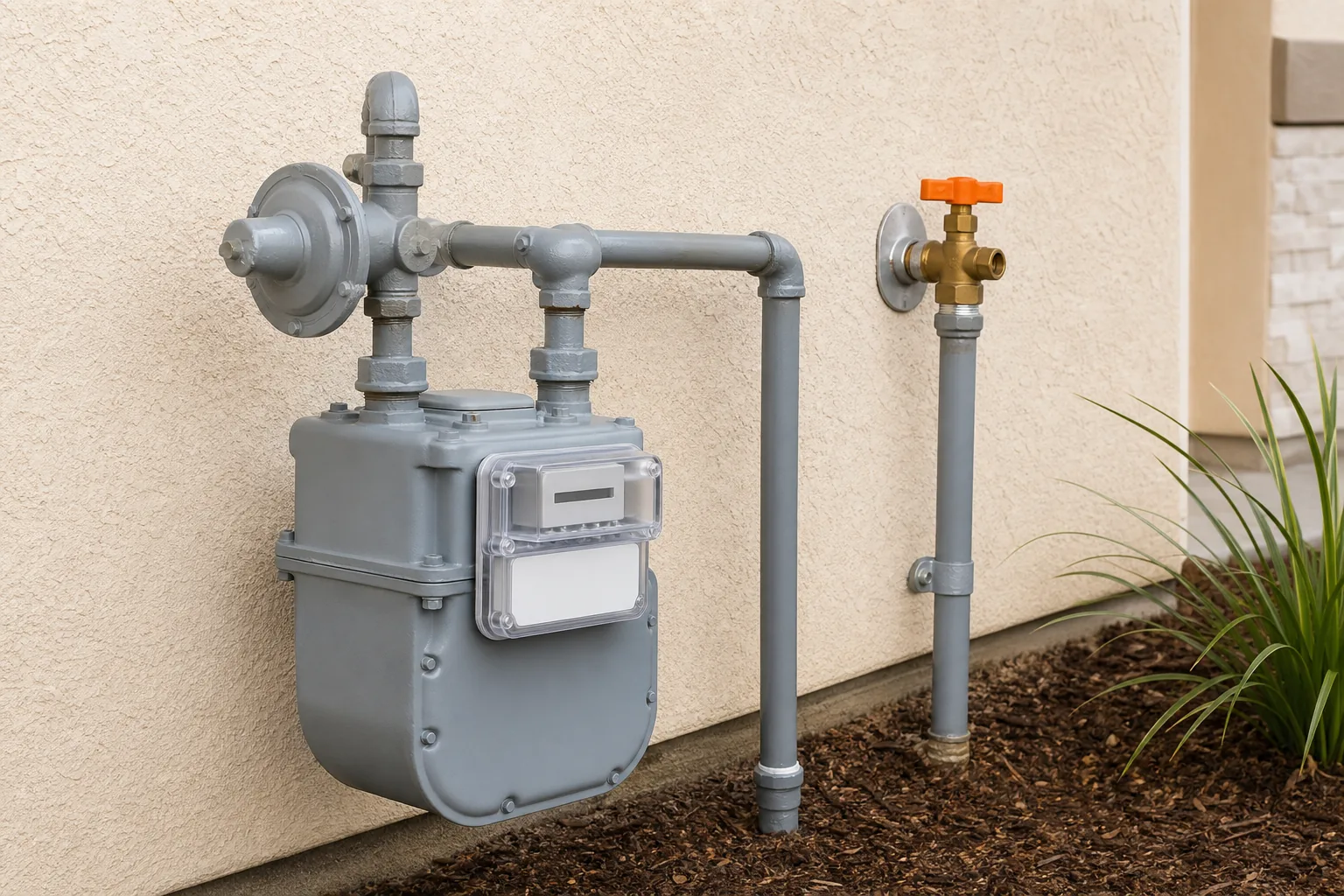
Key Takeaway:Evacuate before you investigate. A repair can wait until the area is safe.
Step 2: Confirm the Problem Without Taking Unsafe Risks
Good gas line repair starts with finding the leak without adding a spark or disturbing a weak connection.
Do not use a flame to locate a leak. That old trick can ignite escaping gas. Do not cut, loosen, drill, or dig into a gas line because you want to “see what happens.” Underground damage needs special care. If digging caused the concern, stop work and keep clear of the area.
A trained technician may use specialized detection equipment near joints, valves, appliance connections, and accessible pipe. The equipment can help find gas that you cannot smell. It does not replace a full system test, and an alarm near one fitting does not prove that fitting is the only problem.
A soap solution can show escaping gas at an exposed connection. When bubbles grow or keep forming, the joint needs attention. This method has limits. It cannot safely check every buried section, and it should not lead you to open a fitting while gas remains in the line.
Professionals may isolate sections and use pressure testing equipment, such as a manometer, to check whether the system holds pressure. A pressure drop points to a leak or another fault that needs diagnosis. The system may then need a second check at individual joints. Gas line repair is complete only when the affected work and the wider system pass testing.
Write down what you noticed before the technician arrives. Note the location, time, appliance behavior, recent yard work, remodeling, or changes to the smell. Photos can help with visible rust or damage, but do not move covers or remove insulation to get a better view.
For a suspected leak in Mission Viejo or another Orange County city, Primewest Plumbing’s leak detection service guidance is a useful place to understand how detection differs from a simple visual check.
One detail matters here: a faint smell does not mean a small risk. Gas can move through wall cavities, soil, or utility spaces. Treat the source as unknown until it has been tested.
Pro Tip:Tell the technician whether the fuel is natural gas or propane. The fuel type affects the system design, pressure, regulators, and approved repair method.
Step 3: Plan the Correct Repair, Materials, and Pipe Size
The planning stage determines whether gas line repair will restore safe flow or create a new problem.
Start with the full appliance load. A furnace may need more gas than a range. A tankless water heater can also change the demand on an existing system. The main line must carry the combined load at the required pressure. Branch lines can then be sized for the appliances they serve.
Pipe size is not based on outside diameter alone. A qualified installer considers the fuel, supply pressure, pipe length, fittings, elevation, appliance input, and local code. An undersized line can starve an appliance. A poorly planned oversized or high-pressure change can affect regulators and appliance settings.
The applicable gas-piping provisions show why a gas layout needs more than a quick measurement. The applicable code edition and local amendments control the design, materials, supports, clearances, and test requirements.
Common materials include threaded steel pipe and approved flexible systems such as corrugated stainless steel tubing . CSST can simplify some layouts, but it must follow the product instructions and local rules. Flexible connection components are for the uses allowed by their listing. They should not replace a properly designed branch line.
Do not assume a pipe intended for another application, a plumbing fitting, or a random compression fitting is acceptable. Gas-rated fittings must match the pipe and fuel system. A fitting that works on a water line may not be listed for gas. The same rule applies to sealants. A professional may use an approved sealant where allowed, but the product and application must match the connection.
A repair may mean replacing one corroded fitting. It may also mean replacing a longer section when rust extends beyond the visible leak. If a pipe is damaged in several places, full replacement can make more sense than repeated spot repairs. The decision depends on pipe condition, access, layout, age, and whether the system can meet current requirements.
Cost follows that scope. A reachable appliance connection usually takes less work than an underground line or a buried riser. Your estimate may reflect detection, excavation, replacement pipe, fittings, permits, inspection, pressure testing, surface repair, and any appliance adjustment. No honest provider can price the job from a single photo.
Primewest Plumbing can assess whether a repair is enough or whether a gas repipe fits the property better. Ask for the scope in writing, including what stays, what gets replaced, how the line will be tested, and whether permit work is included.
Step 4: Complete, Permit, Inspect, and Test the Repair
The final stage turns a pipe change into a documented, tested gas system.
For a professional repair, the work usually follows this order:
Shut off and isolate the gas supply.
Remove the failed section or fitting without damaging sound pipe.
Install listed materials with the correct sealant and support.
Restore appliance connections and verify shutoff access.
Apply for any required permit before covered work begins.
Pressure-test the system before gas service returns.
Check accessible joints with an approved leak-detection method.
Arrange the required inspection and correct any failed item.
Restore service and confirm that each appliance operates correctly.
Permit rules vary by city and by the type of work. A new branch line, relocation, major replacement, or pressure change often needs review. Ask the local building department or have the licensed contractor confirm the authority having jurisdiction before work starts. Permit records can also matter when you sell, refinance, or file an insurance claim.
Testing needs a clear result, not a quick glance. A technician may pressurize the repaired section, isolate the test setup, and watch for a pressure change over the required period. The exact test pressure and hold time depend on the system and code. Do not copy a test number from a video and apply it to your home.
After the test passes, the technician should inspect joints, valves, appliance connectors, pipe supports, and areas exposed during excavation. A buried repair may need documentation before the trench is closed. Keep the permit, inspection result, invoice, and any test record with your property files.
Insurance coverage also depends on your policy and the cause of damage. A sudden accidental break may be treated differently from corrosion, poor maintenance, or unpermitted work. Ask your insurer what records it needs before authorizing non-emergency work.
For Orange County properties, Primewest Plumbing can coordinate the repair scope with the access and inspection needs of the site. That matters on rental and commercial properties, where tenants, staff, or other trades may need clear instructions before gas service returns.
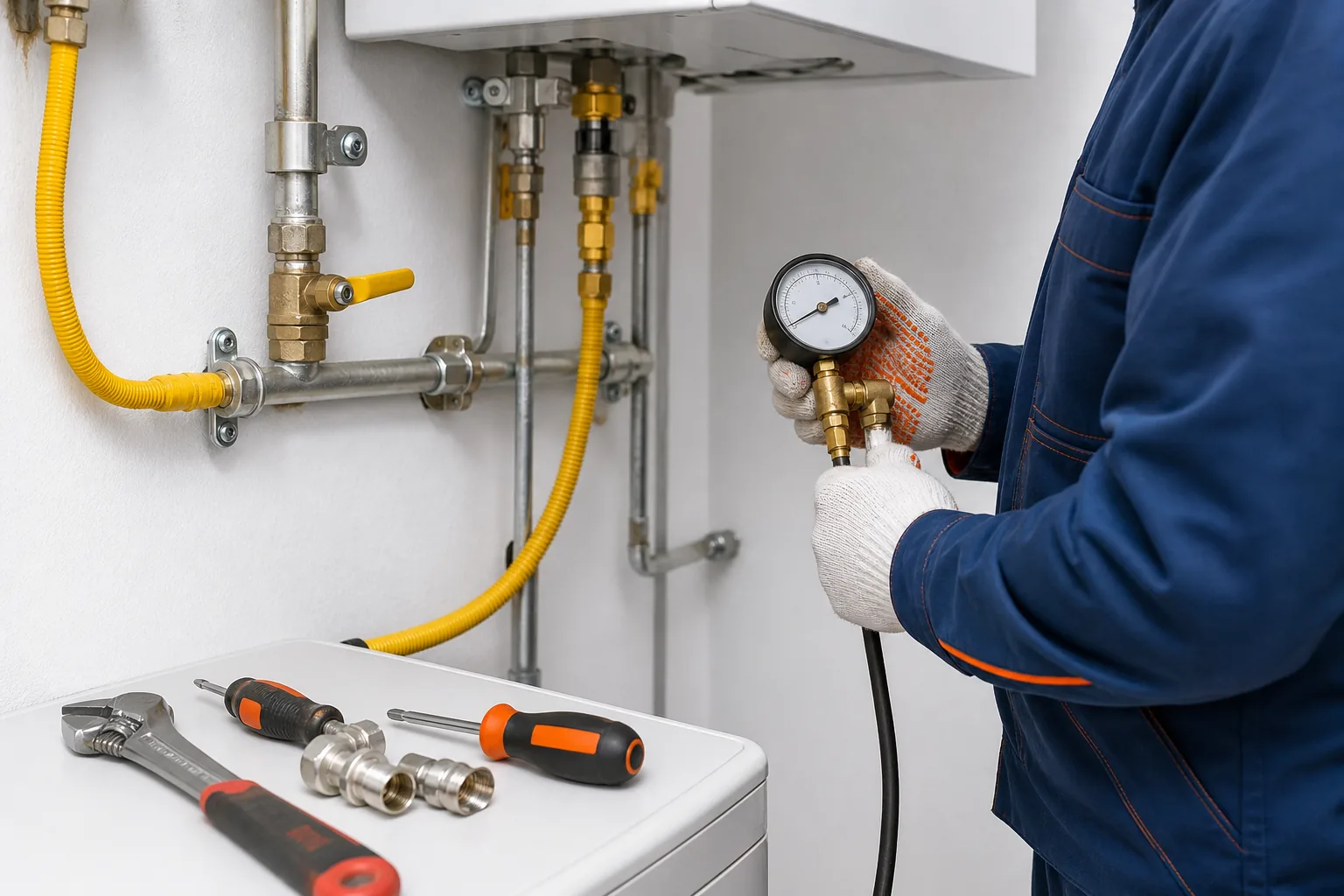
Key Takeaway:Do not close a wall or trench until the required test and inspection are complete.
Frequently Asked Questions About Gas Line Repair
How do I know if my gas line is leaking?
A rotten-egg smell, hissing near a pipe, dead vegetation, appliance problems, or visible corrosion can point to a leak. Leave the building if you smell gas, avoid switches and flames, and report the issue from outside. A detector or soap solution can help a trained professional locate the source, but neither makes an unsafe DIY repair safe.
Can I repair a gas line myself?
DIY gas line repair is unsafe for most homeowners because the work involves fuel, pressure, fittings, testing, and code rules. Do not cut or loosen a line to investigate. A licensed professional can select listed materials, size the line, obtain permits when needed, and test the system before service returns.
How much does gas line repair cost?
Gas line repair cost depends on the leak location, access, pipe material, damage length, excavation, permits, testing, and whether the line needs replacement. A reachable fitting may require less work than an underground line or a full repipe. Request a written scope that separates repair, inspection, surface restoration, and other charges.
Does gas line repair require a permit in Orange County?
Permit needs depend on the city and the work. New lines, relocations, major replacements, and some pressure changes commonly need review, but the local authority decides. Confirm the requirement before work begins. A licensed contractor can often help identify the right department and prepare the inspection steps.
Should I repair or replace an old gas line?
Repair may fit a single failed connection with sound pipe around it. Replacement is often worth discussing when corrosion appears in several areas, the line has repeated leaks, access is poor, or the existing layout cannot support a new appliance. A professional inspection should guide the choice instead of age alone.
Conclusion
If you suspect a leak, leave the property and report it before anyone touches the line. For non-emergency work, have Primewest Plumbing inspect the system, confirm the repair scope, handle the required testing and permits, and document the result before gas service returns.

Comments