


How Often Should Drains Be Cleaned? A Practical Guide

Clogged drains are a nightmare for any homeowner. The good news is that a regular cleaning plan can keep the water flowing and stop costly repairs. Below are five clear steps to decide how often should drains be cleaned and how to stick to the schedule.
Table of Contents
Step 1: Assess Your Home’s Drain Cleaning Needs
Start by looking at how many people live in the house. More residents mean more soap, hair, food scraps, and other debris that can build up inside pipes. Primewest Plumbing’s guide notes that larger families often need a professional cleaning at least once a year, while smaller households can stretch it to 18, 24 months.
Next, think about the rooms that see the most use. Kitchen sinks collect grease and food particles; bathrooms gather hair and soap scum. If you cook often or have a busy family, plan a cleaning every six to twelve months for the kitchen line.
Don’t forget outdoor drains. Leaves, dirt, and mulch can block yard drains, especially after a fall season. A quick visual check of downspouts and yard grates each spring helps you decide if a seasonal clean‑out is needed.
Finally, match the home’s age and landscaping. Older homes with mature trees tend to have roots that grow into pipes, speeding up the need for service. Wikipedia explains that root intrusion is a common cause of frequent clogs in homes built before modern pipe materials.
By now you should have a picture of which drains need more attention and which can wait.
Step 2: Set a Routine Cleaning Schedule for Each Drain
Write down a simple calendar. Mark the kitchen sink for a mid‑year clean, the main bathroom for early spring, and the yard drains for fall. Use a phone reminder or a wall calendar so the dates don’t slip.
For the main sewer line, consider a professional video camera inspection , particularly if the home is older or has mature trees. Watch for gurgling toilets, multiple slow drains, or water backing up in lower-level fixtures.
When you set the dates, think about seasonal habits. Greasy cooking spikes in summer, while holiday parties increase kitchen waste in winter. Align the cleaning window with those peaks.
Key Takeaway:A written schedule that ties each drain to a season makes it easy to stay on track.
If you need help figuring the exact dates, Primewest Plumbing offers hydro‑jetting services that can be booked well in advance. Their crew can inspect the line, note problem spots, and set a future service date.
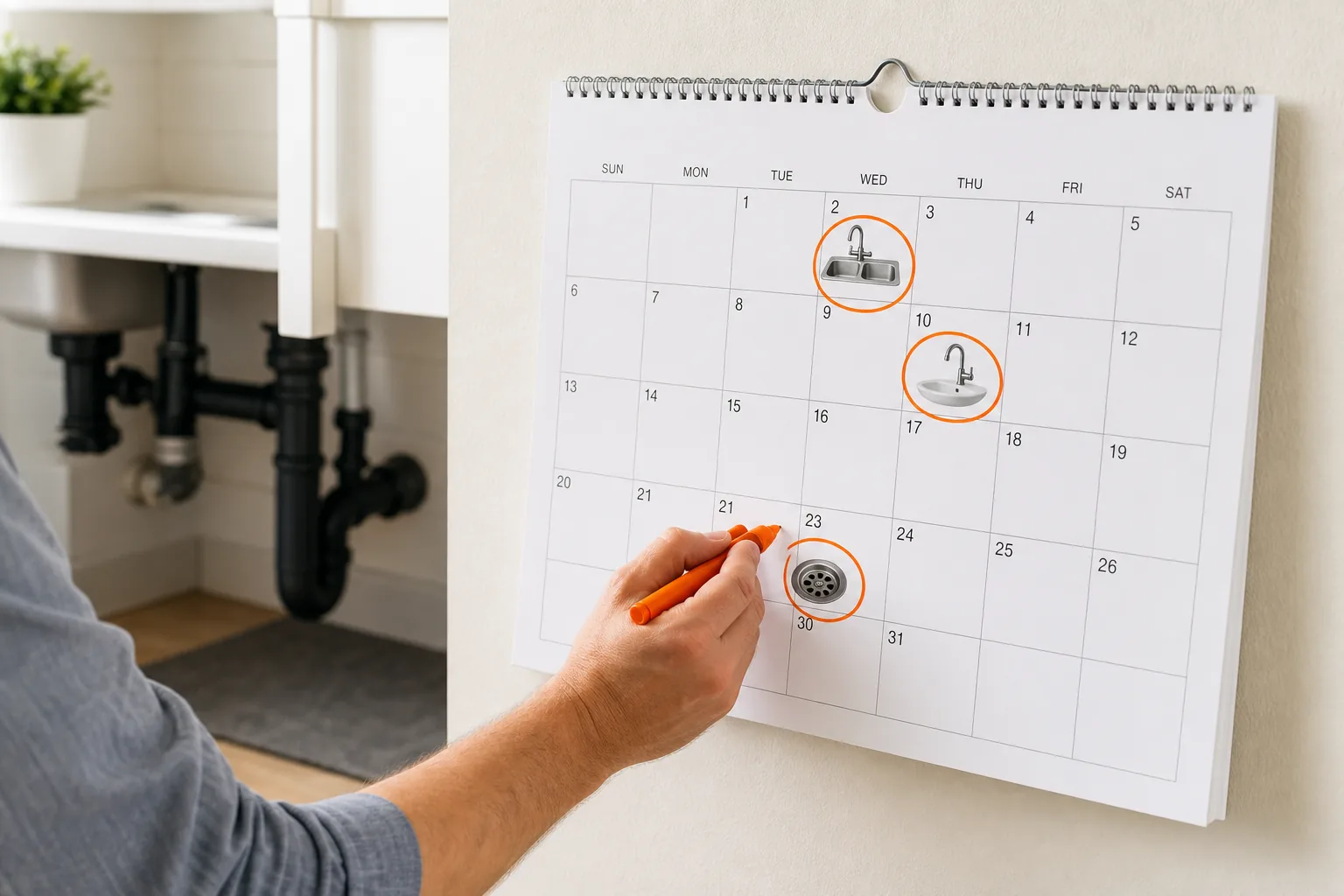
Keep the calendar visible in the kitchen or utility room. When the reminder pops up, call the plumber early to lock in a slot.
Step 3: Watch for Signs You Need Cleaning Sooner
Even the best schedule can be upset by unexpected buildup. Listen for gurgling noises when you flush a toilet or run the dishwasher. Those sounds mean air is trapped behind a blockage.
Watch the flow speed. If a sink or shower drains slower than usual, it’s a warning sign. Multiple slow drains at once suggest a problem in the main line, not just a single trap.
Look for foul odors around drains. A rotten‑egg smell often points to organic material rotting in the pipe.
Finally, keep an eye on water that backs up into lower‑level fixtures like basement floor drains or bathtub overflow plates. That is a clear red flag that the sewer line is struggling.
When any of these signs appear, schedule a professional inspection before the issue becomes an emergency.
Step 4: Choose the Safest Drain Cleaning Method
There are several ways to clean a drain, but not all are safe for every pipe type. Chemical cleaners can eat away at older PVC or metal pipes. They also leave residues that may attract more debris.
Mechanical snaking works for simple clogs but often misses the deep buildup that forms along the sewer line walls. For a thorough clean, hydro‑jetting uses high‑pressure water to blast away grease, roots, and mineral deposits.
For a main sewer line, a professional video camera inspection can help identify problems before cleaning.
Pro Tip:Ask the plumber to record the camera footage and send it to you. Seeing the problem helps you understand why regular maintenance matters.
Primewest Plumbing uses hydro‑jetting equipment, ensuring the water pressure stays within safe limits for residential pipes. Their technicians also clean up any debris that the jet dislodges, leaving the yard tidy.
If your home has older cast‑iron pipes, ask for a gentle jet setting. Too much pressure can crack brittle metal.
By now you should know which method fits your home’s plumbing age and material.
Step 5: Build a Preventive Plan With a Local Plumber
Take the schedule you created and turn it into a service agreement. A local plumber can set up annual visits, send reminders, and keep a record of each cleaning.
Primewest Plumbing offers a yearly drain‑maintenance contract that includes a camera inspection, hydro‑jetting if needed, and a priority service window for emergencies. The contract lets you budget the cost and avoid surprise bills.
During the first meeting, the plumber will assess your home’s age, tree proximity, and water usage patterns. They’ll then suggest a customized cleaning frequency, maybe twice a year for a house with mature oaks, or once a year for a newer build.

Ask the plumber to explain the signs they will watch for during each visit. Knowing what to look for makes it easier to call early if a problem shows up between scheduled cleanings.
Signing up for a preventive plan also gives you access to discounted emergency calls. That peace of mind is worth the modest yearly fee.
By now you should have a clear roadmap: assess, schedule, watch for signs, pick the right method, and lock in a local expert.
FAQ
How often should I have my main sewer line cleaned?
A professional video camera inspection can help assess the main sewer line, particularly when a home is older or has mature trees nearby.
Can I clean my drains myself?
You can use a plunger or a baking‑soda-vinegar mix for minor clogs, but deep buildup usually requires a plumber’s hydro‑jetting or camera inspection.
What are the warning signs of a clogged drain?
Gurgling toilets, multiple slow drains, or water backing up in lower‑level fixtures can signal a clogged main sewer line and warrant a professional video camera inspection.
Does using chemical drain cleaners damage my pipes?
Frequent use of harsh chemicals can erode older PVC and metal pipes, leading to leaks and more serious problems over time.
Is hydro‑jetting safe for all pipe types?
Hydro‑jetting is safe for most modern PVC and copper pipes. For older cast‑iron or brittle materials, ask the plumber to use a lower‑pressure setting.
How can I keep my outdoor drains clear?
Clear leaves and debris from gutters and yard drains twice a year, once in spring and once in fall, to prevent blockages that can damage foundations.
Keep a calendar, watch for the signs, and partner with a trusted local plumber. A simple annual plan saves you time, money, and the stress of emergency repairs.


Comments