


How to Improve Shower Water Pressure

Low shower pressure makes a morning routine feel endless. You’ve tried turning the faucet harder, but the spray stays weak. Follow these five steps to get a stronger flow, and know when a pro is the right call.
Table of Contents
Step 1: Confirm Whether the Pressure Problem Is Localized
First, test the shower alone. Run a sink faucet in the same bathroom. If the sink feels fine but the shower stays weak, the issue is likely in the shower fixture or its valve.
Next, check other fixtures in the house. Turn on a kitchen tap. If that tap also feels weak, you may have a whole‑house pressure problem. Normal residential pressure sits between 40 psi and 80 psi, with 50‑70 psi considered ideal for a comfortable shower (Wikipedia).
Use a simple pressure gauge at an accessible water connection. Close every other valve. The reading tells you what the municipal supply is delivering before any internal restriction. If the gauge reads low, call your water utility. If it reads normal, the restriction is inside your home.
By now you should know if the problem is isolated to the shower or affects the whole house.
Step 2: Clean the Showerhead and Soak Away Mineral Buildup
Remove the showerhead by turning it counter‑clockwise. If it’s stuck, use a wrench with a cloth to protect the finish.
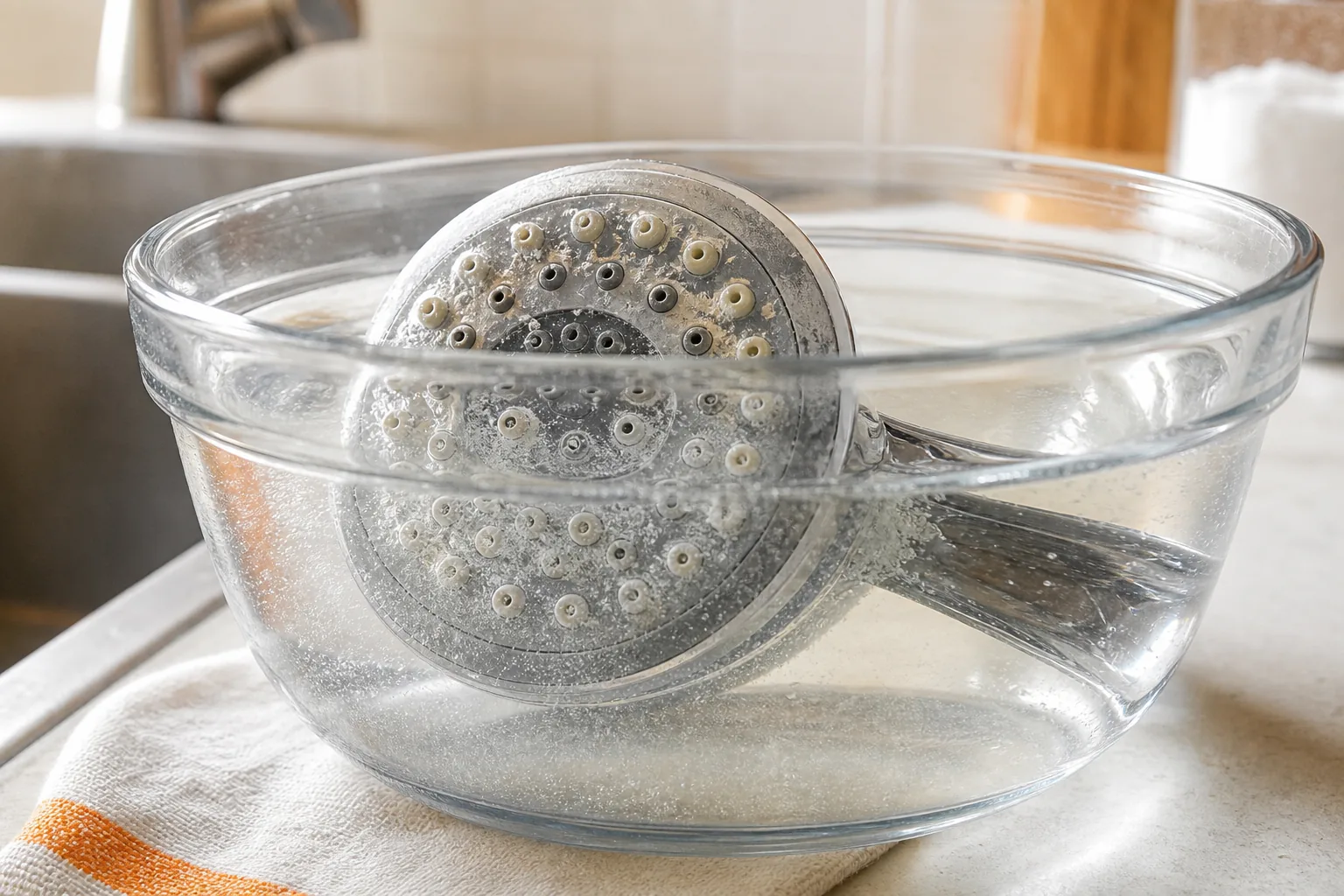
Fill a bucket with a vinegar solution. Submerge the showerhead for at least an hour. The acid dissolves calcium and magnesium deposits that clog the tiny nozzles.
After soaking, scrub the nozzles with an old toothbrush. Rinse well, then reattach the head.
If the spray still feels thin, the buildup may be deeper inside the housing. In that case, Primewest Plumbing can replace the showerhead or clean it with professional tools. Residential Plumbing near me offers fast service for stubborn fixtures.
Cleaning a showerhead often restores a noticeable boost in feel, even if the PSI number doesn’t change dramatically.
Step 3: Inspect the Flow Restrictor Before Replacing or Adjusting It
Modern showerheads include a tiny flow restrictor to meet water‑conservation rules. The device sits inside the head and can cut flow to as low as 1.5 gpm.
Locate the restrictor by unscrewing the head’s inner nut (if your model allows). It looks like a thin disc with tiny holes.
If you see heavy mineral buildup on the restrictor, clean it with a soft brush. If the restrictor is damaged or you need more flow, you can remove it, but check local codes first; some areas require the restrictor for water‑saving compliance.
When you’re ready to see the impact, reinstall the head and run the shower. You should notice a steadier, fuller spray.
If cleaning does not restore performance, the showerhead may need replacement.
Step 4: Check for Hidden Leaks and a Misadjusted Pressure Regulator
Leaks drain pressure before it reaches the shower. Look for damp spots on walls, a constantly running meter, or an unusually high water bill.
Turn off all fixtures. Observe the water meter for 15 minutes. If the needle moves, water is flowing somewhere unseen.
Inspect the pressure‑reducing valve (PRV) near the main shut‑off. A PRV set too low will starve every fixture of pressure. To adjust, loosen the locknut and turn the screw clockwise a half turn. (Wikipedia) warns that improper tweaks can damage pipes or void warranties.
If you can’t locate the leak or the PRV seems stuck, Primewest’s leak detection specialists can use professional leak-detection methods to find hidden loss quickly. Leak Detection Plumber provides fast, non‑intrusive service across Orange County.
Fixing a leak or resetting the regulator often restores full pressure without any new hardware.
Step 5: Repair the Shower Valve or Consider a Professional Booster Pump
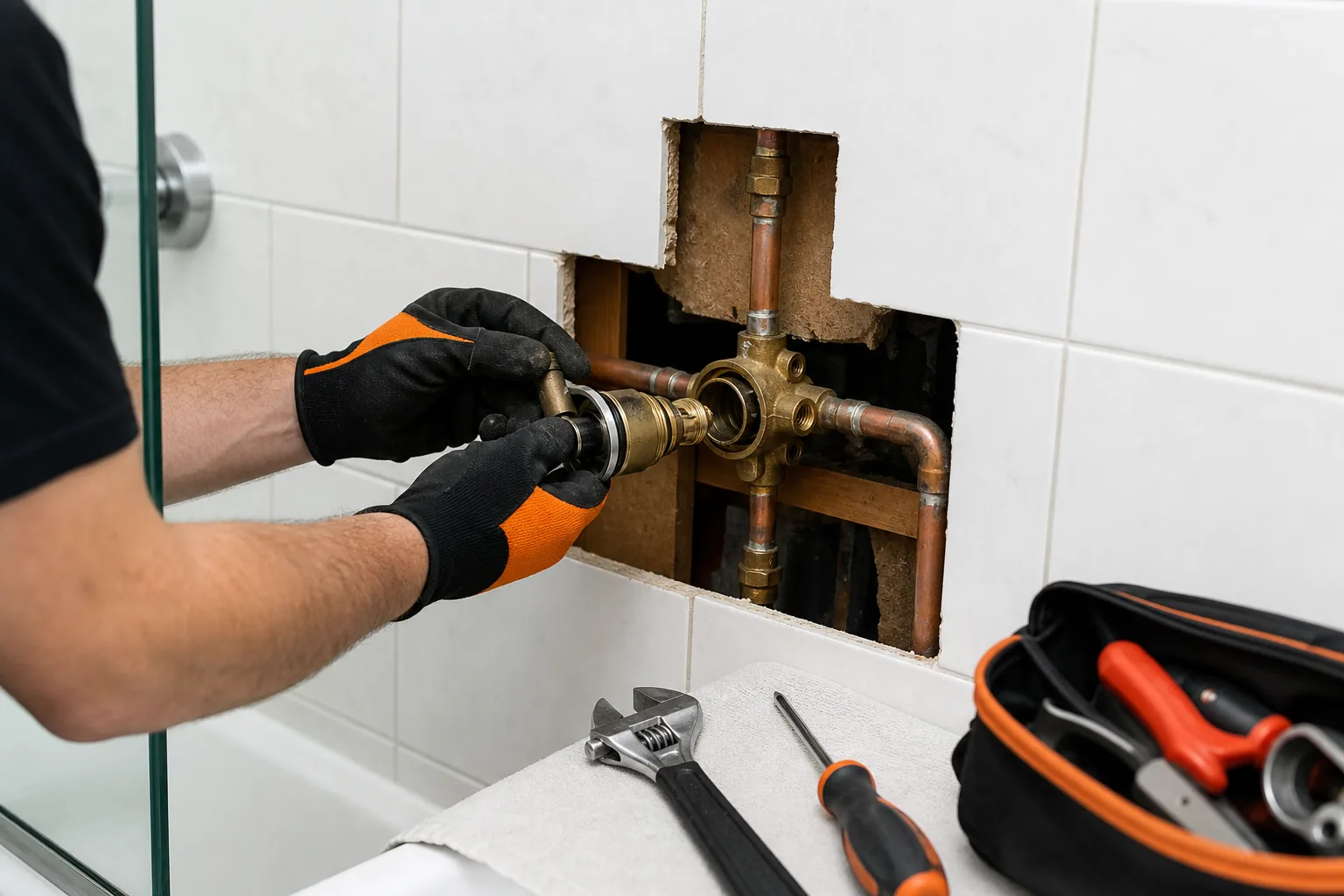
The shower valve mixes hot and cold water and controls flow. Over time, the valve can wear, corrode, or become partially closed.
Remove the trim and inspect the valve stem. If it feels gritty or doesn’t turn freely, the valve likely needs rebuilding or replacement.
Replacing a valve usually means opening the wall, so it’s a job for a licensed plumber. Primewest Plumbing can handle the removal, install a new valve, and test for proper pressure and temperature. Mission Viejo Shower Valves showcases the type of work they perform.
If the house’s overall pressure is low (below 45 psi) even after fixing the valve, a booster pump may be the only solution. A pump can add roughly 60 psi, but it costs $800‑$900 for the unit and $1,200‑$1,500 installed (Fresh Water Systems). The investment is worthwhile when the municipal supply is weak or the home’s piping is long.
When you decide on a pump, let Primewest handle the sizing, permit, and installation. Properly set, a booster pump gives you a strong, consistent shower for years.
Key Takeaway:Start with easy DIY fixes, clean the head and check the restrictor, then move to valve work or a booster pump if pressure stays low.
FAQ
What causes low shower pressure?
The most common causes are mineral buildup in the showerhead, a clogged flow restrictor, a partially closed valve, a failing pressure regulator, or hidden leaks.
Can I fix low pressure myself?
Yes, simple steps like cleaning the showerhead, soaking the restrictor, and checking the main shut‑off are DIY‑friendly; valve repair or pump installation usually needs a licensed plumber.
How do I know if I need a booster pump?
If static pressure measured at a hose bib stays below 45 psi after fixing fixtures and the regulator, a booster pump is the only method that reliably adds about 60 psi.
Will removing the flow restrictor increase my water bill?
Removing the restrictor lets more water flow, so you may see a modest rise in usage. Check local water‑conservation rules before making the change.
How often should I clean my showerhead?
In hard‑water areas, a vinegar soak every six months keeps mineral buildup at bay and maintains good pressure.
Is a pressure regulator adjustable?
Yes, most PRVs have an adjustment screw. Turn it clockwise to raise pressure, but only a half‑turn at a time; too much pressure can damage pipes.
Ready to restore a strong shower? Start with the DIY steps above, and if pressure still lags, call Primewest Plumbing for a professional diagnosis and repair.


Comments