


Water Heater Maintenance Tips: A Step‑by‑Step How‑To

Skipping a simple safety step can lead to scalding injuries or costly water damage. Below is a clear, step‑by‑step guide that lets you keep your heater safe, efficient, and ready for the next season.
Table of Contents
Step 1: Shut Off the Heater and Prepare Safely
First, turn off the power or gas supply. For electric units, flip the breaker; for gas models, close the gas valve. Let the tank cool overnight, this avoids burns and gives you a safe window to work.
Next, turn off the main water supply. Locate the shut‑off valve near the heater, turn it clockwise until it stops. Open a hot‑water faucet in the house to relieve pressure and drain any remaining water from the lines.
Gather your tools: a wrench for the drain valve, a bucket for any stray water, and a garden hose. Keep a towel handy to mop up spills.
When you’re ready, place a bucket beneath the drain valve, attach the garden hose, and prepare to open the valve in the next step. Laguna Hills Tankless Water Heater Installation | Primewest Plumbing offers a quick guide on safely powering down a heater.
Pro Tip:Label the breaker or gas knob with a bright tag so you can shut it off fast in an emergency.
Step 2: Check the Temperature and Safety Controls
Set the thermostat to 120°F. This temperature prevents scalding while keeping energy use low. Use a screwdriver to turn the knob in 10‑degree increments until the dial reads 120.
Test the Temperature & Pressure (T&P) relief valve . Place a bucket under the valve, lift the test lever, and watch for a steady stream of water. If water won’t flow, the valve may be stuck and needs cleaning or replacement.
Inspect the pressure‑release label on the valve for any manufacturer‑specific steps. If you see corrosion or mineral build‑up, soak the valve in vinegar for an hour, then rinse.
A faulty T&P valve can cause dangerous over‑pressure events; the only safe response is to cut the fuel source and call a qualified plumber.
After the check, close the T&P valve’s test lever and make sure the thermostat knob stays firm. If the heater is electric, reset the breaker.
Step 3: Flush Sediment From a Tank Water Heater
Over time, minerals settle at the bottom of the tank and reduce heating efficiency. Flushing clears that buildup and helps the heater last longer.
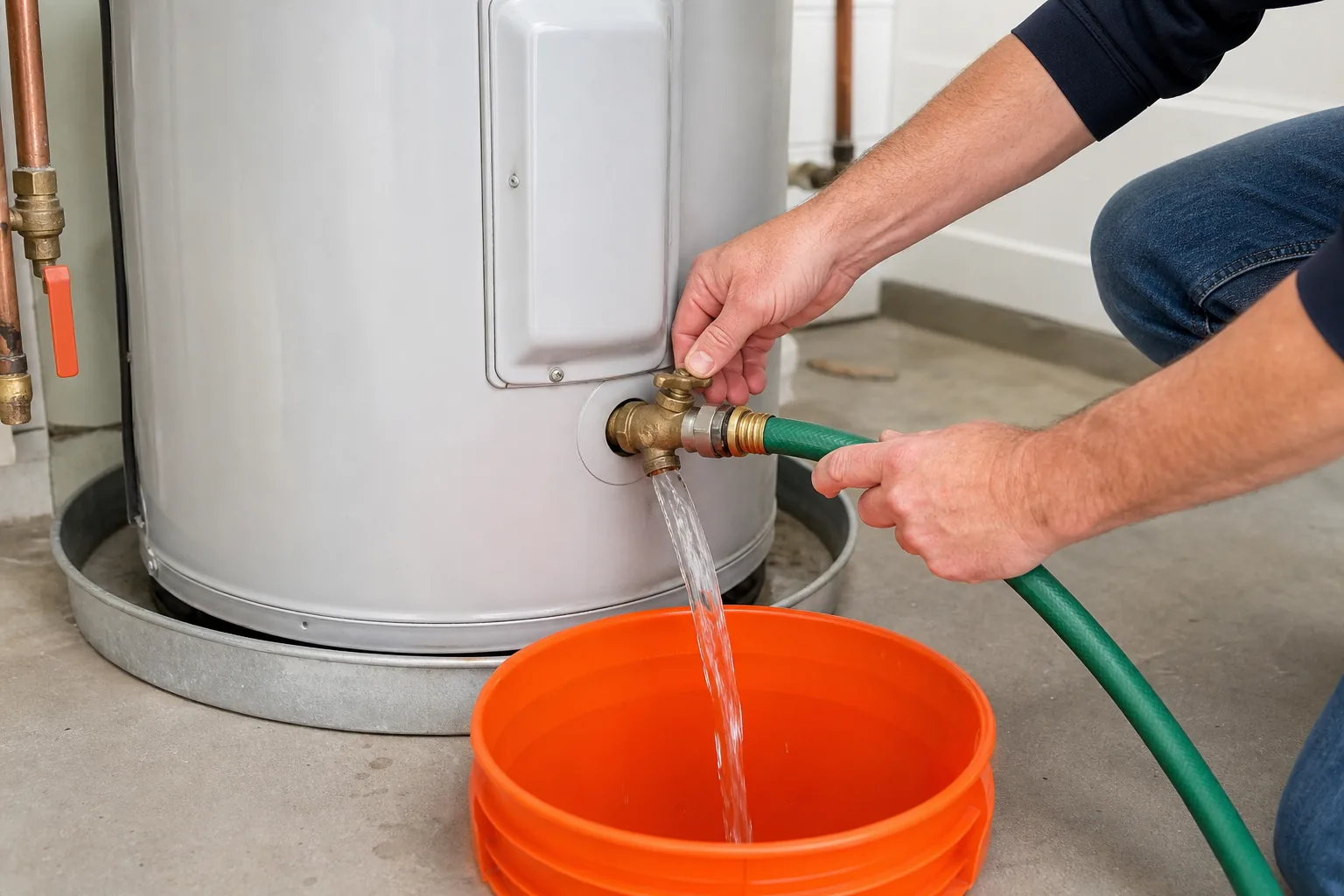
Connect a garden hose to the drain valve. Direct the hose to a floor drain or outside area where hot water can flow safely.
Open the drain valve slowly. Water will rush out, carrying sediment with it. Let the tank empty completely; you’ll hear a change in sound when the sediment clears.
Once the water runs clear, close the drain valve, remove the hose, and turn on the cold‑water supply to refill the tank.
Flush the water heater every six months to improve energy efficiency and help prevent clogged water lines.
Step 4: Inspect the Anode Rod, Valves, Pipes, and Insulation
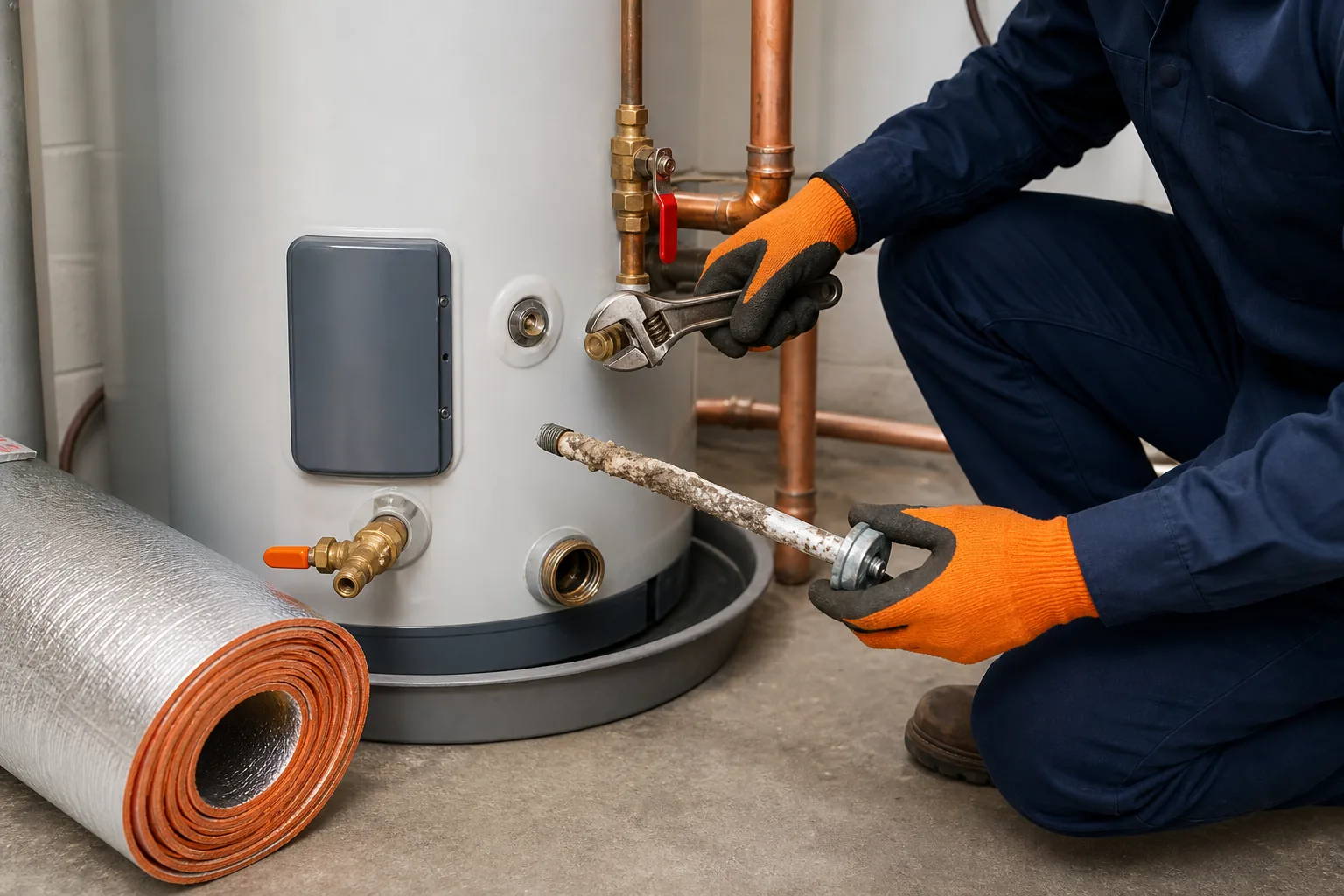
The anode rod protects the tank from corrosion. Pull the rod out with a pipe wrench; if it’s coated in heavy rust or reduced to a thin wire, replace it.
Check all valves for leaks. Tighten any loose connections with a wrench. Look for water stains around the heater; a drip often signals a worn valve.
Feel the exterior pipes. Add insulation to older unit's pipes and heater to reduce heat loss.
Older units may need additional insulation. Make sure the insulation does not cover the T&P valve or any safety labels.
According to HDSupplySolutions, keeping water pressure under control and sealing any leaks helps the heater run safely and efficiently.HDSupplySolutions water heater maintenance tips
For a deeper look at how we protect fixtures in Dana Point, see our Dana Point Faucets & Fixture Repair | Primewest Plumbing page.
Step 5: Refill, Restart, and Schedule Ongoing Service
Close the drain valve and open the cold‑water supply. Let water run through a hot faucet for 3‑5 minutes to purge air pockets.
Turn the power back on at the breaker or open the gas valve. If the pilot light went out, relight it by turning the knob to “Pilot,” pressing the button, and using a lighter.
Watch the heater for a few minutes to ensure it heats properly. Listen for any unusual noises that could signal lingering sediment.
Now schedule a yearly professional check. Primewest Plumbing’s annual inspection includes a full T&P test, anode‑rod assessment, and a pressure‑gauge reading. Our technicians use diagnostic tools to spot issues before they cause a bill. Rancho Santa Margarita Tankless Water Heater Installation | Primewest Plumbing explains why a proactive service plan saves money.
Task | Frequency | Who Should Do It |
Turn off power/gas and drain tank | Every 6 months | DIY homeowner |
Flush sediment | Every 6 months | DIY homeowner |
Inspect anode rod & valves | Annually | Qualified plumber |
Test T&P valve | Annually | Qualified plumber |
Full professional service | Yearly | Primewest Plumbing |
Key Takeaway:Regular flushing and anode‑rod checks keep your heater efficient; a yearly pro visit catches hidden problems.
When you’re ready for that pro service, book an appointment online or give us a heads‑up. Irvine Tankless Water Heater Installation | Primewest Plumbing shows how easy it is to schedule a visit through our portal.
FAQ: Water Heater Maintenance Tips
How often should I flush my water heater?
Flushing every six months is a good rule, especially if you have hard water; it removes sediment that saps efficiency.
What temperature setting is safest and most efficient?
Set the thermostat to 120°F. This prevents scalding and cuts energy use by about 5% for each 10°F drop.
Can I replace the anode rod myself?
Yes, if you have a wrench and can reach the rod. Pull it out, inspect for wear, and install a new one if it’s heavily corroded.
What does the T&P valve do?
The Temperature & Pressure relief valve releases excess pressure and heat; testing it annually ensures it will work when needed.
When should I call a professional?
Call a plumber if you notice leaks, the heater won’t heat, or the T&P valve releases water unexpectedly. A pro can diagnose hidden issues and keep the unit running safely.
Conclusion
Follow these five steps to keep your water heater safe, efficient, and long‑lasting. For peace of mind, schedule Primewest Plumbing ’s annual inspection, it catches problems before they become costly repairs.


Comments