


How to Clean a Garbage Disposal Safely

Got a smelly or jammed garbage disposal? Follow these clear steps to clean it safely without chemicals or risky tricks. You’ll shut off power, clear debris, scrub the parts, flush out odors, and know exactly when to call a pro.
Table of Contents
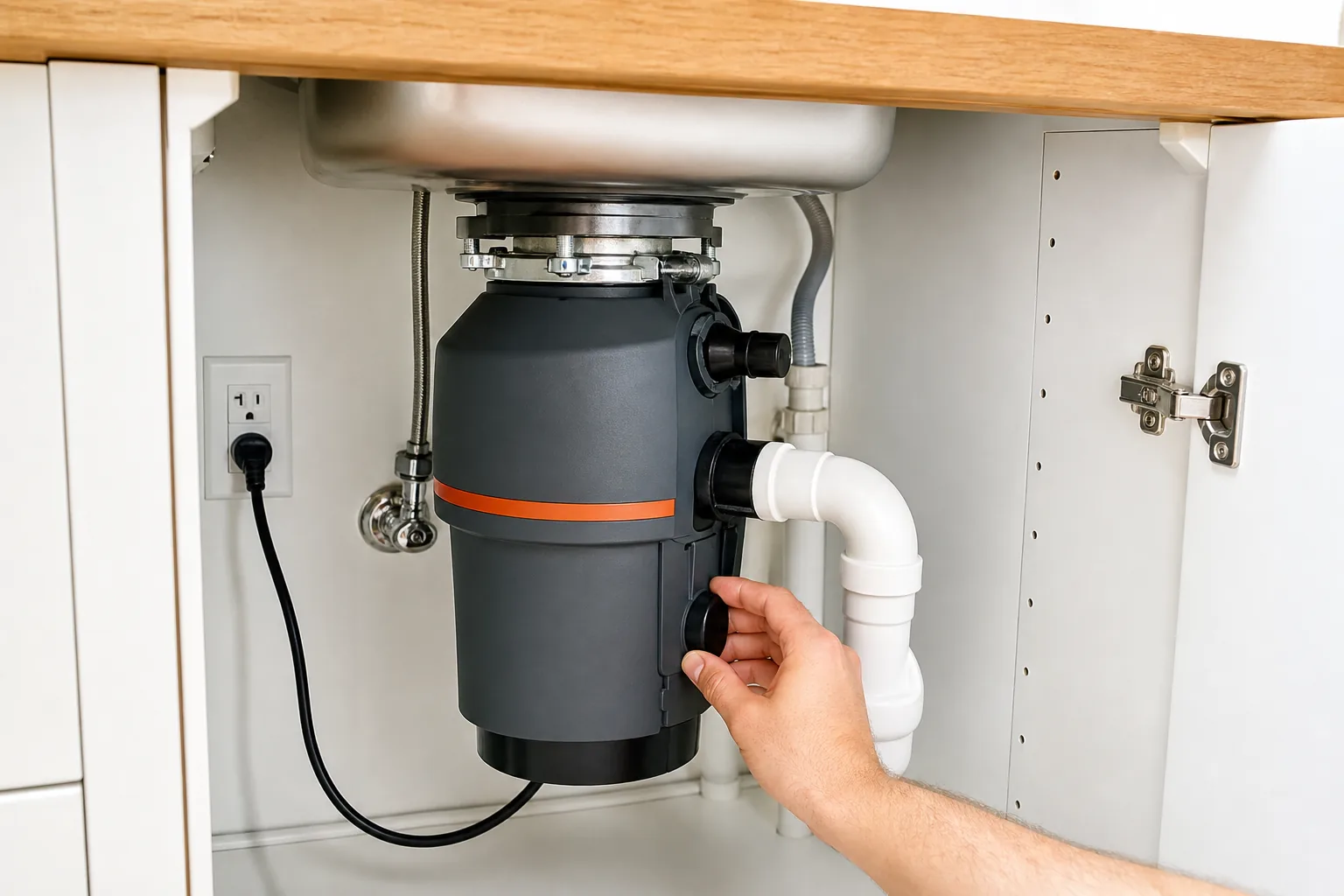
Step 1: Turn Off Power and Prepare the Sink
The first thing to do is cut the electricity. Unplug the unit from the outlet under the sink or flip the breaker labeled “disposal” in your home’s panel. This eliminates any chance of the motor turning while you work.
Next, clear the sink basin. Remove any dishes and wipe down the countertop so you have space to move tools. Keep a bucket of cold water nearby; you’ll need it for rinsing later.
Many modern disposals include a built‑in safety switch that locks the motor when the unit is unplugged. Checking that the switch clicks gives you confidence the unit is truly dead.
Once the power is off, place a towel over the drain opening. This prevents anything from falling in while you work.
Key Takeaway:Always verify the disposal is dead before you touch anything inside.
Step 2: Remove Visible Debris Without Reaching Into the Disposal
Grab a pair of tongs or needle‑nose pliers. Use them to pull out any large pieces you can see, like fruit pits or fibrous vegetable stalks. Never use your fingers; even a dead motor can snap back if it somehow starts.
If you spot a buildup of grease or food particles near the opening, dip a paper towel in warm, soapy water and wipe it away. This simple action removes the bulk of the mess before you get to the deeper cleaning.
For extra safety, keep a flashlight handy. A beam of light lets you see into the chamber without putting a hand inside.
Homeowners in Orange County, from Irvine to Laguna Beach, often find that regular debris removal prevents costly jams. If you need a professional look‑over, Sewer Repair & Drain Service - Primewest Plumbing can inspect the unit and the drain line.
Step 3: Scrub the Splash Guard and Grinding Chamber
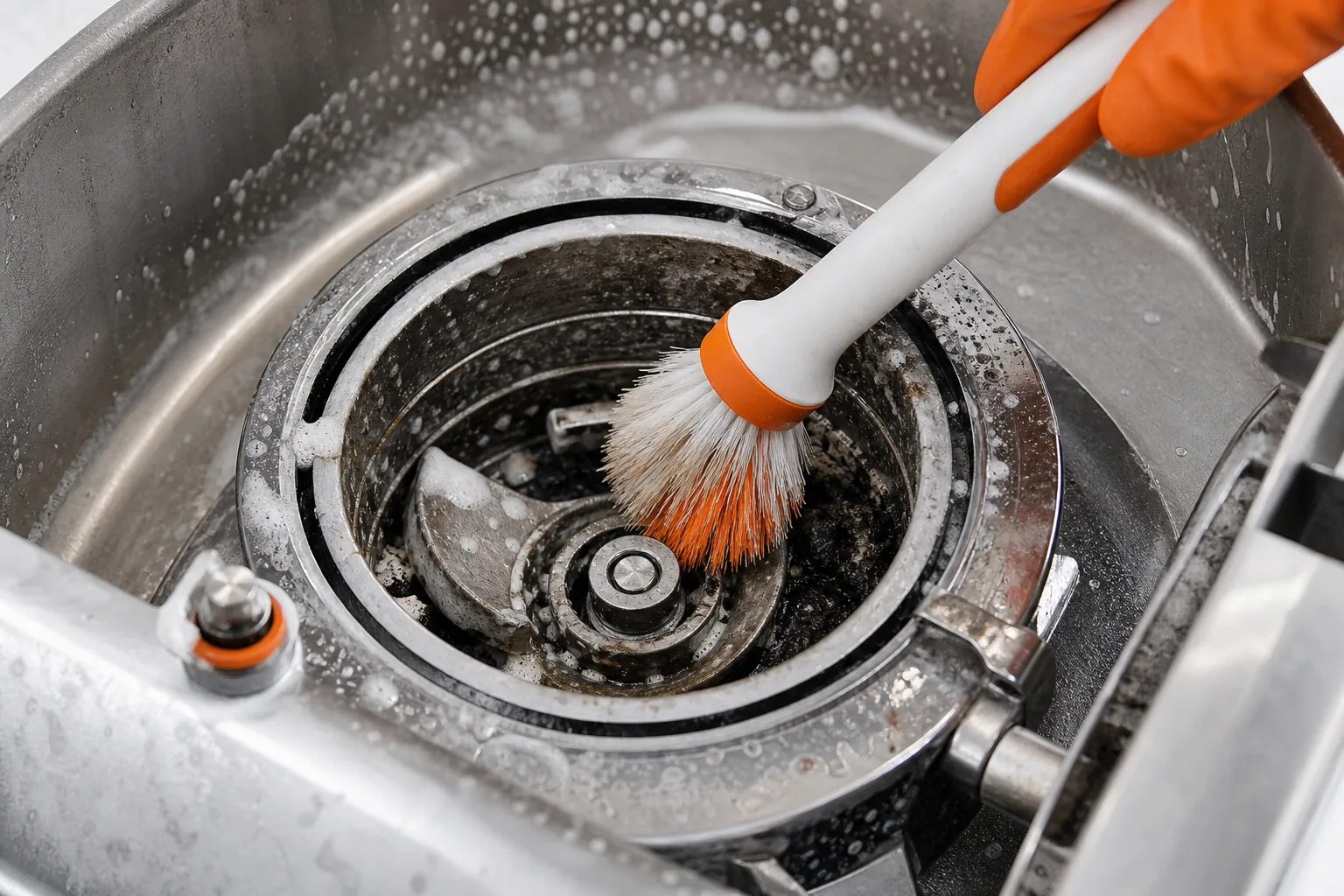
The rubber splash guard sits right under the disposal’s opening. Lift it out if your model allows, then scrub both sides with an old toothbrush dipped in dish soap.
For the grinding chamber, a long‑handled brush works best. Insert the brush through the opening and rotate it to reach the blades. The motion loosens food particles that cling to the metal.
Many DIYers swear by ice cubes for a quick scouring . Drop a handful of ice while the unit runs on cold water; the ice chips act like tiny pebbles that scrape away buildup.
Finish by wiping the splash guard dry and snapping it back into place.
Step 4: Flush, Deodorize, and Check for Leaks
Turn the power back on and run cold water at full flow. Let the water run for at least 30 seconds while the disposal grinds. This flushes loose debris out of the pipes.
Now add a natural deodorizer. Toss a handful of ice cubes followed by a few citrus peels (lemon or orange) into the disposal. The ice scours, and the citrus oils leave a fresh scent.
If you prefer a fizzing action, pour half a cup of baking soda into the chamber, then follow with a cup of white vinegar. Let it bubble for ten minutes, then run hot water to rinse.
After the cleaning cycle, inspect the area under the sink for any water pooling. A small drip may mean a loose connection that needs tightening.
When in doubt, Hydro Jetting Orange County | Drain & Sewer Cleaning offers a thorough line clean that removes stubborn buildup from the pipe walls.
Step 5: Know When to Stop Cleaning and Call a Plumber
If the disposal hums but doesn’t grind, or if it makes grinding noises but the water won’t drain, the problem is likely a jammed flywheel or a motor issue.
At this point, unplug the unit again. Try inserting a quarter‑inch Allen wrench into the hex socket at the bottom of the disposal and turn it back‑and‑forth. If the flywheel still won’t move, the jam is deeper than a simple blockage.
Also watch for leaks that appear after flushing. Persistent leaks often signal a cracked seal or a loose pipe connection, both of which need professional repair.
When any of these signs show up, it’s time to call a licensed plumber. Primewest Plumbing can diagnose motor failures, replace seals, or install a new disposal that meets local code.
Getting help early prevents water damage and saves you from a costly emergency later.
FAQ
Can I use bleach to clean my garbage disposal?
No. Bleach can splash out of the unit and damage surrounding surfaces, plus it doesn’t break down food residue effectively.
How often should I clean my garbage disposal?
Cleaning once a month keeps odors at bay and prevents buildup that leads to clogs.
Is it safe to use a plunger on a jammed disposal?
No. A plunger can push debris deeper into the drain and may damage the unit’s motor.
What household items can I use for deodorizing?
Ice cubes and citrus peels work well, and a mix of baking soda and vinegar adds a fizzing clean that neutralizes smells.
When should I replace my garbage disposal instead of repairing it?
If the motor hums but the blades won’t turn, or if the unit is over 12 years old and shows frequent jams, replacement is usually more cost‑effective.
How do I know if I need a professional?
Call a plumber if you see water leaking, hear unusual noises, or can’t free a jam with an Allen wrench.
Conclusion
Follow these five steps to clean your garbage disposal safely and keep your kitchen smelling fresh. If the unit still won’t work right, reach out to Primewest Plumbing for a quick, reliable fix.
Pro Tip:Use a brush with stiff nylon bristles, they clean without scratching the stainless steel.


Comments