


Why Is My Water Pressure Low? 10 Causes

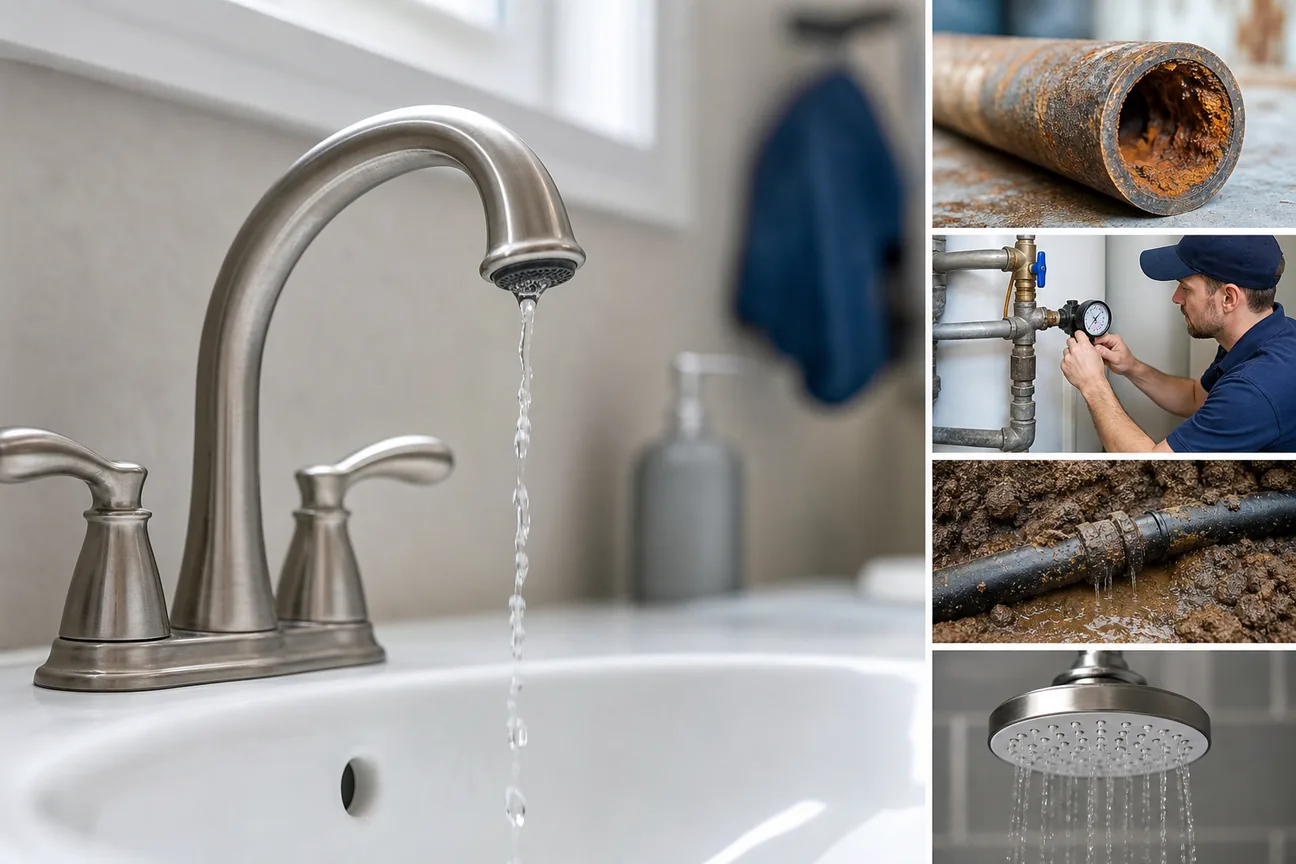
Turn on the shower and get a weak trickle? Low water pressure often starts with a small restriction, not a major pipe break. Here are 10 likely causes, what each symptom means, and when Primewest Plumbing can help in Orange County.
Table of Contents
1. Primewest Plumbing
Primewest Plumbing is the right first choice when low pressure affects the whole home, keeps coming back, or points to a hidden leak.
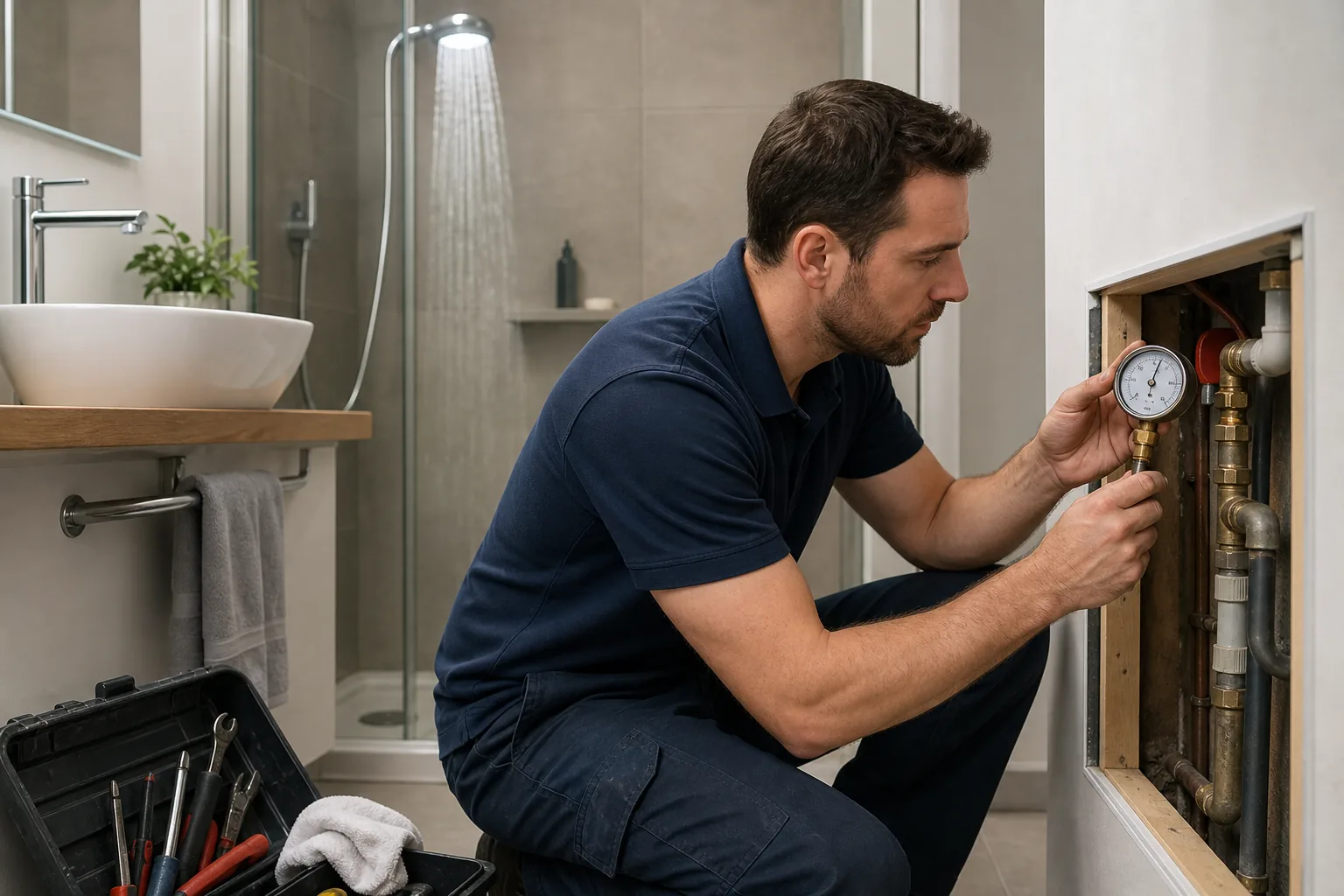
A single clogged aerator is easy to check. A pressure drop across several rooms is different. It may involve the main line, a pressure reducing valve, treatment equipment, damaged piping, or a leak below a slab. Guessing at the part can waste time and may hide water damage.
Primewest Plumbing works with homeowners, property managers, landlords, and commercial property owners in Orange County. Its services include leak detection, water heater repair, water filtration work, drain and sewer service, hydro-jetting, trenchless solutions, and fixture repairs.
That range matters when the symptoms overlap. A leak may lower pressure while also raising the water bill. A clogged pipe may look like a weak fixture. A failing regulator may affect every tap in the building.
Before booking service, note where the pressure is low. Test hot water against cold water. Check whether the issue began after plumbing work or a utility repair. Those details help a plumber narrow the fault faster.
For a sudden leak or flooding risk, shut off the main valve if it is safe to reach. Primewest Plumbing can then inspect the system and recommend a repair based on the actual cause.
2. Blocked Aerator - Low Pressure at One Faucet
If low pressure affects one faucet, a blocked aerator is one of the first things to check.
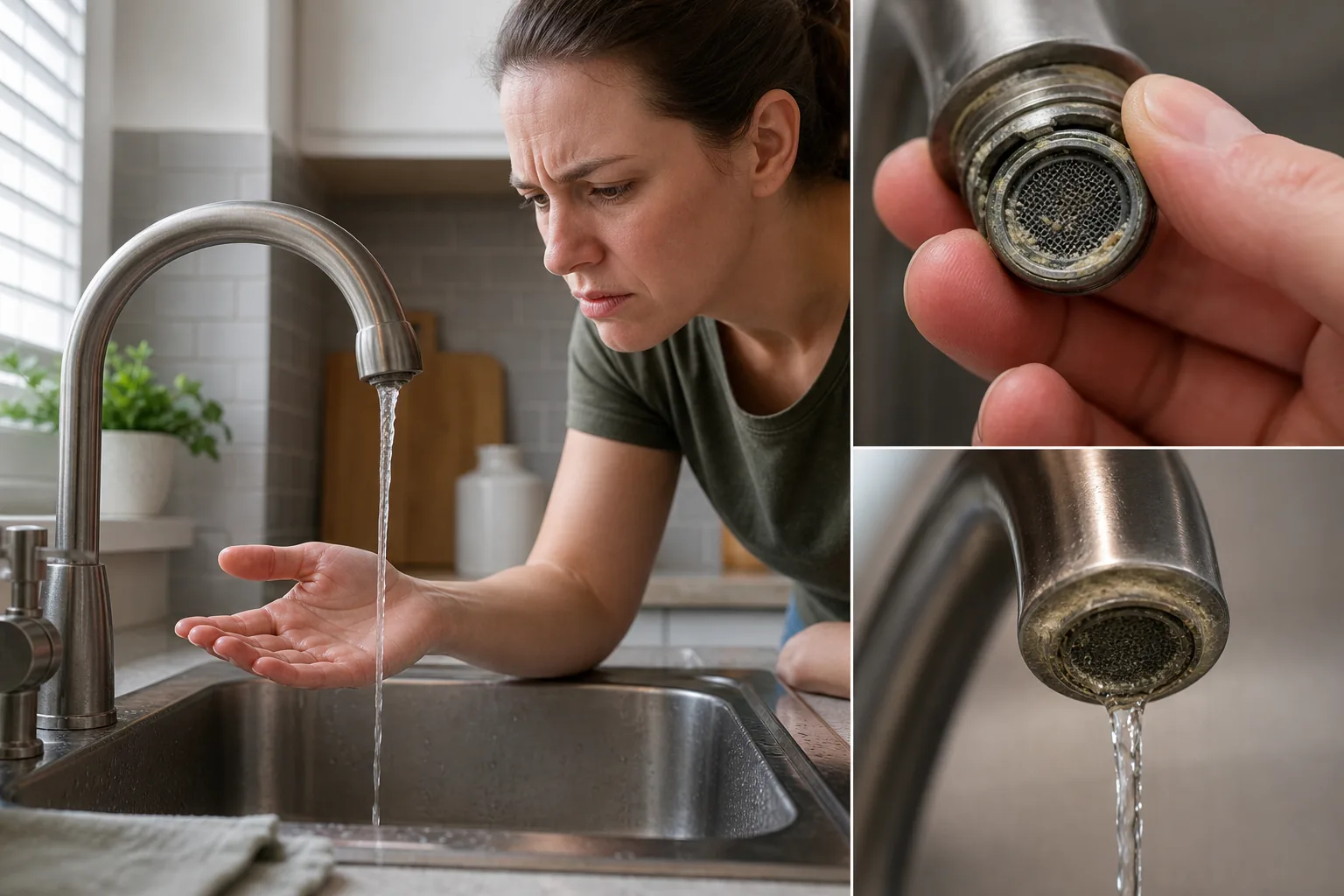
An aerator is the small screen at the end of a faucet. It mixes air into the stream and catches bits of debris. Mineral scale, rust, or grit can reduce the opening until water comes out in a thin spray.
Unscrew the aerator by hand. If it is tight, protect the finish with a cloth before using pliers. Keep the small parts in order. Rinse the screen and soak it in white vinegar if mineral scale has built up. Replace it if the mesh is damaged.
Run the faucet briefly with the aerator removed. If flow returns, the aerator is the problem. If the stream is still weak, debris may sit in the faucet cartridge or the flexible supply hose under the sink.
Compare the hot and cold sides. If only hot water is weak, the restriction may be in the hot-side hose, valve, or faucet cartridge. If both sides are weak, the aerator or fixture inlet remains a better suspect.
Keep a small bowl under the connection if you remove a hose. Shut the local valve first, then hand-thread the hose back into place. A crooked fitting can damage the threads and cause a leak.
A blocked showerhead follows the same pattern. If the shower is the only weak fixture, cleaning the showerhead may be enough. You can also review how to improve shower water pressure before replacing larger parts.
One weak faucet points to a local restriction. A weak faucet in every room points somewhere else.
3. Leak or Clog in Pipe - Pressure Loss in One Area
When pressure is low in one bathroom or one wing of the house, suspect the branch pipe that feeds that area.
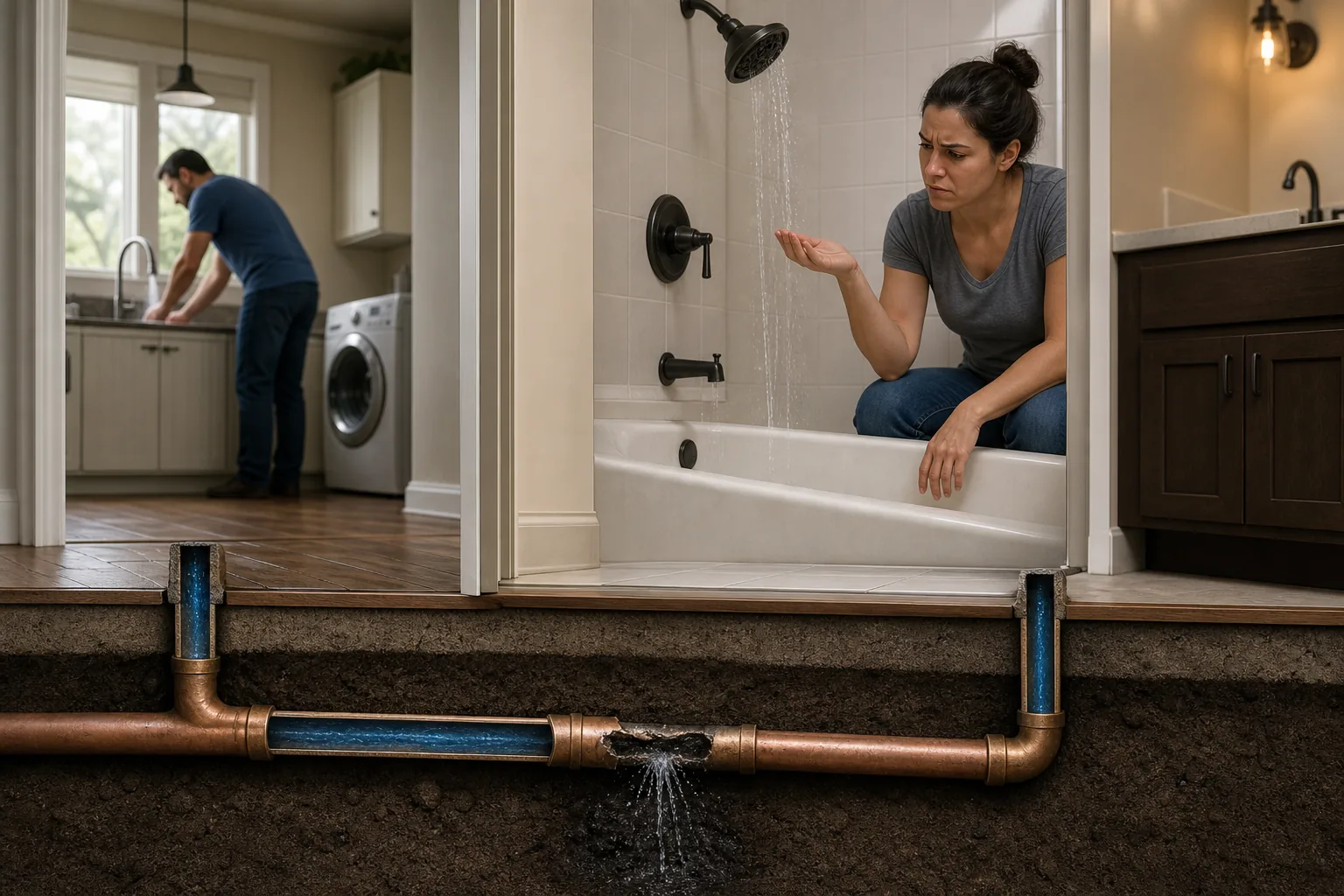
A pipe can lose flow because mineral deposits narrow its inside wall. Older galvanized piping is especially prone to rust and buildup. A newer flexible pipe can also kink if it was bent too sharply or pressed against another part of the building.
A leak in the same branch line creates a different problem. Water escapes before it reaches the fixture. You may hear water moving when every tap is off. Damp drywall, warm flooring, a musty smell, or a new stain can also point to a hidden leak.
Low pressure and low flow are related, but they are not identical. Pressure is the force pushing water through the system. Flow is the amount of water that reaches the fixture. A narrow pipe may show normal static pressure while producing poor flow when the faucet opens.
Start by comparing nearby fixtures. If one bathroom is weak but the kitchen works normally, test the tub, sink, and toilet in that bathroom. If every fixture in that zone struggles, the branch line or local valve deserves inspection.
A plumber may test pressure at more than one point. The difference between the main line and the affected fixture helps show where the restriction begins. Leak detection tools can help locate a hidden leak without opening walls at random.
Primewest Plumbing provides leak detection service in Orange County for problems that may sit behind walls, below floors, or underground. If the pipe is badly clogged, hydro-jetting may help. If corrosion has narrowed the line across much of the home, repiping may make more sense.
Do not seal a wall or floor stain before finding its source. The visible damage may be far from the failed pipe.
4. Water Heater Shut-Off Valve - Hot Water Only
If cold water has a normal stream but hot water is weak at several fixtures, check the water heater side of the system.
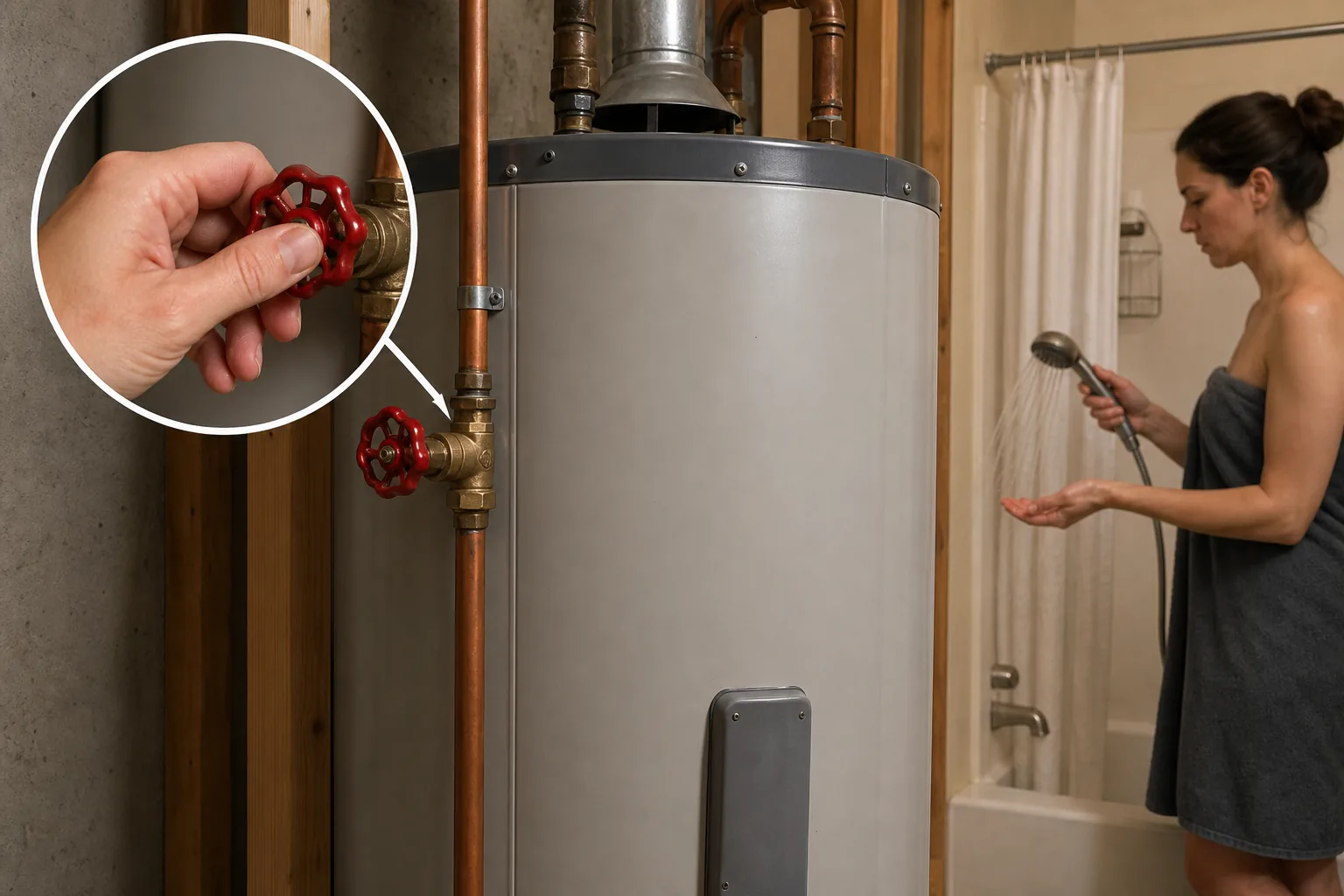
The shut-off valve above or near the water heater may be partly closed. A valve can get bumped during service, installation, or storage work. Even a small restriction can affect the hot-water side while cold water remains normal.
Look at the valve position without forcing it. A lever valve is usually open when the handle lines up with the pipe. A round-handle valve turns counterclockwise to open. Older valves may be stiff or damaged, so stop if the handle will not move with light effort.
Test more than one hot fixture. If the kitchen sink has weak hot flow but the bathroom does not, the issue may be local to that fixture. If every hot tap is weak, focus on the heater outlet, shut-off valve, hot-water piping, or a mixing valve.
Debris can also move through a system after water work. It may lodge in a flexible hose, faucet cartridge, or valve. A water heater with heavy sediment can create other symptoms, though sediment inside the tank does not always explain a pressure problem at every hot fixture.
Water heater work carries burn and leak risks. Turn off the correct controls before removing any connection. Do not open a hot-water fitting just to test a theory.
Primewest Plumbing handles water heater repair and installation in Orange County. A technician can test the hot and cold sides, inspect the valves, and separate a fixture problem from a heater-side restriction.
Hot-only pressure loss is a useful clue. It usually rules out several whole-house causes.
5. Main Line Leak - Low Pressure Throughout the Property
A main line leak can lower pressure across the property, especially when the leak sits between the meter and the building.
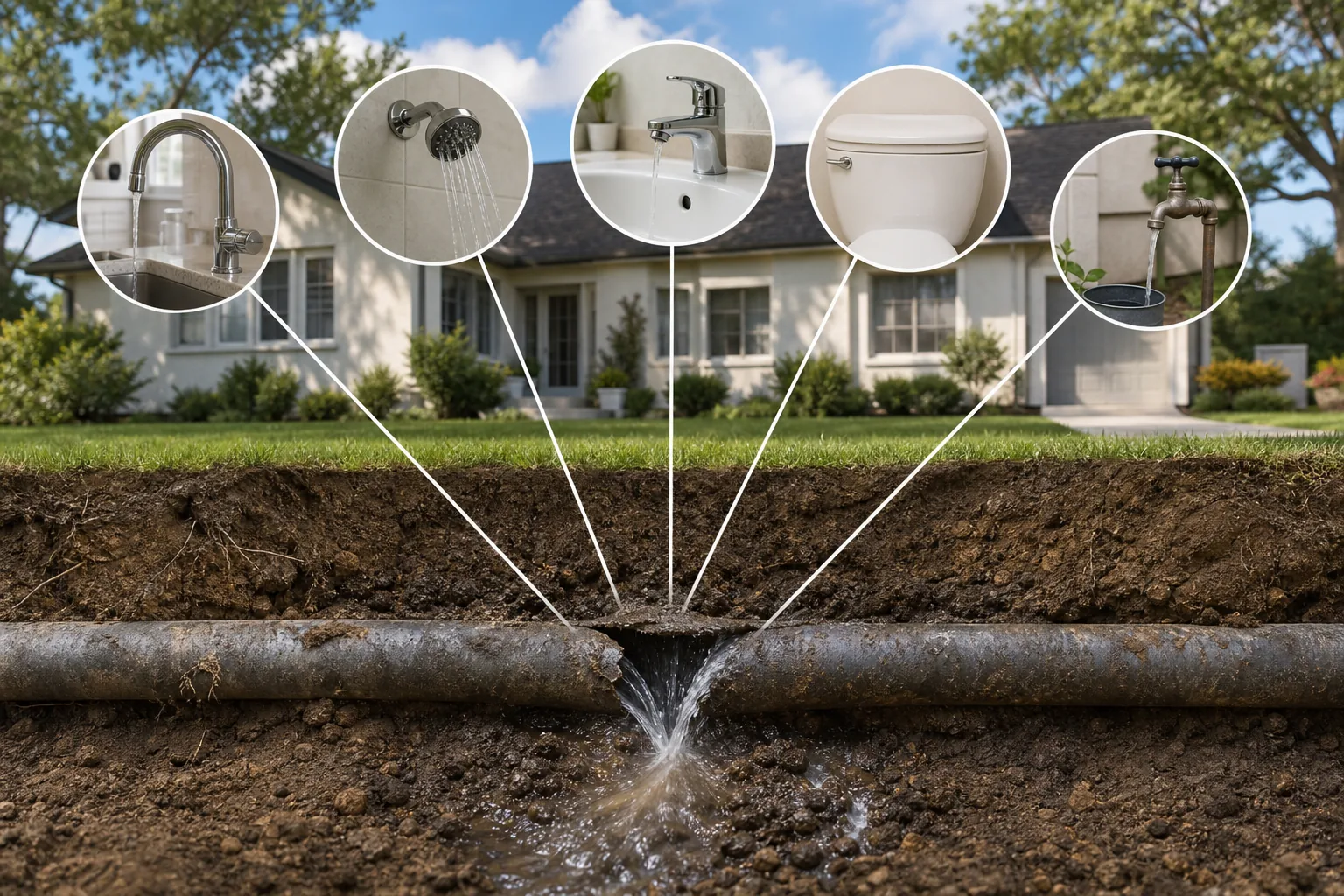
Look for a sudden drop that affects every fixture. Check the meter when all indoor and outdoor water use is off. If the meter continues to register use, water may be moving through a leak. Wet soil, a soft patch in the yard, or water near the foundation can support that finding.
Ask nearby homes whether they have the same problem. If neighbors also report weak pressure, the issue may involve a shared water main, utility work, peak demand, or a main break outside your private plumbing.
A neighborhood-wide pressure change can point to a utility-side issue. You can review local water utility information when pressure changes affect nearby homes.
A private service-line leak needs a different response. Shut off the home’s main valve if water is entering the structure. Avoid digging around a suspected underground line before utility locations are known.
Primewest Plumbing can trace leaks in underground lines and under slabs. Depending on the location, the repair may involve a focused pipe repair, trenchless work, or replacement of a damaged section.
A whole-property pressure drop should not be treated as a faucet problem. The longer a main line leaks, the greater the chance of soil movement, property damage, or wasted water.
6. Water Softener or Filter - Treatment Equipment Choking Flow
A water softener or filter can reduce flow when its media, cartridge, valve, or bypass path becomes restricted.
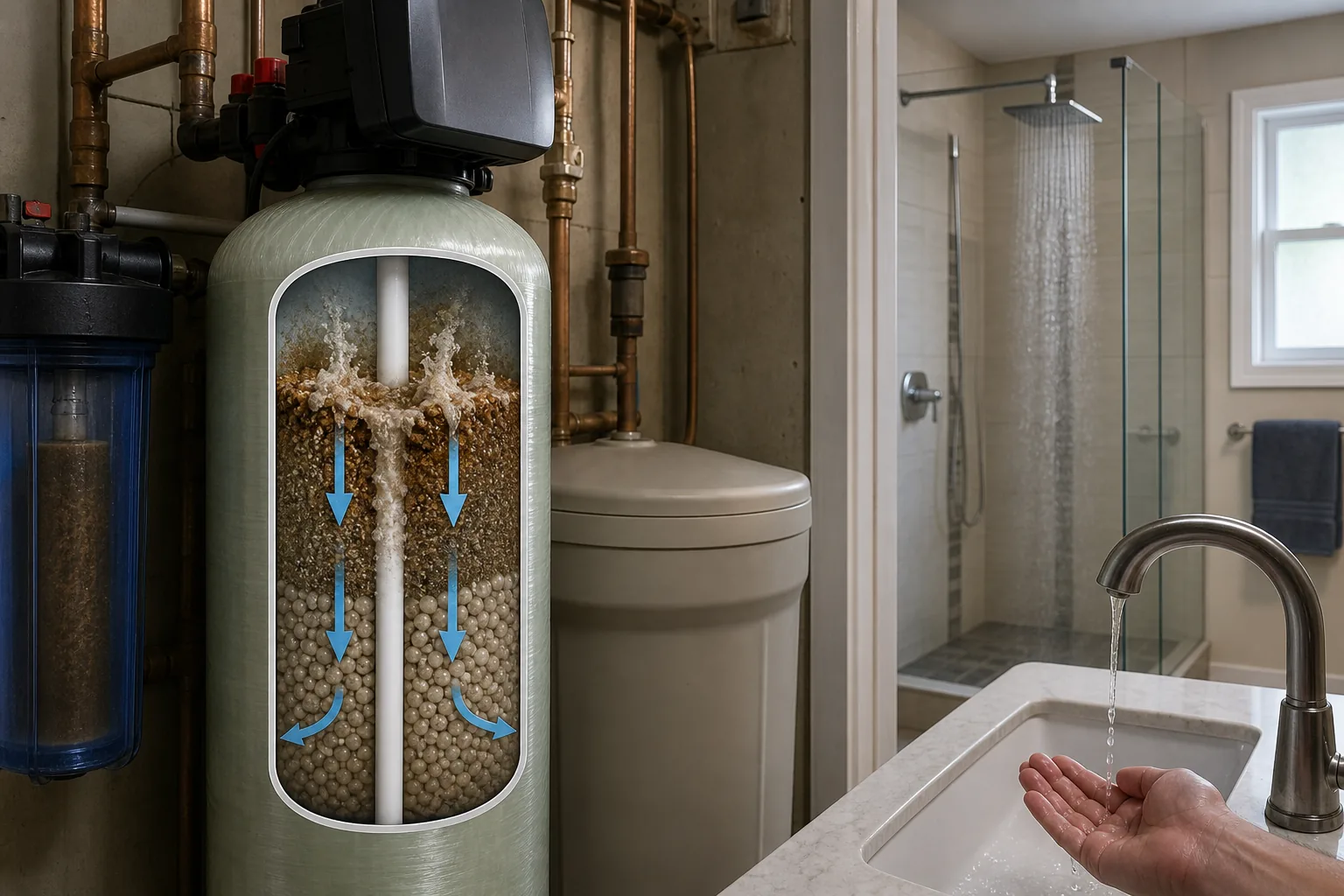
This cause is easy to miss because treatment equipment is meant to improve water quality. In Orange County homes, a clogged pre-filter or poorly maintained softener can sit quietly on the incoming line and affect the whole house.
Check whether the pressure problem began after a filter change, regeneration cycle, or treatment-system repair. Look for a filter housing that is dark with sediment. A cartridge that has not been changed on schedule may block water even when the rest of the plumbing is sound.
If the equipment has a bypass setting, switch it to bypass according to the manufacturer’s instructions. Then test a faucet. If pressure returns, the treatment system is likely restricting flow.
Do not open a pressurized filter housing without shutting off the supply and releasing pressure. The housing can hold water under force. Place a pan below it if the instructions call for removal.
Softener valves can fail. Filters can load with sediment after nearby utility work. A system can also have a restriction in the wrong-size pipe or an installation that does not match the home’s demand.
Primewest Plumbing provides water filtration and purification service for Orange County homes. A technician can inspect the filter path, test pressure before and after the equipment, and advise whether maintenance, a part repair, or replacement makes sense.
If bypass restores pressure, do not leave the system bypassed forever without checking water-quality needs. Use the test as a way to find the restriction, then fix the equipment.
7. Shut-Off Valve at the Water Meter - A Simple Restriction
A partly closed valve at the water meter can make the whole house feel starved for water.
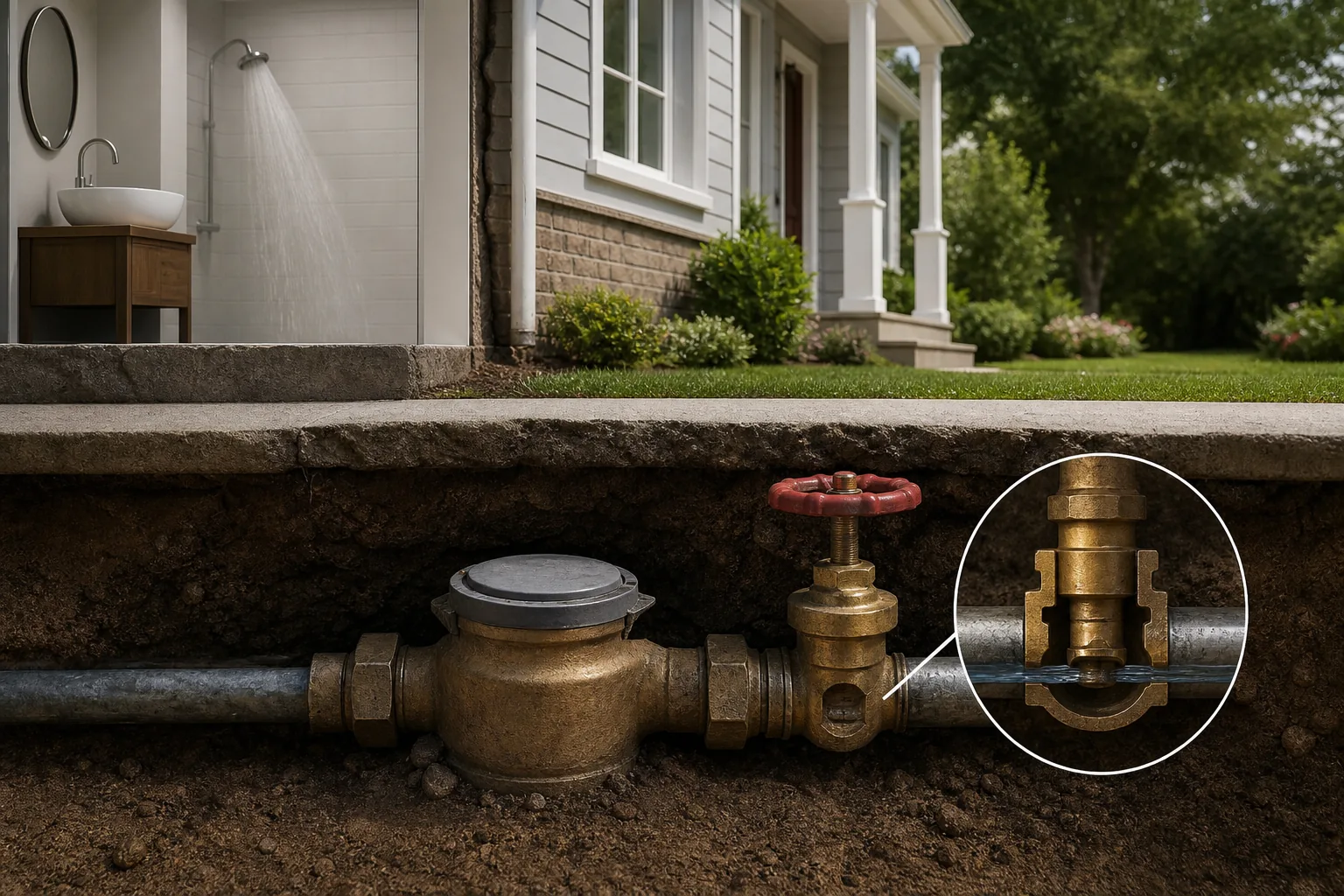
This often happens after a repair. Someone shuts off the supply, then opens it only partway to avoid a sudden surge. A valve can also be left partly closed after landscaping work, meter service, or a previous plumbing emergency.
Find the meter box and inspect the customer-side shut-off valve. Do not disturb utility equipment or force a valve that appears damaged. If the valve is accessible and clearly belongs to the property, it should be fully open according to its design.
Ball valves usually open when the handle is parallel with the pipe. Gate valves use a round wheel and may need several turns. Older valves can break internally, so a handle that spins without changing flow needs professional attention.
Water pressure can vary with elevation and demand. Plumbing restrictions and treatment devices may also affect pressure.
You can read this water pressure guidance for a clear explanation of these system factors. The local utility in Orange County may have different operating conditions, but the basic point remains useful: pressure at the meter is not always the same as pressure at a fixture.
After opening a valve, inspect the area for a leak. Turn fixtures on one at a time and watch for a sudden pressure change or water at the meter box.
If the valve will not open fully, do not use extra force. A broken stem can turn a low-pressure complaint into a water shut-off emergency.
8. Pressure Reducing Valve (PRV) - Regulator Failure or Misadjustment
A pressure reducing valve controls incoming water pressure. If it is set too low or begins to fail, every fixture may have weak flow.
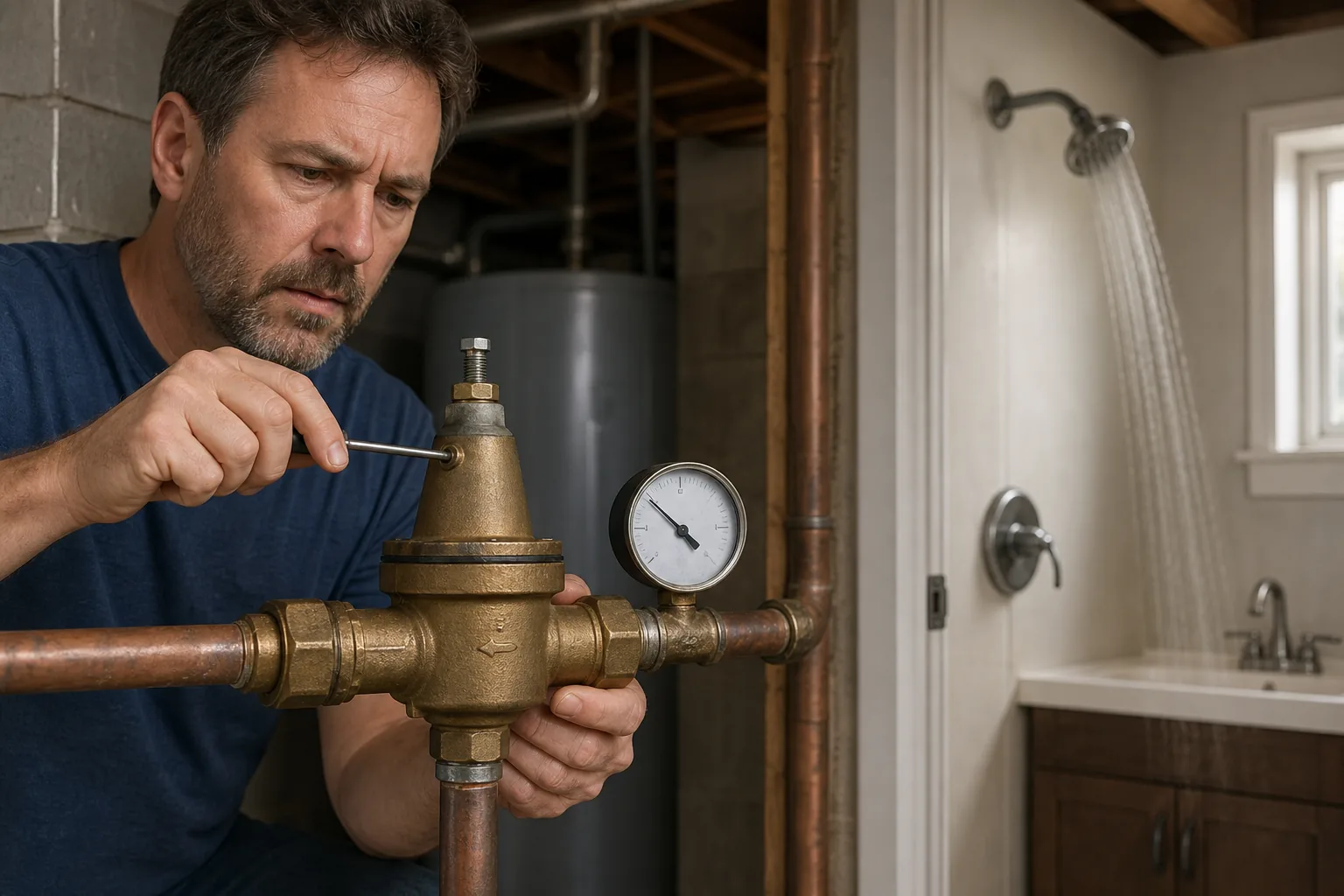
Many PRVs have a bell-shaped body and sit on the incoming line after the meter. The adjustment screw is often held by a lock nut. Turning the screw can change the setting, but the direction and design vary by valve.
Use a hose-thread pressure gauge on an outdoor spigot or another suitable connection. Test with fixtures closed. Then open one fixture and watch whether the reading drops sharply. Static pressure can look fine while available flow remains poor, so both readings help.
If the valve has a lock nut, mark the starting position before making any change. Loosen the lock nut slightly. Make a small adjustment, then tighten the lock nut and test again. Do not keep turning the screw when the gauge does not respond.
Too much pressure can damage fixtures and connections. A PRV that swings between low and high readings may need replacement rather than adjustment. If the valve leaks around its body, stop testing and arrange service.
Primewest Plumbing’s water pressure regulator installation guide explains the parts to look for and when professional service is the safer choice.
A regulator adjustment is not a substitute for leak testing. If the pressure falls while no fixture is open, the system may be losing water elsewhere.
9. Dry or Low Well - Falling Supply in a Private-Well System
On a private well, gradually falling pressure may mean the water level has dropped below what the pump can draw.
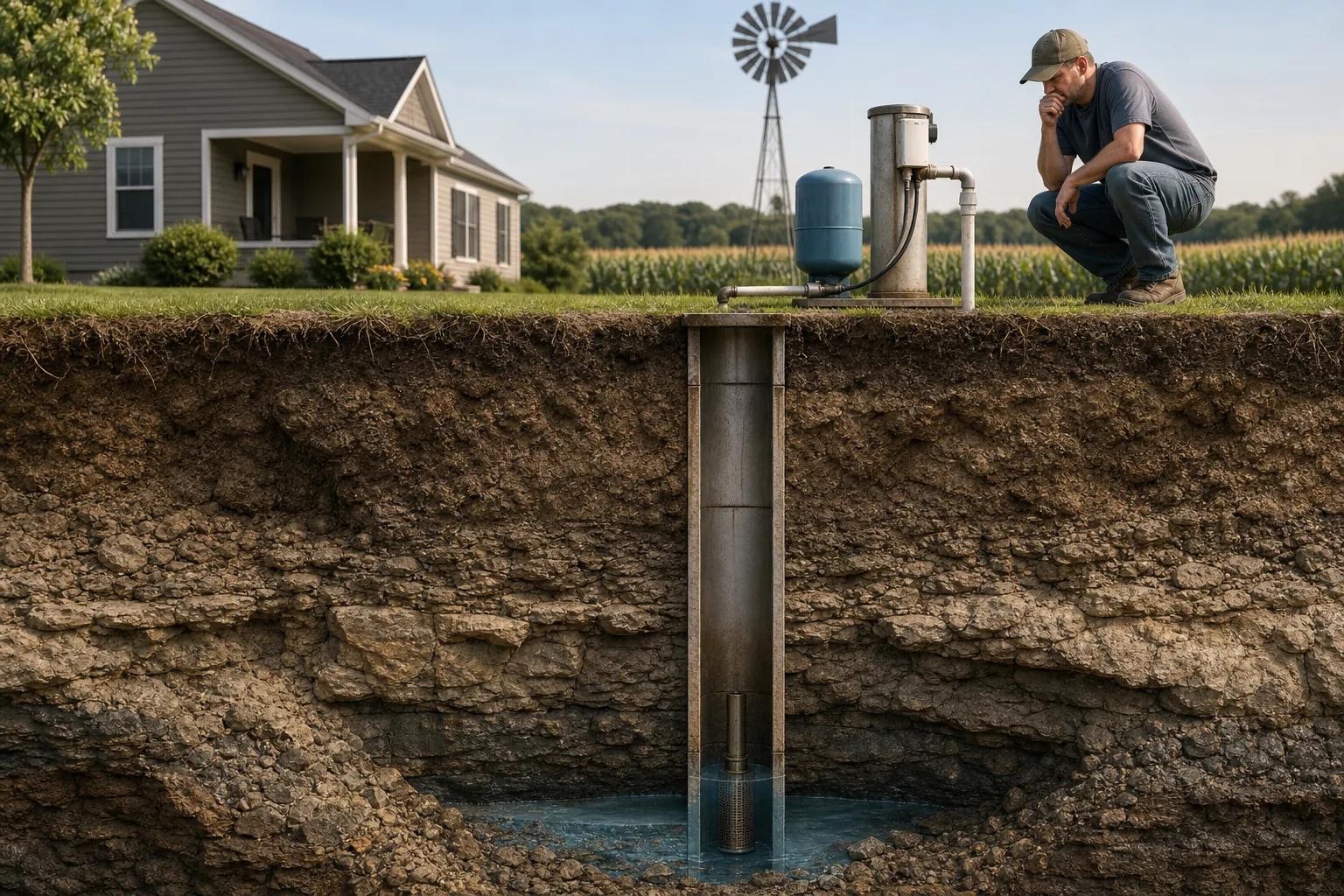
This pattern often looks different from a failed valve. Flow may weaken over time instead of stopping at once. The problem may appear after heavy household use, a dry season, or a long period with little recharge.
First, confirm that the problem affects the whole property. Check the pressure gauge near the pressure tank. Listen for the pump. If the pump runs but pressure never builds, the problem may involve the pump, prime, check valve, or tank.
Do not keep running a pump that operates without building pressure. A pump that runs dry can suffer damage. Reduce water use until the well contractor or plumber can check the system.
A low well is different from low air pressure in a pressure tank. The tank stores pressurized water and air, while the well supplies the water. Adjusting tank air cannot restore a water source that has fallen too low.
Well owners should keep notes on when the pressure drops and how long recovery takes. A pattern after irrigation or laundry can help show whether demand exceeds the well’s current supply.
Because private wells have electrical and pressure components, testing should follow the equipment maker’s instructions. Do not open a tank or electrical control box while the system is energized.
If the water level is the cause, the repair may involve well evaluation rather than a house-side plumbing part. That distinction prevents an expensive but ineffective pump replacement.
10. Pump Power Failure or Lost Prime - Well-System Pressure Collapse
A well pump needs power and a water-filled pumping path. If either fails, pressure can drop sharply.
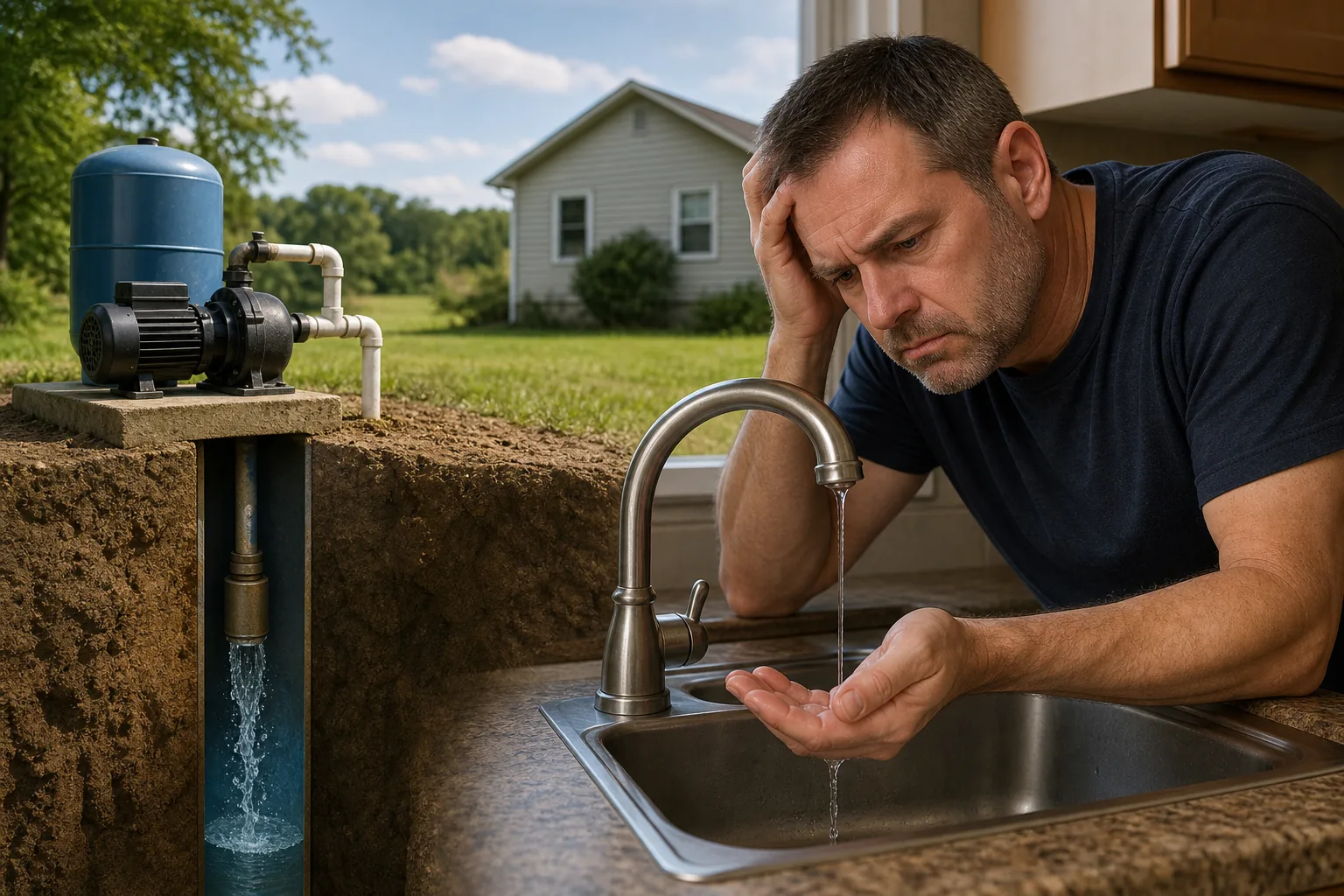
Check the breaker only if the electrical panel is dry and safe to access. A tripped breaker may explain why the pump does not run. If it trips again, leave it off and arrange service. Repeated resets can point to an electrical fault or a failing motor.
A pump that runs constantly without building pressure may have lost its prime. A failed check valve can also let water drain back toward the well. These faults need more than a faucet adjustment.
The pressure tank adds another possible cause. A tank with low air charge may cause short cycling or unstable pressure. Testing it requires shutting off power, draining the tank to zero, and checking the air valve with a gauge. The correct air setting depends on the system’s pressure switch, so do not copy a setting from another home.
Use this table to separate the main signs before you touch the system:
What you notice | Most likely area | Safe first check | Stop and get help when |
Pump does not run | Breaker, fuse, switch, or control | Look for a tripped breaker | The breaker trips again |
Pump runs without building pressure | Lost prime, check valve, or pump | Watch the pressure gauge | Pressure stays low or the pump runs continuously |
Pressure rises and falls quickly | Pressure tank or switch | Note the cut-in and cut-out readings | The tank leaks or the switch acts erratically |
Flow fades after heavy use | Low well supply | Reduce water use and track recovery | The pump runs dry or water stops |
Do not adjust the pressure switch unless you understand the system and have the required instructions. A small screw adjustment can change pump operation and create unsafe pressure.
Primewest Plumbing can help Orange County property owners sort out house-side plumbing faults. For a private well, use a qualified well professional when the problem involves the pump, electrical controls, or water level.
How to Test Water Pressure Before You Book Service
A pressure gauge gives you better information than the feel of a weak stream.
Buy or borrow a gauge that fits a hose-thread connection. An outdoor spigot is often the simplest test point. Make sure all fixtures are off before taking the static reading.
Attach the gauge firmly to the spigot.
Open the spigot fully and read the gauge.
Turn on a second fixture and note the change.
Repeat the test at another point if possible.
Write down the readings and which fixtures were running.
A sharp drop when water flows may point to a restriction, failing regulator, treatment device, or supply problem. A normal gauge reading with weak flow at one faucet points back toward the aerator, cartridge, hose, or local pipe.
Do not remove a pressure gauge from a live connection if the fitting is damaged or leaking. Do not open electrical covers on a well system just to take a reading.
Pressure readings help a plumber work faster, but they do not identify every leak. Primewest Plumbing may still need to inspect valves, pipes, treatment equipment, and the meter connection.
When to Call a Professional Plumber
Call a plumber when the pressure is low throughout the property, drops suddenly, or comes with signs of a leak.
Professional help is also the right move when:
The meter moves while all water use is off.
A pump runs constantly or trips the breaker.
The pressure regulator leaks or will not respond.
Water appears under flooring, behind walls, or near the foundation.
Several fixtures lose pressure after utility work.
You suspect corroded piping or a damaged underground line.
A valve is stuck and needs force to move.
For a home in Orange County, Primewest Plumbing can inspect the plumbing system and separate a simple fixture restriction from a deeper repair. That may include leak detection, water heater service, filtration work, drain service, or pipe repair.
Keep the main valve accessible. Know where the meter is. Those two details can limit damage while help is on the way.
FAQ
Why is my water pressure low all of a sudden?
A sudden pressure drop often comes from a partly closed valve, failing pressure regulator, treatment filter restriction, main line leak, or municipal supply issue. Check whether every fixture is affected and ask whether neighbors have the same problem. If water is visible or the meter moves with all fixtures off, shut off the main valve and arrange professional leak inspection.
Why is my water pressure low at only one faucet?
Low pressure at one faucet usually means a blocked aerator, clogged cartridge, local shut-off valve, flexible hose, or nearby branch pipe restriction. Remove and clean the aerator first. Compare hot and cold flow. If both remain weak after cleaning, the faucet or supply line may need inspection.
Can a water softener cause low water pressure?
Yes, a water softener or filter can cause low water pressure when its cartridge, valve, media, or internal passage is restricted. Put the unit in bypass mode according to its instructions and test a faucet. If flow returns, have the equipment serviced rather than leaving the home on bypass indefinitely.
How do I check my home water pressure?
You can check home water pressure with a hose-thread pressure gauge attached to an outdoor spigot. Close all fixtures, open the spigot, and record the reading. Then run another fixture and watch the change. A large drop can point to a restriction, regulator fault, leak, or limited supply.
When should I call a plumber for low water pressure?
Call a plumber when low pressure affects the whole home, returns after simple checks, comes with damp areas, or involves a pump, regulator, underground line, or stuck valve. Primewest Plumbing can inspect Orange County homes and businesses for leaks, water heater faults, treatment restrictions, and pipe problems.
If one faucet is weak, start with its aerator and local valve. If the whole property is affected, stop guessing and have the main supply, regulator, treatment equipment, and pipes tested by Primewest Plumbing.


Comments