


Benefits of Trenchless Pipe Repair: A Practical Guide
- Primewest Plumbing
- 3 days ago
- 8 min read

A damaged sewer line can make you picture a trench across your yard. Trenchless repair changes that plan. It uses small access points to repair or replace the line below ground, often with less mess and a shorter work window. The key is matching the method to the pipe, then checking the result before service resumes.
Table of Contents
Step 1: Confirm the Pipe Problem With Camera Inspection and Preparation
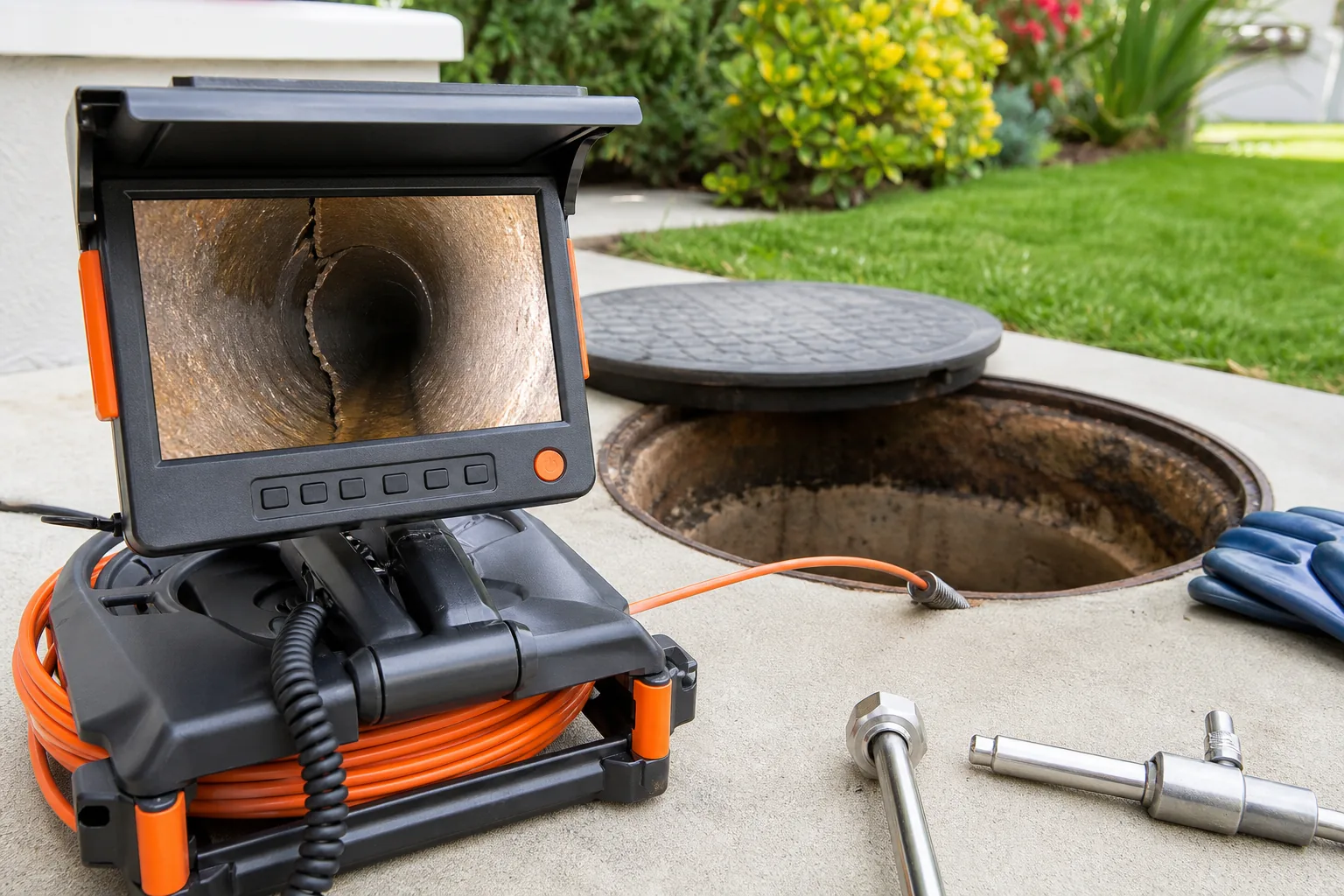
The first step in seeing the benefits of trenchless pipe repair is proving that the pipe can support a trenchless fix. Start with a camera inspection. The camera shows cracks, root entry, corrosion, open joints, offsets, bellies, and full collapse. It also helps locate the damaged section and estimate its depth.
Don't accept a trenchless quote based only on a drain symptom. Repeated backups can come from roots, grease, a broken joint, or a sag in the line. Each problem calls for a different response.
Next, clean the pipe. A rotary chain cleaner can cut through roots and hardened scale. Hydro-jetting then washes loose material from the pipe wall. This matters twice. The camera needs a clear view, and a liner needs a clean surface so it can sit tightly against the host pipe.
Ask for the inspection video or a written condition report. It should show the defect, the pipe's path, nearby connections, and the reason the contractor recommends lining, bursting, or excavation. Primewest Plumbing uses this inspection-first approach for trenchless work in Orange County, so the repair plan starts with what is actually underground.
Remote inspection tools also help owners act before a small defect becomes an emergency. They can find structural problems without opening the ground. Learn more about remote pipeline inspection .
By now you should have:
A clear view of the damaged pipe.
The defect's location and approximate depth.
A cleaned line that is ready for repair.
A reasoned answer on whether trenchless work fits.
Step 2: Choose the Trenchless Method That Fits the Pipe
The main benefits of trenchless pipe repair come from choosing the right process. Pipe lining renews the inside of an existing pipe. Pipe bursting replaces the old pipe through small access pits. Neither method is best for every line.
A pipe-lining approachfits a pipe that is still mostly intact. A flexible liner goes inside the old pipe. Air pressure expands it against the wall, then heat, steam, ambient conditions, or UV light cures it. The finished liner seals cracks and joints. It also blocks new root entry through those points.
UV curing can shorten the work window because a light train hardens the liner as it moves through the pipe. A bladder-supported lining process holds the liner against the wall while it cures. A targeted repair can target one damaged area instead of treating the whole run.
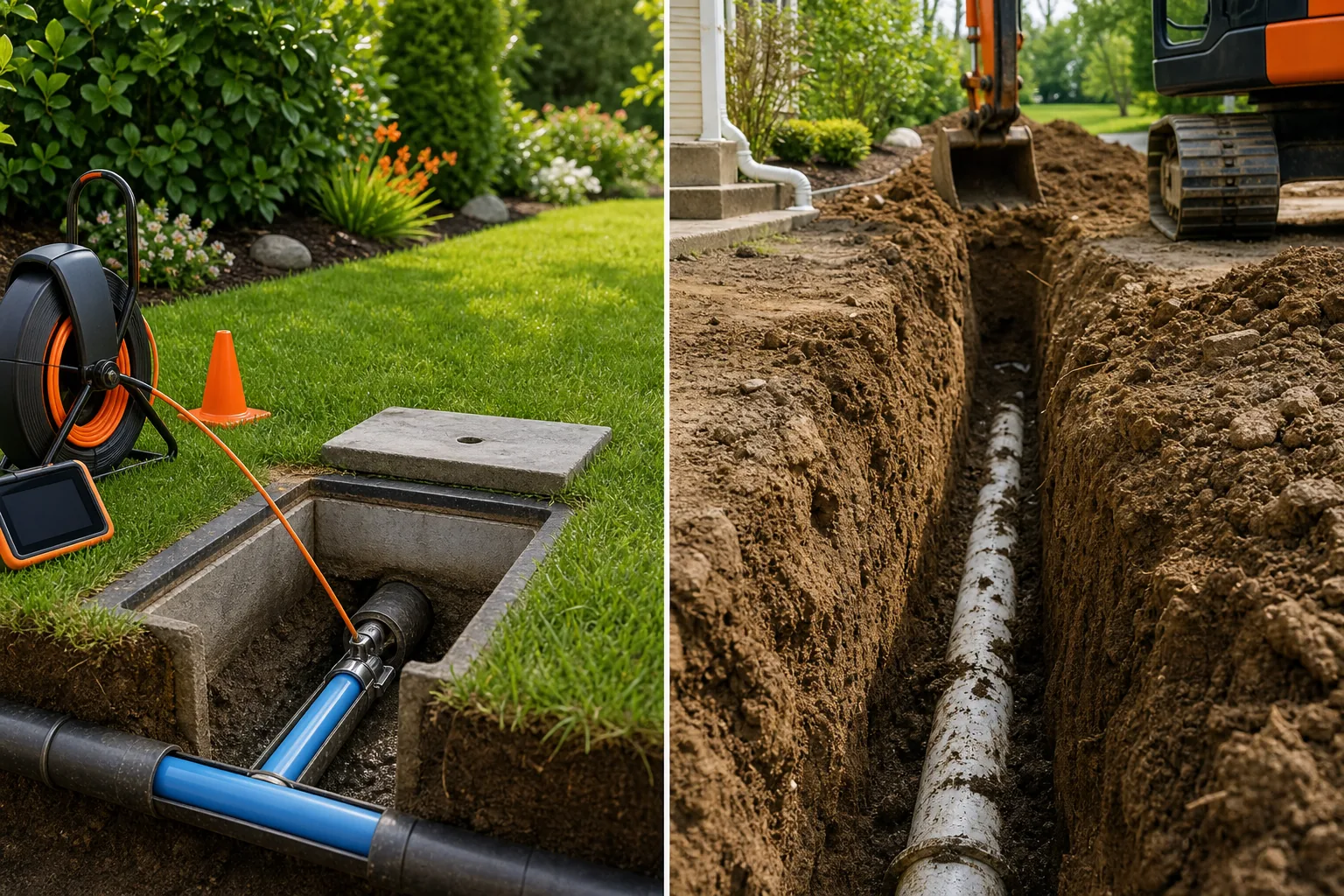
Pipe burstingfits a line that is collapsed, badly damaged, or too small for the property's needs. A bursting head breaks the old pipe apart while pulling a new pipe behind it. This process needs access pits at both ends, but it avoids the long trench used for a long excavation path. In some settings, it can also make room for a larger replacement pipe.
Pipe condition | Likely method | Main gain | Watch for |
Cracks, roots, corrosion, or leaking joints | Pipe lining | Seals the line from inside | The old pipe must still act as a host |
One small damaged section | Targeted repair | Limits work to the failed area | Access and exact defect location matter |
Collapsed or crushed pipe | Pipe bursting | Installs a new pipe | Needs entry and exit pits |
Severe sag or backfall | Excavation may be needed | Corrects the pipe grade | A liner won't remove standing water |
Some pipes still need traditional excavation. A fully collapsed line may leave no path for a liner or bursting head. A severe offset, deep belly, or shifted section can also require open repair. Primewest Plumbing can compare the available options after inspection rather than forcing one trenchless method onto every job.
For local planning, homeowners can review the details of trenchless pipe replacement in Orange County , including how small access points replace a long excavation path.
Step 3: Calculate the Usable Benefits of Trenchless Repair
Compare the full project cost, not only the pipe material. The benefits of trenchless pipe repair often come from avoiding excavation, backfill, concrete removal, hauling, and landscape restoration.
Research gathered for this topic reports cost reductions in the range of 30% to 50% compared with traditional dig-and-replace work. Actual results depend on pipe length, depth, access, soil, connections, permits, and the chosen method. A short line under a lawn may not produce the same savings as a sewer line beneath a driveway or house.
Time can change the value calculation too. A shorter project can reduce lost use of bathrooms or kitchens. For a rental property, it may also reduce vacancy time. For a business, it can limit the period when staff or customers must work around the repair.
Ask for an itemized estimate with separate lines for:
Inspection and locating.
Cleaning and root removal.
Access pits or cleanout work.
Liner, resin, curing, or replacement pipe.
Connection reopening and final testing.
Surface repair, permits, and disposal.
Then compare that total with an excavation estimate that includes restoration. A low excavation quote may leave out the cost of replacing concrete, irrigation, turf, plant beds, or hardscape.
There is an environmental benefit as well. A smaller work area means less soil movement and less damage to mature plants. Some applications have reported up to 54% less liner material and about 50% lower carbon dioxide impact for certain CIPP liners. More context for these material and emissions findings is available in this assessment .
For a homeowner in Laguna Niguel, the math may favor trenchless work when the line runs beneath a patio or mature tree. A property manager may value the shorter shutdown even when the initial quote is close. Use the location and disruption risk as part of the cost decision.
Key Takeaway:Compare total installed cost, lost property use, and restoration work, not just the price per foot.
Step 4: Check Durability, Lifespan, Warranty, and Repair Limitations
Long-term durability is one of the main benefits of trenchless pipe repair, but the result depends on the liner, pipe material, preparation, cure, and installation quality. Ask what material will be used and how it will be cured. Request the manufacturer's expected service life in writing.
Many trenchless systems are described as lasting for decades. Some research and industry material report service lives above 50 years for certain resin and liner applications. That is not a promise for every pipe. A warranty should match the exact product and installation method.
Read the warranty before work begins. Check these points:
Does it cover the material, workmanship, or both?
How long does coverage last?
Who handles a failure claim?
Are access work and branch connections included?
Does the warranty exclude movement, bad grade, misuse, or later construction?
What records must you keep?
Also ask how the crew will reopen lateral connections. A liner can seal the main run, but each branch connection must remain open. The final camera view should confirm that the pipe is clear and that connections were properly restored.
Know the limits. Lining cannot correct a pipe that has lost its shape, has a major belly, or is severely out of alignment. Bursting needs enough room for displaced pipe fragments and may be restricted by nearby utilities, roots, or other structures. Some access points are still needed, so “trenchless” does not mean “no digging at all.”
A good contractor will explain when excavation is safer or more complete. That honest answer protects you from paying for a method that only hides the underlying problem.
Step 5: Plan the Repair, Verify the Result, and Restore Service
Planning turns the benefits of trenchless pipe repair into a controlled job. Before work starts, confirm the work area, access points, pipe route, shutoff plan, branch connections, expected cure time, and final test.
For a residential sewer line, ask how long fixtures must remain out of service. For a commercial property, set the repair window around tenant use, food service, restroom demand, or production needs. Put the plan in writing so the owner, manager, and crew share the same expectations.
Keep these questions on the estimate:
What defect is being repaired?
Why does this method fit the pipe?
How many access points are needed?
What happens if the inspection finds a second defect?
How will the crew protect hardscape and plants?
What final inspection will you receive?
After installation, require a second inspection. It should show a continuous liner or a properly placed replacement pipe. The crew should verify that branch lines are open, water flows through the repaired section, and no loose debris remains.
Keep the final video, invoice, material details, warranty, and repair map with the property records. These documents help a future owner or manager understand what sits below the ground. They also make later plumbing work less risky.
Primewest Plumbing works with homeowners, landlords, and commercial property managers across Orange County who need a repair plan that limits surface damage. If the line is under a driveway, patio, or mature landscaping, sewer repair and drain service can be part of the inspection and decision process.
Pro Tip:Don't close the project after the liner cures. Close it after the final inspection and flow test are complete.
FAQ
What are the main benefits of trenchless pipe repair?
The main benefits include less excavation, a shorter repair window, lower restoration costs, and less disruption to the property. Research reviewed for this topic reports typical cost reductions of 30% to 50% and completion speeds up to 90% faster in suitable cases. The method can also reduce soil movement, waste, and damage to landscaping.
Is trenchless pipe repair cheaper than digging?
Trenchless pipe repair is often cheaper after all project costs are counted, but it isn't always the lowest initial quote. Savings may come from less digging, hauling, backfill, concrete removal, and landscape restoration. Pipe length, depth, access, soil, and pipe condition affect the final estimate. Compare itemized totals from both methods.
How long does trenchless pipe repair last?
Many trenchless systems are designed to last for decades, and some applications are reported to exceed 50 years. The actual life depends on the liner or replacement pipe, cleaning, curing, installation, and the condition of the surrounding system. Ask for the product rating and a written warranty for the exact work proposed.
Can trenchless repair fix a collapsed sewer pipe?
Pipe bursting may fix a collapsed sewer pipe because it installs a new pipe while breaking apart the old one. A lining system usually needs a continuous host pipe and cannot pass through a fully collapsed section. A severe belly, offset, or grade problem may still require excavation. A professional evaluation should help determine the method.
Does trenchless pipe repair damage landscaping?
Trenchless pipe repair usually causes far less landscape damage than a continuous trench because it uses small access points instead of a continuous trench. It can still disturb a lawn, driveway, or patio where crews need entry pits. Ask where those points will go and whether surface restoration is included in the estimate.
Conclusion
Trenchless repair is worth considering when the pipe remains serviceable or can be replaced through access pits. Start with a camera inspection, compare the full project cost, and require a final camera check before signing off. For a local assessment in Orange County, Primewest Plumbing can help you weigh a suitable repair method, bursting, or excavation against the condition of your pipe.


Comments