


Benefits of Whole House Water Filters
- Primewest Plumbing
- 2 days ago
- 8 min read

Have you noticed a chlorine smell in the shower or a strange taste in your tap water? A whole-house filter treats water at the main line, so the benefits reach every faucet, fixture, and appliance. The smart way to choose one is simple: test your water first, match the filter to the problem, then plan for flow and upkeep.
Table of Contents
Step 1: Test Your Water and Identify the Contaminants
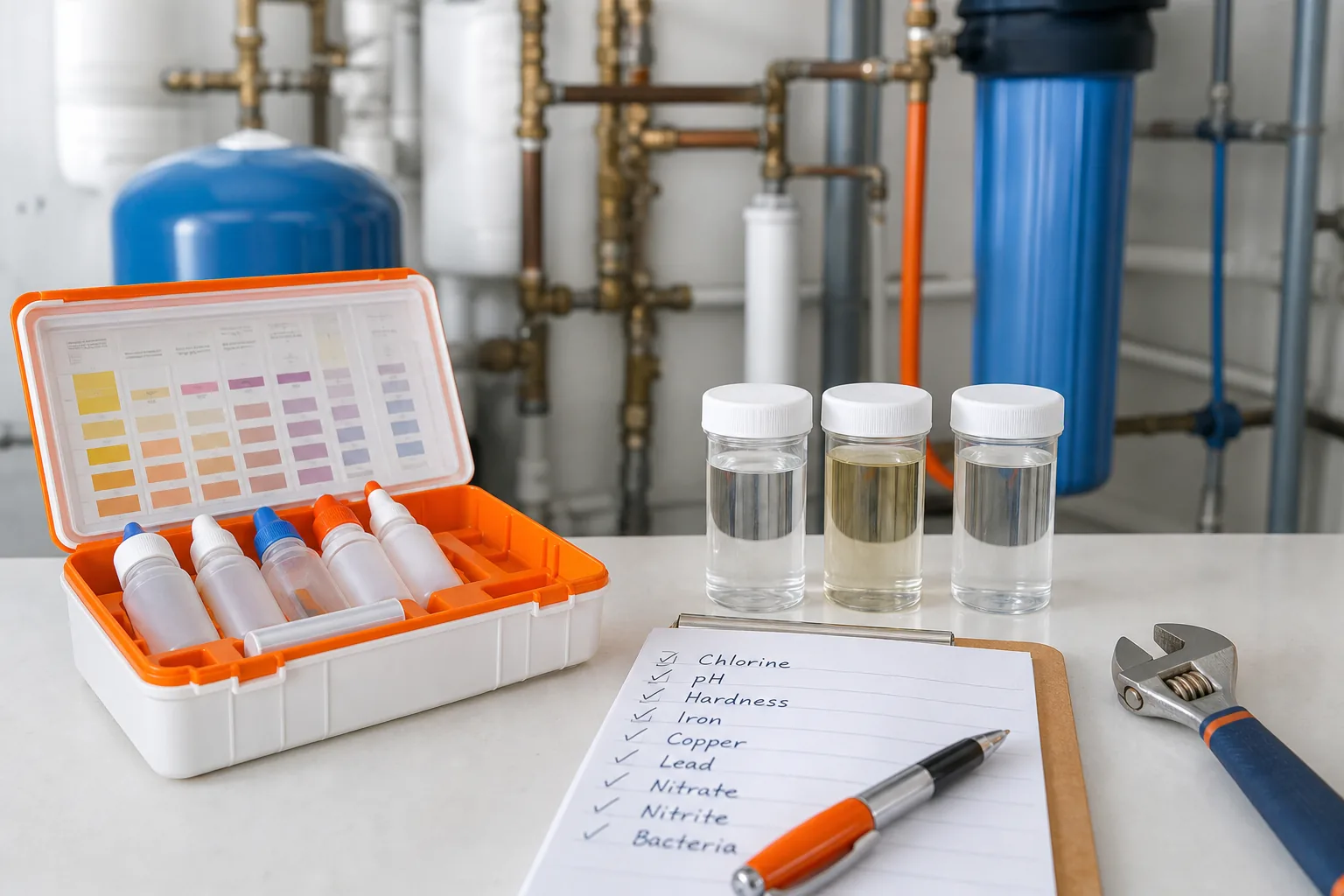
The first step toward getting the benefits of whole house water filter systems is finding out what your water contains. Don't buy a filter based only on taste or a sales claim.
Start with your local water utility's Consumer Confidence Report if you're on municipal water. It can show detected contaminants and treatment levels. But it may not reveal what happens after water leaves the treatment plant. Old service lines, indoor plumbing, or a private well can change the water at your tap.
Take a sample from a cold-water tap that you use often. A basic test can check hardness, chlorine, iron, pH, total dissolved solids, and sediment. For lead, arsenic, PFAS, bacteria, or other health concerns, use appropriate testing. A named contaminant needs a matched treatment method, rather than a generic filter.
Write down the problem you want to solve. Is it a chemical smell? White scale on faucets? Rust-colored stains? Poor taste? Each clue points to a different treatment path.
Primewest Plumbing can help Orange County homeowners review water concerns before an installation. That matters because a filter sized for one issue may do little for another.
By now you should have a test report, a list of symptoms, and a clear target for treatment.
Step 2: Match the Filter Media to Your Water Goals
The benefits of whole house water filter systems depend on the media inside the tank or cartridge. Each type handles a different water problem.
Activated carbon is common for municipal water. It can reduce chlorine, some odors, and many organic chemicals. A filter designed to catch suspended particles can help remove sand, rust, dirt, and silt before they reach the carbon bed.
A water softener works differently. It uses ion exchange to remove calcium and magnesium, the minerals behind hard-water scale. A softener can help protect a water heater, dishwasher, washing machine, and plumbing fixtures. It doesn't replace a carbon filter because it isn't designed to remove chlorine or many chemical contaminants.
Some homes need both. Think of the filter as a treatment for chemicals and particles. Think of the softener as a treatment for hardness. A treatment designed to prevent mineral build-up and stains may help reduce buildup on surfaces, but it doesn't remove hardness minerals from the water.
Water issue | Common treatment | What to confirm before buying |
Chlorine taste or smell | Activated carbon | Reduction claim and capacity |
Sand, rust, or dirt | Sediment prefilter | Micron rating and replacement plan |
White scale on fixtures | Water softener or mineral-build-up prevention | Hardness level and salt or service needs |
PFAS or another named contaminant | Contaminant-specific treatment or reverse osmosis | Treatment match for that contaminant |
Contaminants at multiple fixtures | Whole-tap protection against contaminants | Coverage for every tap and contaminants addressed |
Filter claims need close review. A carbon filter may improve taste but leave dissolved minerals in place. A treatment designed for one water concern may address that concern but won't remove chemicals or sediment. Research on drinking-water treatment supports treating the contaminant rather than relying on a one-size-fits-all label.
Choose the smallest system that meets the test results and household demand. Oversizing can add cost without solving a new problem.
Step 3: Plan a Whole-House Installation for Reliable Flow
A whole-house filter works at the point where water enters your home. Good planning protects every fixture without making the shower weak.
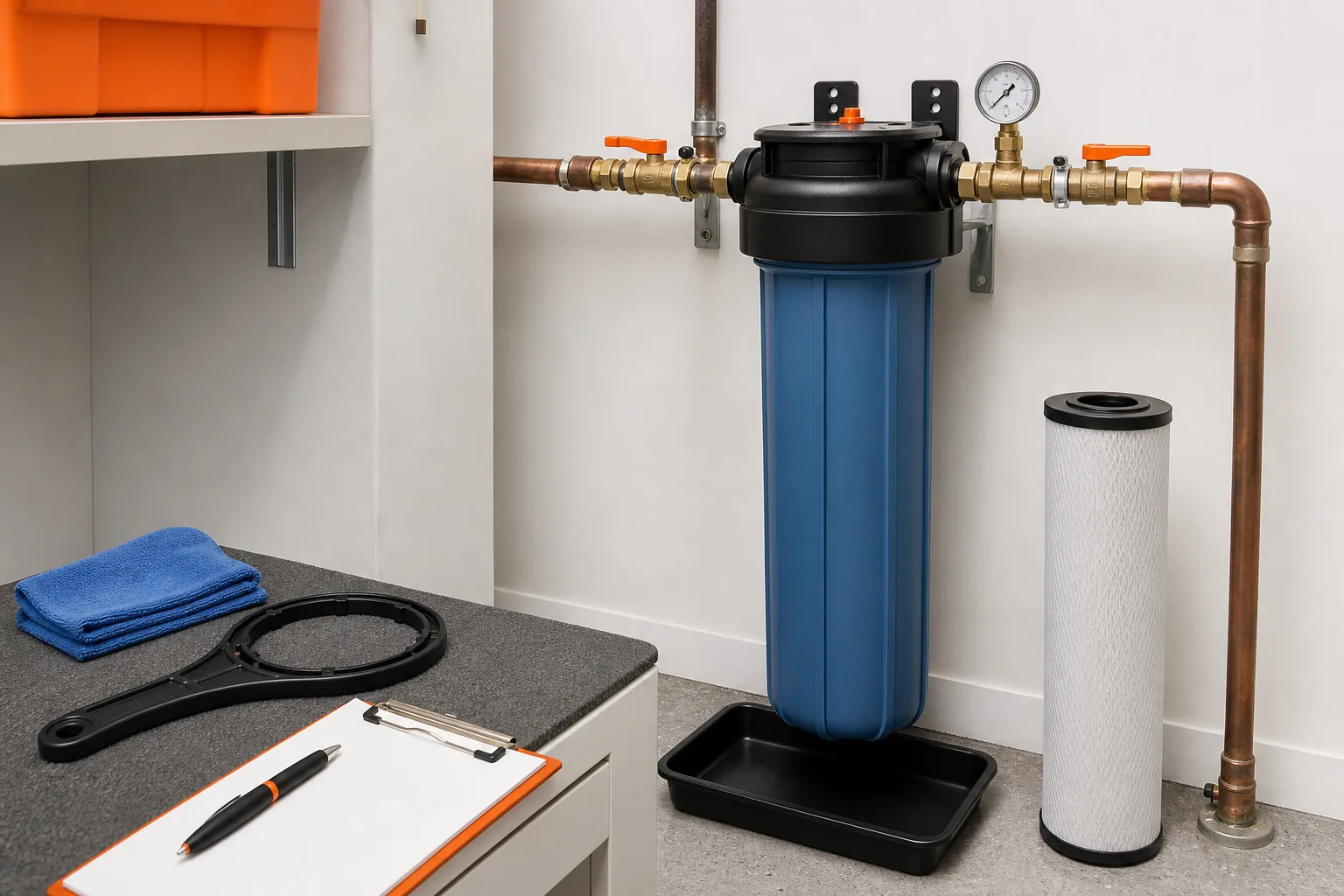
Locate the main water line before choosing the system. The filter needs enough space for the housing, shutoff valves, service access, and future cartridge changes. Leave room to remove a tank or open a filter bowl. A cramped install turns a basic filter change into a plumbing repair.
Size the system around peak flow, pipe diameter, household use, and the number of bathrooms. A small cartridge may work in a one-bath home with light use. A larger family home may need a higher-capacity system with more media and a larger connection size.
Ask the installer to include a bypass route and an accessible shutoff. Plan for a way to monitor when a filter is loading with sediment. Keep the area near the housing accessible for inspection, especially in a garage or utility closet.
Fittings should be durable and installed correctly. The right choice depends on the pipe material, space, connection type, and local code. Don't mix fittings without checking how they seal and support the pipe.
Some filtration systems may last for years between media changes, while cartridge systems need more frequent attention. Cartridge filters can also cause pressure loss when they load with sediment. That is why system size matters as much as the filter media.
For a local review of the work, Primewest Plumbing's water filtration and purification service can help you assess placement and plumbing connections in an Orange County home.
By now you should have a proposed location, a flow target, and a clear service path. If access is poor, fix that before installation.
Key Takeaway:The best filter is the one that treats your measured water problem while keeping normal household flow steady.
Step 4: Build a Maintenance and Cost Plan
The long-term benefits of whole house water filter systems depend on regular service. A filter that is full of sediment can't protect flow or perform as designed.
List every cost before you approve the work. Include the equipment, plumbing changes, installation labor, routine filter replacements, testing, and any softener salt or media service. Some systems also need a drain connection for backwash or regeneration.
Don't treat a low purchase price as the full cost. A cartridge system may cost less at first but require frequent replacement. A tank system may cost more up front and need less routine attention. The better choice depends on your water, use, and willingness to handle service.
Set a calendar reminder for each task. Check the filter's particle-collection area when pressure drops or flow changes. Replace cartridges on the maker's schedule, or sooner if testing and pressure readings show a problem. A softener may need salt added and periodic regeneration. Automatic settings reduce daily work, but they still need inspection.
Keep records of the installation date, filter changes, test results, and any leak checks. This record helps you spot a pattern. If the same filter clogs early each time, the home may need a better prefilter or a plumbing inspection.
Spent cartridges also need a disposal plan. Follow the manufacturer's instructions and local waste rules. Don't assume every cartridge belongs in household recycling. Reducing bottled-water use may lower packaging waste, but the filter itself still needs proper handling.
The evidence around savings needs a clear caveat. Some sources report four to six years for activated-carbon media, while other claims suggest a pre-carbon filter may extend softener life for much longer. Those results depend on water chemistry, flow, maintenance, and system design. Treat them as planning estimates, not promises.
Primewest Plumbing can help property owners and managers in Orange County plan service access alongside other plumbing needs, such as water-heater work or leak checks.
Pro Tip:Put the next filter change on your calendar before the current filter is installed. Missed service is a common cause of pressure loss.
Step 5: Verify the Results and Protect Your Plumbing Long Term
The final step is to confirm that the system delivers the benefits of whole house water filter treatment you paid for. Don't judge success by taste alone.
Test the water before installation, then test it again after the system has flushed and settled. Use the same tap and, when possible, the same laboratory. Compare the target contaminant, not just pH or total dissolved solids.
Check the home in daily use. Run a shower and note odor. Fill a glass and check taste. Watch pressure when two fixtures run at once. Look at faucet screens for new sediment. These checks won't replace lab results, but they can reveal a flow or installation issue quickly.
Keep an eye on appliances and fixtures. Less sediment can reduce deposits in aerators. Lower scale exposure may help protect plumbing and water-using appliances. A filter does not repair pipe corrosion or remove every contaminant, so persistent stains, low flow, or unusual odor still need a plumbing assessment.
For homes with a softener, install order matters. A prefilter can protect the softener from chlorine and sediment, while the softener handles hardness. If the water contains microbes or a specific chemical concern, add only treatment that matches confirmed test results.
Homeowners in Mission Viejo, Laguna Niguel, or nearby Orange County communities can ask Primewest Plumbing to review an existing system when water quality changes, pressure falls, or a filter housing starts to leak. A good follow-up checks the filter, the bypass position, valves, connections, and the rest of the water line.
Use the results to set a review date. Recheck after major plumbing work, a change in water source, or a new well condition. Water treatment is a system, not a one-time box on the wall.
Frequently Asked Questions
What are the main benefits of a whole house water filter?
The main benefits are cleaner-tasting water at every tap, lower chlorine odor, and added protection for plumbing and appliances. The system treats water at the entry point, so showers, sinks, laundry hookups, and water heaters receive treated water. Results depend on the media and the contaminants found in your home.
Does a whole house water filter remove hard water?
A standard whole-house carbon filter does not remove hard-water minerals. Calcium and magnesium cause scale, so a water softener is usually the better match for that problem. Some systems combine filtration with softening to address mineral build-up and stains. Test hardness first, then decide if you need one system or both.
Is a whole house water filter better than a point-of-use filter?
A whole-house filter treats water at every fixture, while a point-of-use filter treats one outlet. Whole-house treatment makes sense when you want cleaner shower water or appliance protection as well as drinking water. A point-of-use unit may be enough when only one faucet needs targeted treatment.
How often does a whole house water filter need maintenance?
Maintenance varies by system type, water quality, and household use. Some filters may need regular replacement, while some systems have longer service intervals. Softeners need salt and regeneration checks. Follow the maker's schedule, then adjust it if pressure drops or testing shows the filter is no longer working.
Are whole house water filters worth the cost?
Whole-house filters can be worth the cost when your water has a confirmed contaminant, strong chlorine odor, excess sediment, or a problem that affects several fixtures. They may also reduce appliance exposure to scale and sediment. Compare installation and service costs with the specific problem you want to solve, not with a vague promise of better water.
Conclusion
A whole-house filter is a good choice when testing shows a problem that affects more than one tap. Start with a water test, choose media for the contaminants found, and plan for flow and service. If you're unsure where the system belongs or how it should connect, ask Primewest Plumbing to review the water line and installation plan before work begins.


Comments