


Best Backflow Preventer for Residential Use
- Primewest Plumbing
- 1 day ago
- 7 min read

A backflow preventer can look like a simple valve, but the wrong type can leave your drinking water exposed. The best choice depends on what your system does, how much hazard it creates, and what Orange County rules require. Start with the device type, then confirm the site, code, and test plan before you buy.
Table of Contents
1. Primewest Plumbing
Primewest Plumbing is the best starting point when you need help choosing or servicing residential backflow protection in Orange County. A plumber can look at the supply line, irrigation branch, pressure, and nearby equipment before recommending a device.
That matters because a backflow preventer for a basic sprinkler system may not fit a system with a fertilizer injector. A home with a booster pump or another source of higher downstream pressure may also need stronger protection than a simple anti-siphon valve.
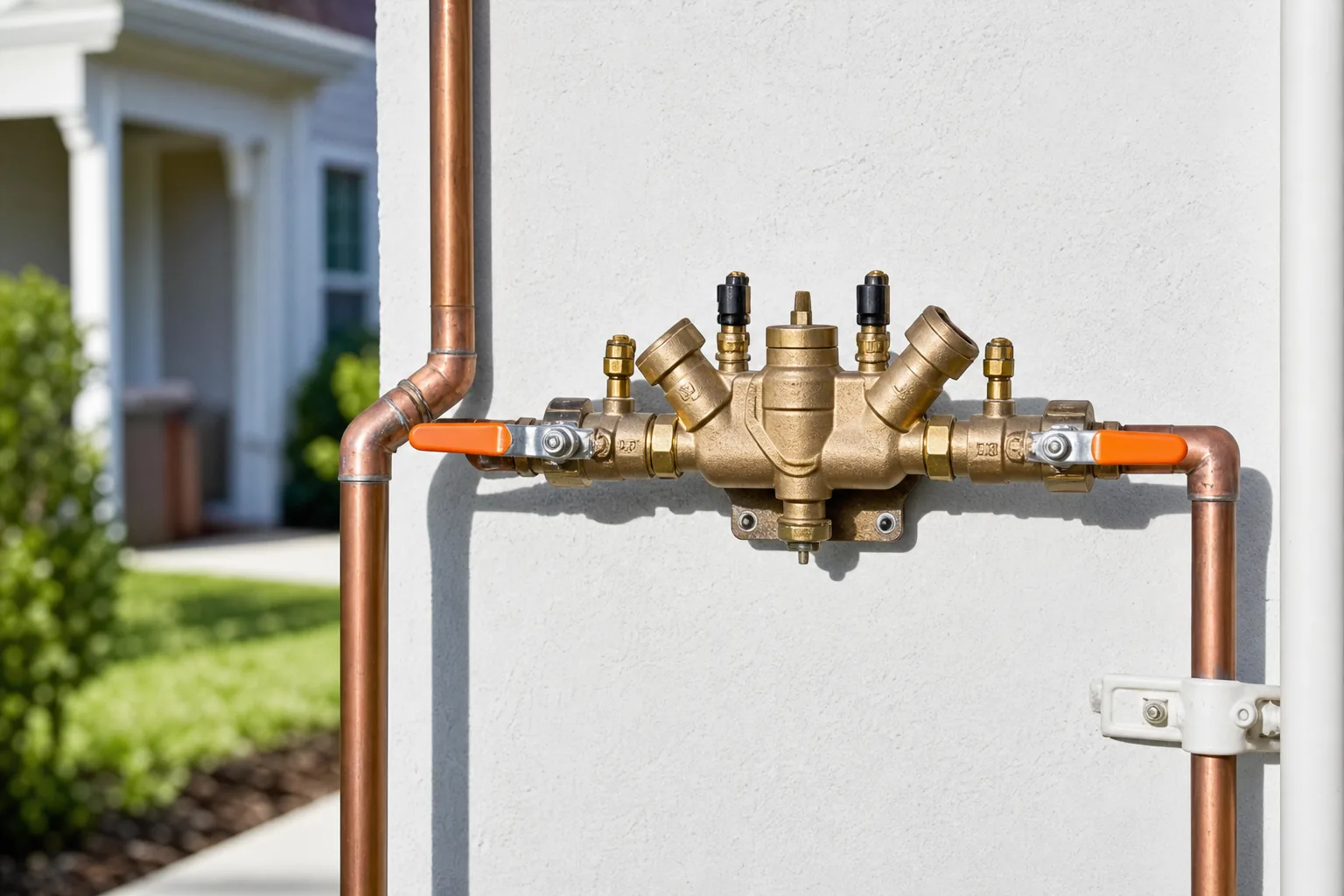
Primewest Plumbing works with homeowners, landlords, property managers, and commercial property owners in Orange County. The team can also connect the backflow work with related plumbing issues, such as leaks, pressure problems, damaged supply lines, or irrigation branch repairs. If you're planning the work yourself, review the backflow preventer installation guide before you open the line.
Device type | Typical residential use | Main strength | Main limit | Material |
Anti-siphon valve, ASV | Simple irrigation zone | Basic protection with a lower installation burden | Doesn't handle continuous downstream pressure | Plastic or brass |
Pressure vacuum breaker, PVB | Residential irrigation | Protects against backsiphonage | Must sit above the highest outlet and may spill water | — |
Double check valve, DCV | Systems with continuous pressure | Protects against backsiphonage and backpressure | May not meet rules for a health hazard | — |
Reduced pressure assembly, RPA | High-hazard water connections | For health hazard situations | Needs above-ground placement and can reduce pressure | — |
PGV-ASV | Residential irrigation systems | Designed for an irrigation use case | Confirm local approval and system fit | PVC |
Ask for flow ratings, connection sizes, and certification details before installation, then compare them with your water pressure and local requirements.
For a home with a clear irrigation need but no chemical injector, a PVB is often the first device to discuss. For a higher-risk setup, the installer should assess an RPA instead. Primewest Plumbing can help make that decision on site rather than guessing from a product photo.
“Application first” is the safest way to narrow the choice. The device should match the risk at the connection.
Step 2: Check California and Orange County Requirements Before Buying
The best backflow preventer for residential use is the one your water supplier accepts for the actual hazard. Check state cross-connection requirements before choosing a device.
Before you buy, ask your water supplier or local authority these questions:
Which device types are accepted for this property?
Does the irrigation system need an annual test?
Must a certified backflow tester install or test the assembly?
Does a new or replacement device need to sit above ground?
Are there extra rules for a fertilizer injector, well, pool, or other water source?
Local enforcement can shape the details, so confirm the rule before setting pipe or pouring a box.
The basic hazard split is easy to understand. Backsiphonage happens when pressure in the public main drops and water gets pulled backward. Backpressure happens when pressure on the property rises above pressure in the main. A device must protect against the type of reversal your system can produce.
A double check valve suits residential and commercial installations with continuous pressure, while a reduced pressure assembly is for health hazard situations with a fertilizer injector. Treat that distinction as a safety issue, not a shopping preference.
A DCV may suit a continuously pressurized irrigation line, but it isn't meant for every hazard. A fertilizer injector changes the risk because chemicals can enter the water path. An RPA is appropriate for that situation.
Keep the approval record, model details, test paperwork, and repair notes with your property records. This helps when you sell the home, replace the device, or need to explain the setup to a new plumber.
Key Takeaway:Confirm the accepted device and testing rule with the local water authority before buying parts.
Step 3: Install the Preventer in the Correct Location and Orientation
Correct placement lets the device work, drain, and get tested. Put it on the supply line before the protected irrigation equipment or branch, with the flow arrow pointing toward the system.
First, find the highest sprinkler head or drip outlet controlled by the device. An ASV needs to sit above the highest emission point. The reviewed installation guidance gives six inches for an ASV and 12 inches for a PVB. Local code may set a different height, so use the stricter rule.
A PVB belongs above ground. In a sloped yard, that may mean placing it near the high point and running the supply pipe up to it. Leave room around the assembly so a tester can reach every port and shutoff.
An RPA also needs above-ground placement. It must have room to discharge water without flooding a wall, walkway, crawlspace, or electrical area. The relief valve may release water during a fault, so plan a safe drain path.
A DCV can sometimes sit in a valve box, subject to local approval. If you use a box, keep the assembly clean and accessible. A double-box setup can help. One box supports the valve, while a second box above it helps keep soil away from the assembly and leaves better working room.
Test ports should face upward. Side-facing ports may seem easier to reach, but they can make field testing hard or impossible. Upward ports also give the tester a clear path to connect test equipment.
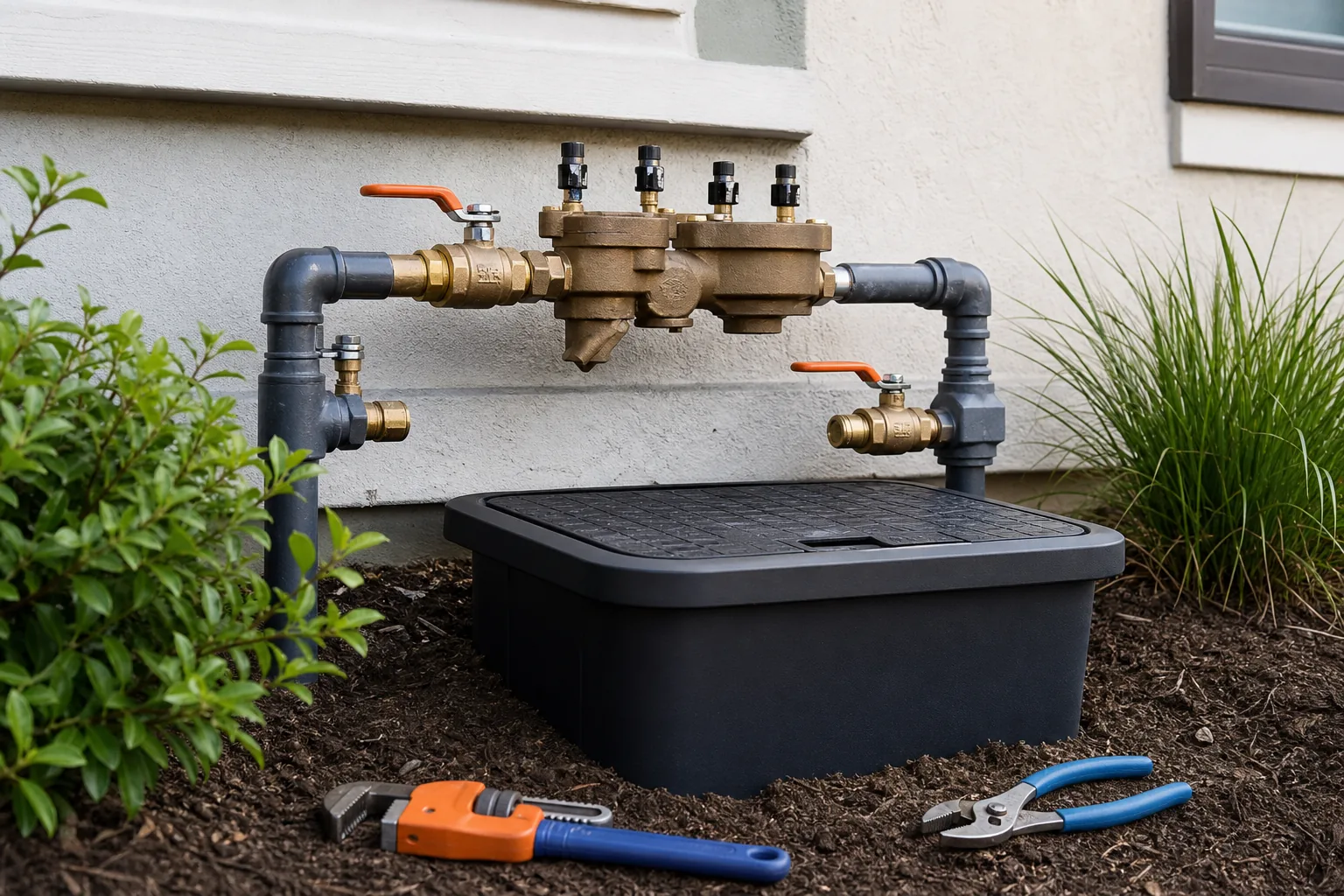
Use unions or service points where the approved assembly allows them. They make future removal less destructive. Support the pipe so the device doesn't hang from a threaded joint or twist when the valves close.
Before the final connection, check the arrow again. Then confirm the device is above the required outlet height, protected from standing water, and reachable for inspection. A neat install that cannot be tested is still a poor install.
Water pressure also deserves a check. An RPA can reduce pressure as water passes through it. If the sprinkler heads already have weak flow, measure pressure before selecting the assembly. Primewest Plumbing's home water pressure regulator guide explains how to take a pressure reading before changing a valve.
Don't bury a device just because the old one was buried. In California, new or replacement residential installations may need above-ground placement. Confirm the current requirement before the trench is closed.
Step 4: Test, Troubleshoot, and Winterize the Backflow Preventer
A backflow preventer isn't finished when the water turns on. It needs a test plan, a clean flow path, and protection from freezing weather.
Arrange testing with a properly recognized tester when local rules require it. The reviewed guidance says most device types, apart from an anti-siphon valve, need inspection and certification each year. California property owners should also keep the test record and confirm the tester's credentials.
If water leaks from the relief area or a check valve, shut off the supply before opening anything. A common cause is debris under a poppet or check seal. Grit, rust, or small stones can stop the seal from closing fully.
Use this simple fault check:
Close the downstream shutoff while watching the relief discharge.
If water stops, inspect the downstream check.
If water continues, the upstream check or relief section may need service.
Clean only the parts allowed by the manufacturer's instructions.
Replace a cut, hardened, or badly deformed seal.
Don't force a spring-loaded cover or lose track of the check parts. Some assemblies need special test tools after repair. A device that seems dry may still fail a formal test.
Freeze protection starts before the first cold night. Shut off the supply, open the test cocks as directed, and drain trapped water from the assembly. Never seal a wet device inside an insulated cover and assume that will stop freeze damage.
Use the manufacturer's drain procedure for the specific assembly. The PGV-ASV is intended for residential irrigation and uses PVC construction, but it doesn't replace local approval or a full system check.
Pro Tip:Take a photo of the arrow, shutoff positions, and test-port layout before winterizing. It makes spring startup less prone to mistakes.
At spring startup, open the supply slowly. Watch for leaks at each joint. Run one irrigation zone at a time and check that the preventer stays dry unless its design allows discharge during a fault.
For leak detection, pressure testing, or a device that fails its test, Primewest Plumbing can inspect the surrounding plumbing and repair the cause. A replacement is sometimes needed, but debris or a worn seal may be the smaller fix.
Frequently Asked Questions
What is the best backflow preventer for residential use?
The best backflow preventer for residential use depends on the hazard and irrigation layout. A PVB often fits a standard residential irrigation system, while a DCV suits some continuously pressurized systems. A fertilizer injector can require an RPA. Confirm the accepted type with your local water supplier before purchase.
Do residential backflow preventers need annual testing?
Many residential backflow preventers need annual testing, but the exact rule comes from the local water authority. Keep the test report because it may be needed for compliance, repair records, or a property sale.
How high should a residential backflow preventer be installed?
The required height depends on the device and local code. An RPA needs above-ground placement, with room for its relief discharge. Measure the highest sprinkler or drip outlet before setting the pipe.
Can a backflow preventer be installed underground?
Some DCVs can go in a valve box when local rules allow it, but many residential replacements in California may need above-ground installation. A buried assembly also creates access and drainage problems. Check the local rule first, then leave enough room for testing and repairs.
Why is my backflow preventer leaking?
A leaking backflow preventer often has debris under a check seal, a damaged poppet, or a worn gasket. Shut off the water before inspection. Some repairs require a formal retest, and local rules may require a certified tester after maintenance. If the leak continues, have the assembly inspected instead of bypassing it.
Conclusion
For most standard residential irrigation setups, start by asking about a PVB, then confirm height, approval, and testing rules. Use an RPA when the connection creates a high health hazard, such as fertilizer injection. Before buying, have the water authority or Primewest Plumbing verify the device, location, and pressure needs for your Orange County property.


Comments