


Best Water Softeners for Well Water in 2026

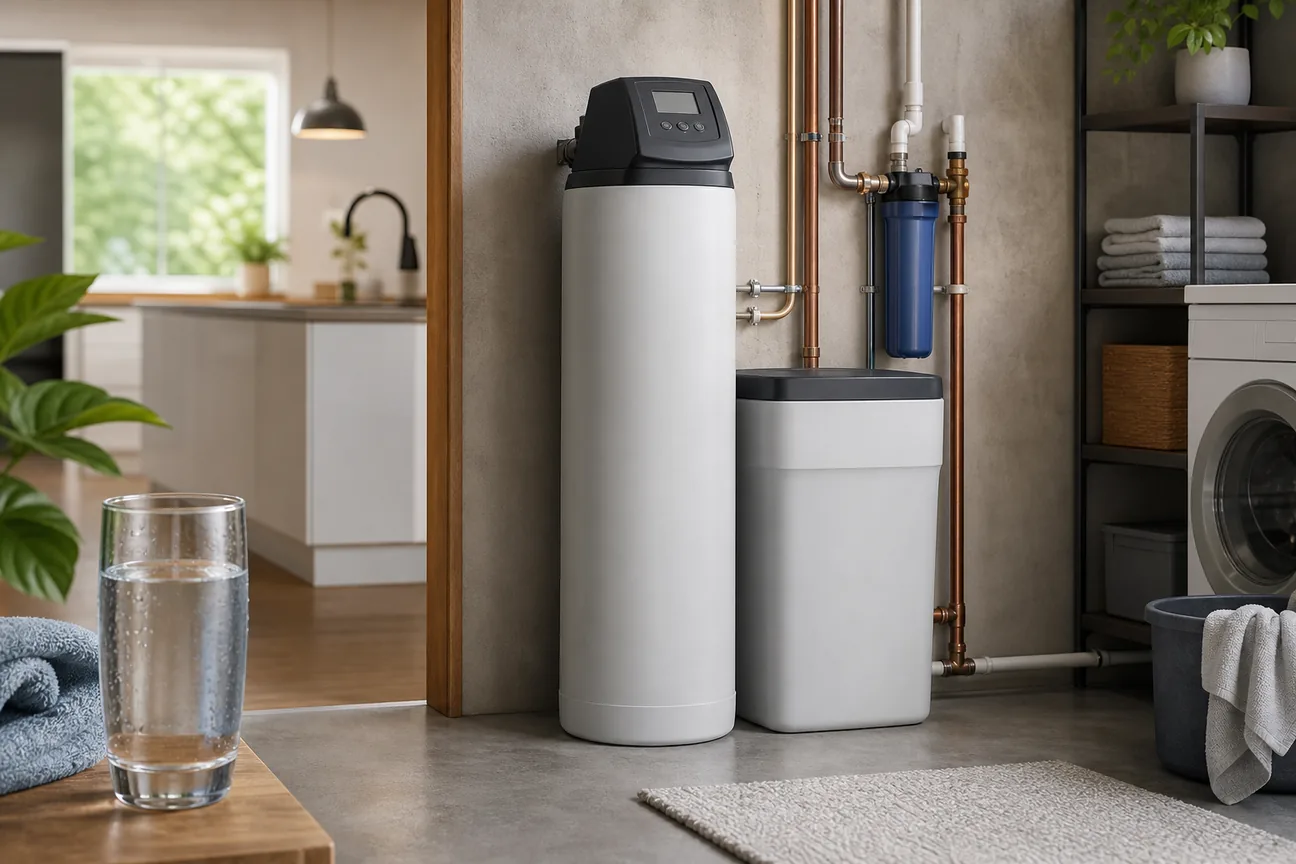
Well water can leave hard‑scale on your pipes, appliances, and skin. The data shows many products claim to “soften” well water, but only a few truly remove calcium and magnesium. Below are five options that actually work for Orange County homes, plus a quick way to compare them.
Table of Contents
1. Primewest Plumbing
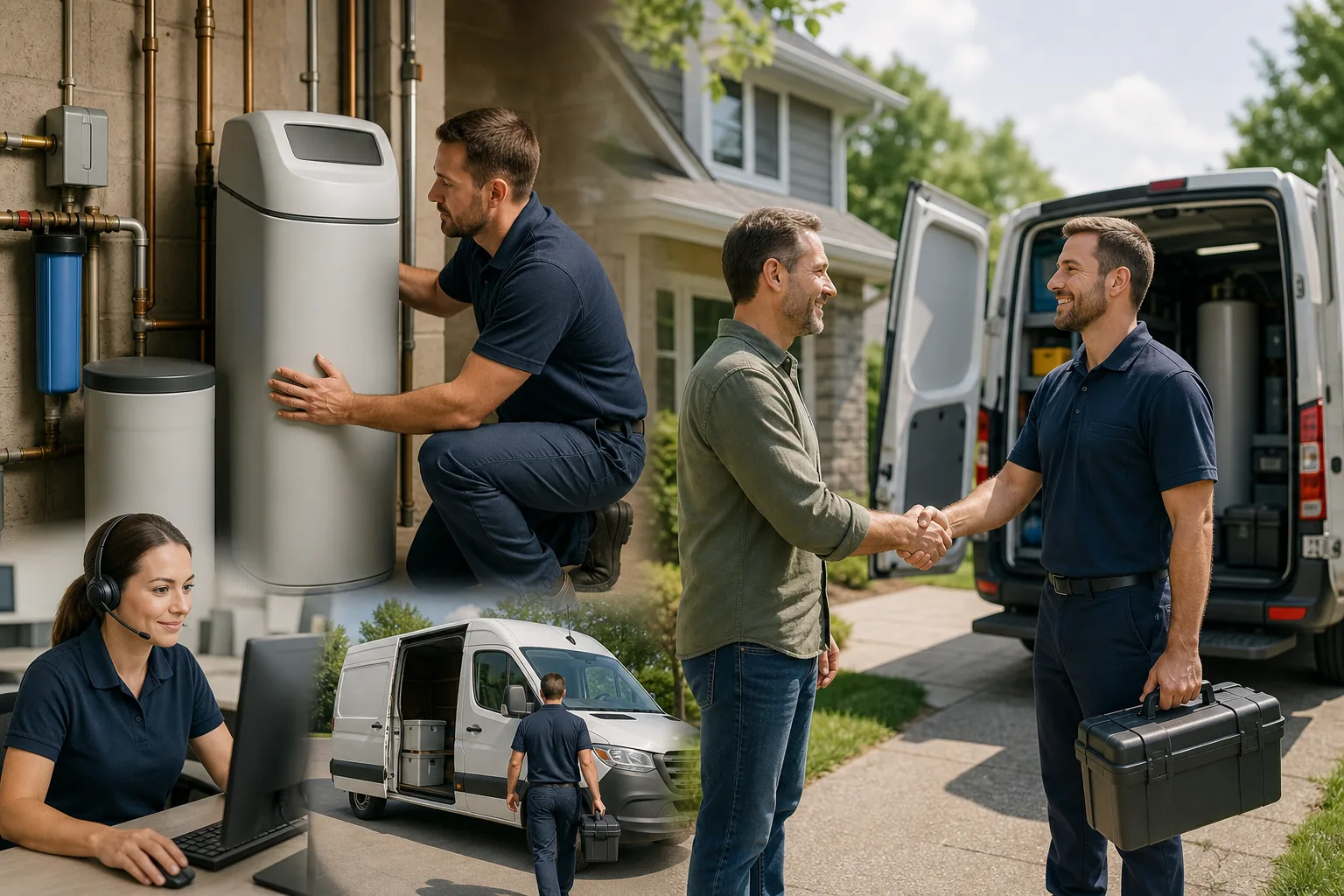
Primewest Plumbing is a local service that installs, services, and maintains whole‑house water‑treatment systems for homeowners in Dana Point, Laguna Niguel, Mission Viejo, and surrounding areas. They assess your well‑water report, size the softener to your daily demand, and handle every pipe cut and reconnect.
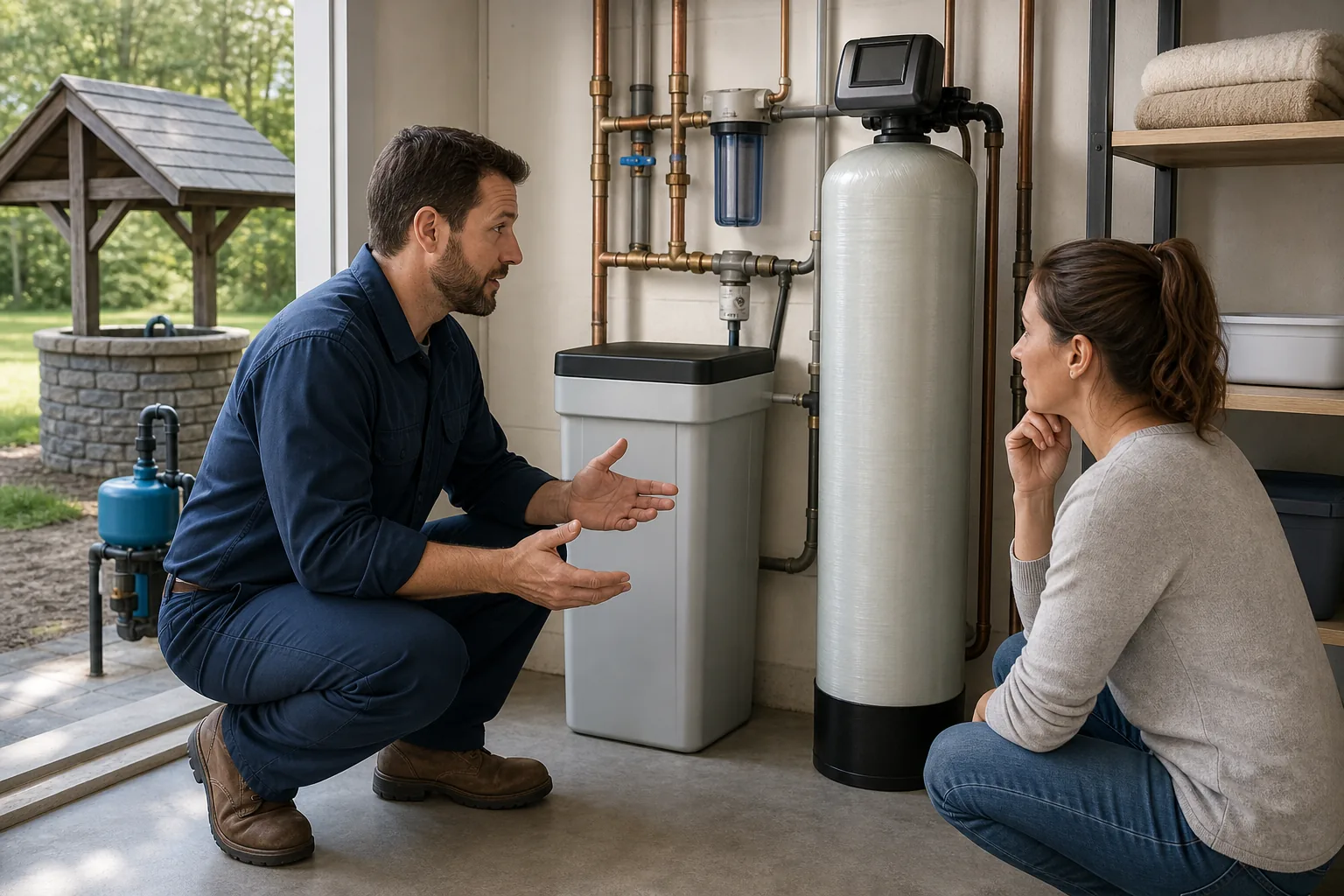
Who it’s best for: renters or owners who want a hands‑off experience and a local team that knows the mineral profile of Orange County wells.
Their technicians can also add a pre‑filter for iron and manganese, which often accompany well water in the region. For homes that need contaminant reduction in addition to scale control, whole-house water filtration systems can complement a water softener.
Best Whole House Water Filter Installation Cost Options explains how they bundle filter and softener work into one clear quote.
One limitation: you’ll need to schedule a site visit for a proper water test before they can size the unit, so the process isn’t instant.
Key Takeaway:Primewest gives you a single point of contact for both testing and installing the right softener for your well.
2. SpringWell SS1 — High‑capacity smart softening for well‑water homes
The SpringWell SS1 uses demand‑initiated regeneration and a 20 GPM flow‑rate, making it the only unit in our list that can handle a full‑home load without pressure loss. It swaps calcium and magnesium for sodium via ion‑exchange resin.
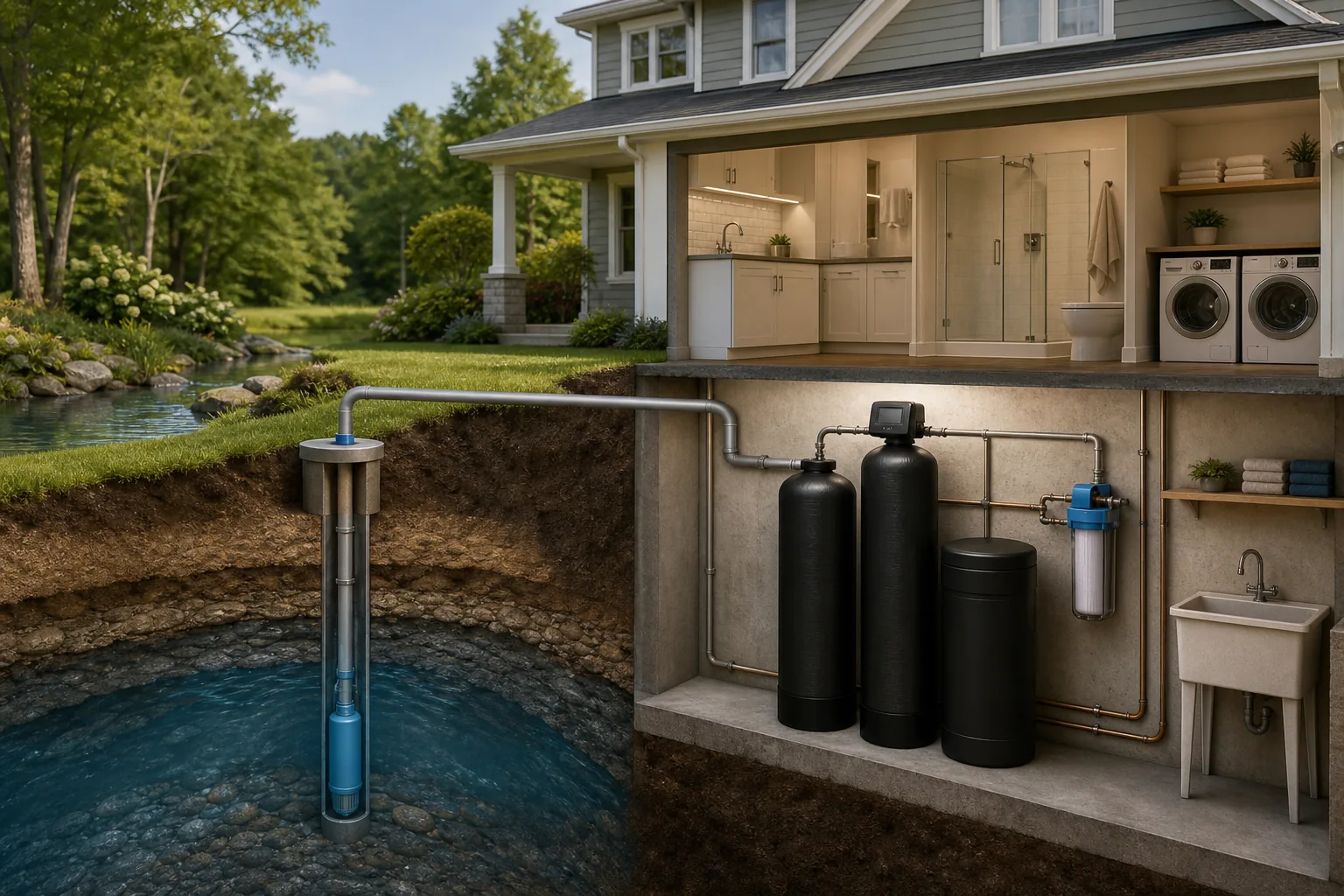
Best for: households with moderate to very hard well water that need high flow for multiple showers, dishwashers, and irrigation systems.
The unit also includes a battery backup, so a power outage won’t erase your settings.
Caveat: professional installation is recommended because the bypass valves and plumbing connections are larger than a typical DIY kit.
3. Fleck 5600SXT — Flexible budget choice for DIY‑oriented well homes
The Fleck 5600SXT pairs a 48,000‑grain capacity with a digital control panel that lets you set hardness, water use, and regeneration intervals. It runs on demand‑initiated regeneration, which saves salt and water compared with timer‑based models.
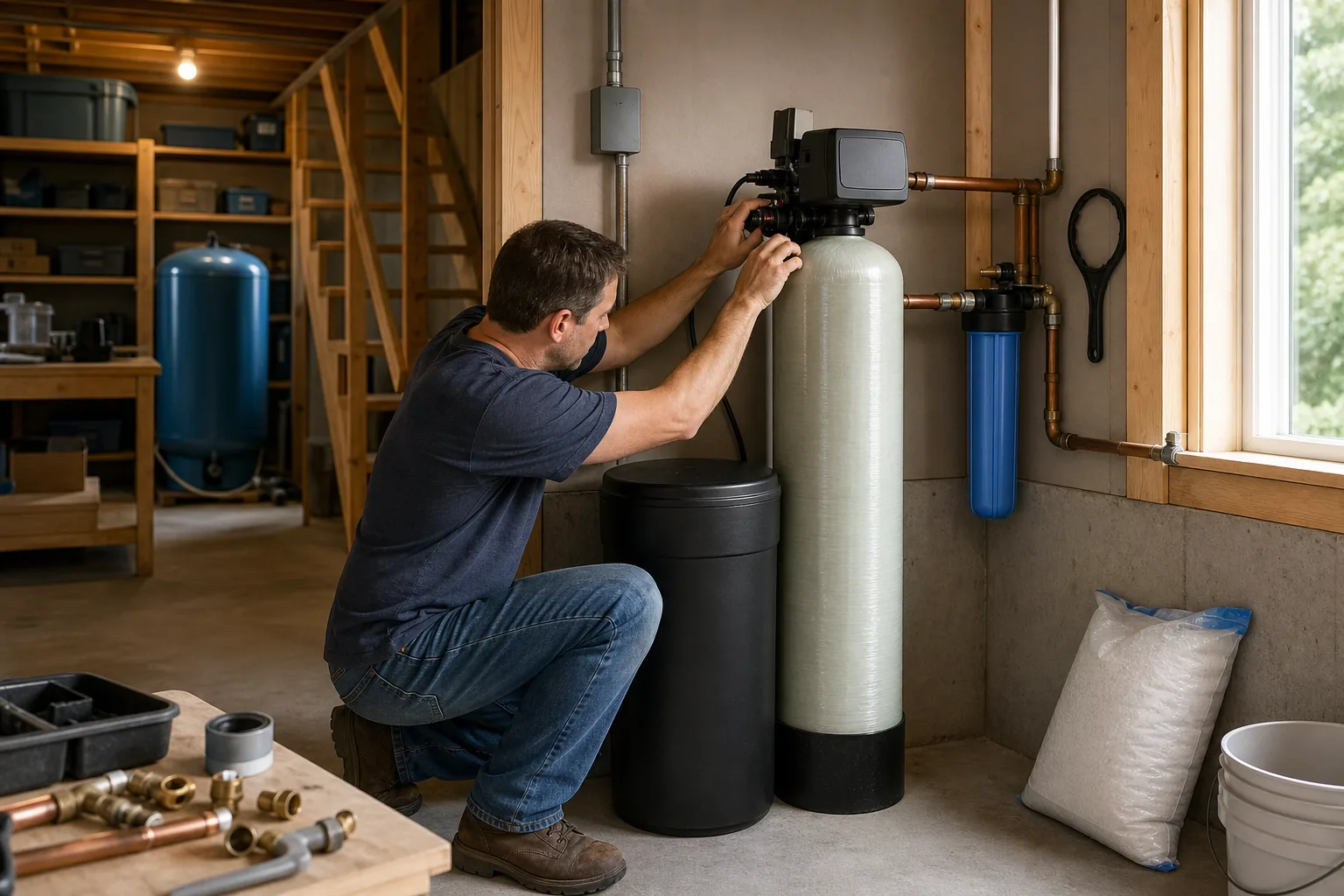
Who it’s best for: DIY‑savvy homeowners who want a solid, budget‑friendly system that can be programmed without a subscription.
Reasons it makes the list: the unit handles flow rates up to 20 GPM, so a family of four can run a shower and dishwasher at the same time. Its sturdy metal valve outlasts plastic‑capped rivals, and the price point is lower than most smart‑connected softeners.
Limitation: the programming interface is less intuitive than a phone app, and the warranty is 5 to 10 years depending on the reseller.
4. Aquasential Smart HE Water Softener — Full‑service support for easier ownership
Aquasential’s Smart HE line is built for both city and well sources. The unit uses proportional brining, meaning only the exhausted portion of the resin bed is regenerated, which cuts salt use by about 40 %.
Best for: homeowners who want a “set‑and‑forget” experience with professional service options, like regular salt delivery.
Why it earns a spot: the smart sensor notifies you when salt runs low, the leak sensor can stop a burst before it floods a bathroom, and the company offers financing or rent‑to‑own plans. The water pressure stays above 50 psi even during regeneration, so you won’t notice a dip in shower flow.
One drawback: the system isn’t sold directly in California, so you’ll need a local dealer like Primewest Plumbing to source and install it.
5. SimplySoft — Salt‑free scale prevention for moderately hard well water
SimplySoft uses a salt-free media for scale prevention at moderate hardness levels, but it is not effective on hardness above 25 GPG.
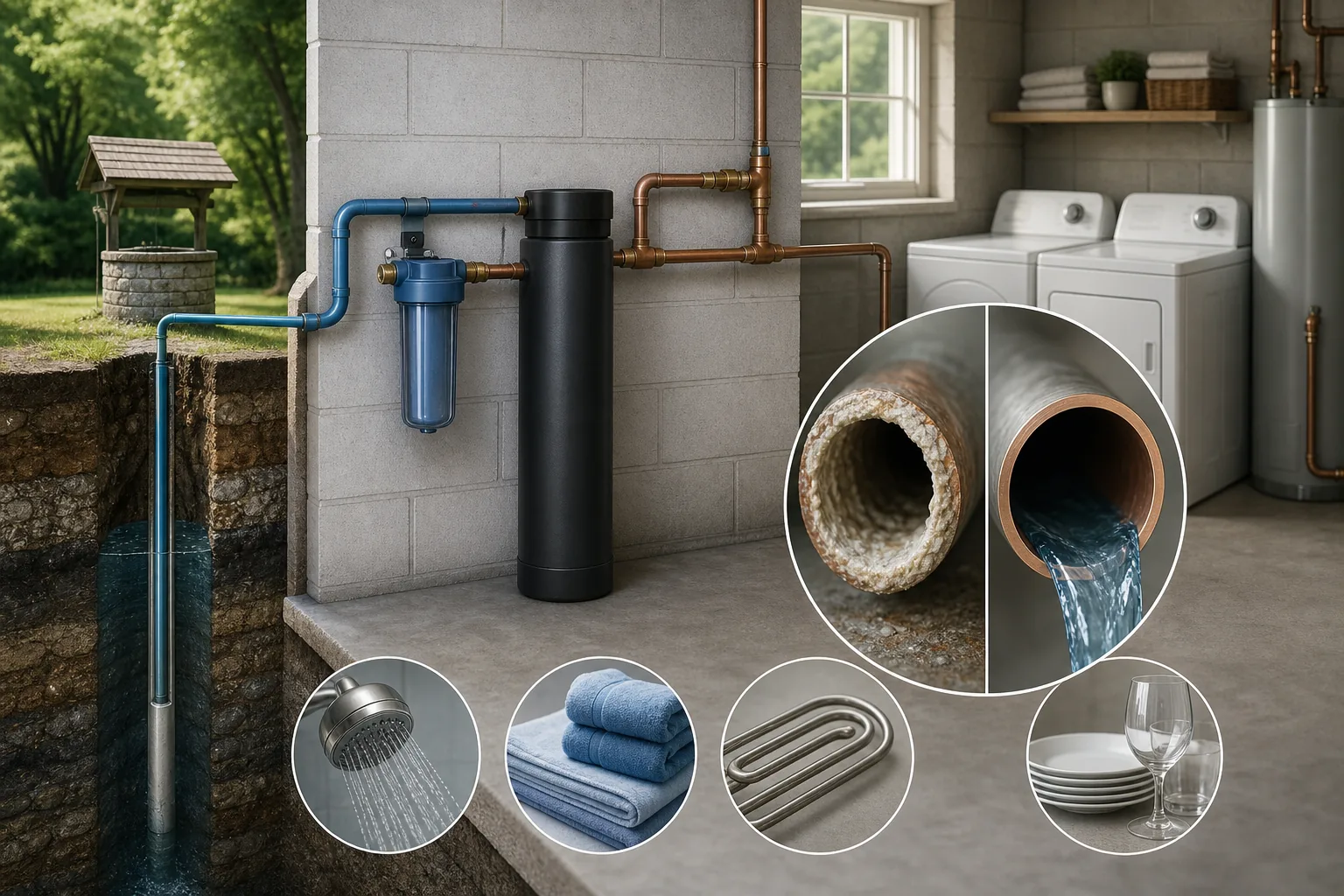
Best for: renters, budget‑conscious owners, or anyone who wants to avoid salt, electricity, and wastewater.
Real‑world reason to consider it: the media never needs electricity, so you won’t add to your utility bill. The pre‑filter replacement cost is about $40 every six months, which is still cheaper than the ongoing salt purchases for a traditional softener.
Limitation: it does not lower measured hardness (GPG), you’ll still see the same reading on a test kit, and soap may not lather as well as with a salt‑based system.
Comparison Table: Which Well‑Water Softener Fits Your Home?
Option | Grains/Day | Flow Rate (GPM) | Regeneration Type | Best For | Key Limitation |
Primewest Plumbing (installed unit) | — | — | — | Local service, full support | Requires on‑site water test first |
SpringWell SS1 | 32‑80 k | 13‑20 | Demand‑initiated | High flow, smart app | Professional install needed |
Fleck 5600SXT | 48 k | — (up to 20 GPM) | Demand‑initiated | DIY‑friendly, budget | Less intuitive UI |
Aquasential Smart HE | 40‑48 k | — (8.5‑12 GPM typical) | Proportional brining | Full‑service support | Not sold directly in CA |
SimplySoft | — (salt‑free) | 7 GPM | Salt‑free (polyphosphate) | Low‑maintenance, renters | Does not reduce hardness reading |
When you compare capacity and flow, the demand‑initiated models (SpringWell SS1, Fleck 5600SXT) dominate the high‑performance segment. If you need a hands‑off experience, Aquasential’s smart sensor and Primewest’s local service are the easiest routes. For a no‑salt, low‑cost entry point, SimplySoft fills the niche.
Looking beyond softeners, consider other home-maintenance needs. A home-maintenance guide covers a separate topic from the scale-prevention work of a water softener.
FAQ: Choosing a Water Softener for Well Water
What size softener do I need for a typical four‑person household?
A system that can handle at least 40,000 grains per day and a flow rate of 10‑12 GPM will cover daily showers, laundry, and dishwashing for most four‑person homes.
Can a salt‑free conditioner replace a traditional softener?
It can prevent scale, but it does not lower the hardness reading; you’ll still see the same GPG on a test kit.
Do I have to buy a separate pre‑filter for well water?
Most installers, including Primewest Plumbing, recommend a sediment pre‑filter to catch sand and iron before water reaches the softener resin.
How often does a demand‑initiated system regenerate?
Regeneration occurs only when the resin bed reaches capacity, which for a well‑water home typically means once a week to once every two weeks.
Is professional installation required?
While DIY kits exist, a professional plumber ensures correct pipe sizing, proper bypass valve placement, and compliance with local codes.
Will a water softener affect my drinking water taste?
Ion‑exchange adds a small amount of sodium; most users notice no salty taste, but you can choose a low‑salt setting if taste is a concern.
Conclusion
If you rely on well water, start with a demand‑initiated, high‑capacity unit like the SpringWell SS1 or the Fleck 5600SXT, and let Primewest Plumbing handle the test and install. Contact Primewest to schedule a water‑quality analysis and get a single‑quote that covers parts, labor, and any needed pre‑filtration.


Comments