


How to Detect Hidden Water Leaks With Smart Sensors

Water can slip through walls, under floors, and into cabinets before you ever see a drop. A hidden leak can cost thousands and ruin belongings.
Follow these five steps to catch a leak early with a smart sensor, and know when to bring in Primewest Plumbing .
Table of Contents
Step 1: Identify Where a Hidden Leak Is Most Likely
Start by looking at the places where water travels most often: under sinks, behind toilets, near water heaters, and along supply lines that run through walls.
In Orange County homes, a burst pipe upstairs often drenches the ceiling below, and a slow‑drip from an aging pipe can waste gallons a day. A typical burst can be costly to fix. Knowing the hot‑spots helps you decide where to place a sensor.
Think about appliances that run daily, dishwashers, washing machines, and ice makers. Their hoses can develop pin‑hole cracks that release substantial amounts of water per minute.

Also check outdoor fixtures: irrigation lines and pool pumps. A dime‑thin crack can waste significant amounts of water each month, a loss you’ll notice on the water bill before you see a puddle.
Pro Tip:Turn off all appliances and run a quick visual sweep of exposed pipes. Any damp spot is a cue for a sensor.
Step 2: Choose the Right Smart Sensor for the Leak Risk
Smart sensors fall into two camps: moisture‑only devices that sound an alarm when water touches them, and flow‑meter units that watch water pressure and volume to spot leaks before water reaches a sensor.
Moisture sensors dominate the market, about 70% of products rely on a simple probe. Flow‑meter models like Flo by Moen and Flume 2 can detect a drop per minute upstream, but they cost more and need a main‑line install.
Sensor | Detection Method | Best For | Smart‑Home Integration |
Flo by Moen | Flow‑meter | Anyone worried about leaks | Google Assistant, Amazon Alexa |
Shelly Flood Gen4 | Moisture sensor | Budget‑minded smart homes | Alexa, Google, HomeKit, Matter |
Flume 2 | Flow‑meter | Budget‑minded environmentalists | Amazon Alexa |
Phyn Smart Water Sensor | Moisture sensor | Convenience seekers | — |
YoLink Starter Kit | Leak sensors | Rentals, vacation homes | Alexa, IFTTT |
When you compare features, look for three things: battery life, alert types, and integration. Only about 45% of the 20 models list any smart‑home link, and just a quarter mention battery duration.
For a quick reference, see the leak detection entry on Wikipedia, which explains how flow‑meter technology works under the hood.
Key Takeaway:If you need proactive protection that shuts off water, choose a flow‑meter sensor; otherwise a moisture sensor will catch most drips.
Step 3: Install, Connect, and Calibrate the Sensors
Mount the sensor where you expect water to appear first. For moisture probes, attach them to the base of a sink or the back of a water heater. For flow meters, the manufacturer usually recommends placing the device on the main supply line.
After the device is physically in place, download the companion app and follow the on‑screen wizard to join your Wi‑Fi network. Most apps ask you to name each sensor (e.g., “Kitchen Sink” or “Main Line”). This naming step makes later alerts easier to act on.
Primewest Plumbing recommends a professional install for in‑line shut‑off valves because the pipe sizes vary from ½" to 1½" in older Orange County homes. A proper fit prevents leaks at the valve itself.
Once online, run the calibration routine. Flow‑meter units typically perform a test that sends a tiny pulse of water and measures pressure loss. Moisture sensors will log a dry baseline for 24‑48 hours.
Need help with the install? Leak Detection Plumber - Primewest Plumbing offers a free assessment and can handle any main‑line sensor setup.
Pro Tip:Keep the sensor’s battery at least 75% charged during the first month; a low battery can trigger false alerts.
Step 4: Monitor Alerts and Trace the Leak to Its Source
When a sensor fires, the app will push a notification and may sound an audible alarm. The alert will include the sensor’s name and a brief description (e.g., “Moisture detected at Laundry Room”).
Check the app’s usage graph. A sudden spike in flow‑rate often means a pipe burst, while a slow rise points to a hidden seep.
Spotting a minor increase early can save both water and money. For additional background, review water-use information .
If the alert shows a location you can access, dry the area and look for a visible source. If the sensor is on the main line, you likely need a professional to locate the break.
In severe cases, such as a burst pipe that threatens structural damage, consider consulting a pipeline accident lawyer to understand liability and possible compensation.
Key Takeaway:Real‑time alerts let you act before a few gallons become a flood.
Step 5: Shut Off the Water, Confirm the Problem, and Call a Plumber
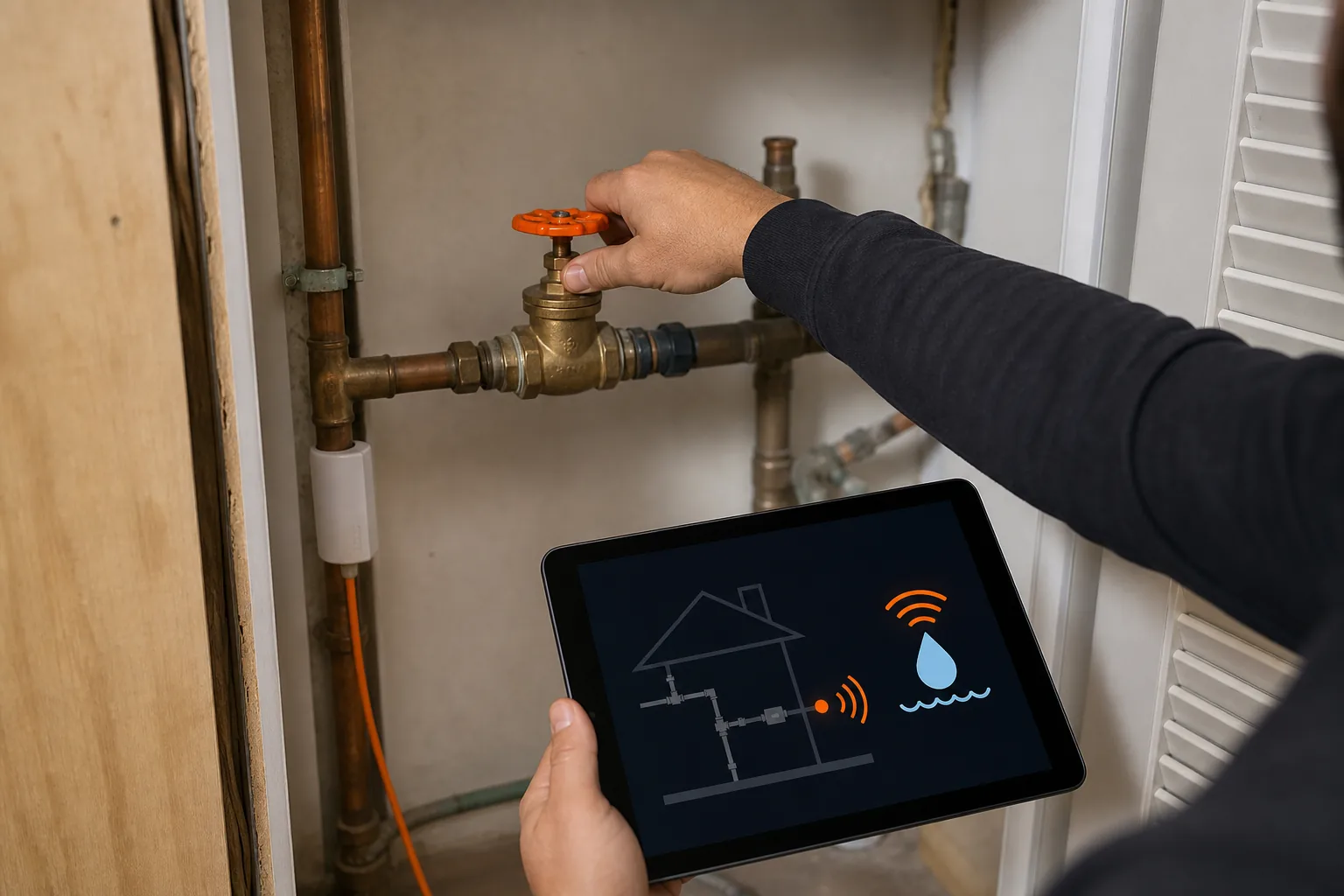
If the sensor reports a serious leak, locate your home’s main shut‑off valve and turn it clockwise until it stops. In many Orange County homes, the valve sits near the water meter or in the utility closet.
After the water is off, open a faucet at the lowest point in the house to relieve pressure and confirm the flow has stopped.
Document what you saw: note the sensor name, time of alert, and any visible water. This information helps a plumber diagnose the issue faster.
A slab leak may require specialized equipment. For related information, see slab leak warning signs , and Primewest Plumbing has the tools to locate and repair them without tearing up your floor.
Primewest will run a camera inspection, pinpoint the exact pipe, and recommend repair, whether a simple patch or a trenchless pipe replacement.
Pro Tip:Keep the smart sensor’s battery fresh after the repair; a fresh sensor will catch any follow‑up leaks.
FAQ: Detecting Hidden Water Leaks With Smart Sensors
Can a smart sensor stop a leak before it starts?
Flow‑meter sensors can detect abnormal pressure or flow and trigger an automatic shut‑off, so they can stop water before it reaches the leak point.
Do moisture sensors work in basements?
Yes, place a moisture probe near the floor joists or sump pump; it will alert you if water pools.
How long do the batteries last?
Battery life varies; some models list up to three years, while others don’t disclose it. Check the spec sheet before buying.
Many sensors include a local alarm that sounds even when the network is offline, giving you a physical warning.
Is professional installation required?
In‑line flow‑meter valves usually need a plumber to cut the pipe and secure the device. Moisture probes you can install yourself.
Will a smart sensor void my home insurance?
No, most insurers view them as a risk‑reduction measure and may even lower premiums.
Conclusion
Pick a flow‑meter sensor for proactive shut‑off, install it at the main line, and let the app guide you to any hidden drip. When an alert arrives, shut the water, verify the leak, and call Primewest Plumbing to fix it fast.


Comments