


Best Energy Efficient Water Heater Options

Orange County homeowners face rising utility bills and tight space constraints. Picking the right energy‑efficient water heater can slash costs and keep showers hot on demand. Below are the usable steps you need to choose, install, and maintain the best system for your home.
Table of Contents
Step 1: Primewest Plumbing
Primewest Plumbing handles every kind of water‑heater job in Orange County. The team does leak detection, drain cleaning, and full‑system installs for tank, tankless, heat‑pump, and solar units. They know the local building codes, the quirks of underground gas lines, and the best ways to fit a heater into a cramped closet.
Homeowners who need a fast, reliable install often start with the Tankless Water Heater 50Gal Equivalent | Primewest Plumbing page to see size options and performance numbers. Primewest’s technicians are licensed, carry the right permits, and can pull any required electrical upgrades.
Because the company works with both residential and commercial clients, they can size a unit for a single‑family home or a multi‑unit complex. Their service contracts include annual maintenance checks, which keep efficiency high and prevent surprise breakdowns.
One caveat: high‑efficiency models often need larger venting or more electrical capacity, so a pre‑site survey saves time and money.
Step 2: Compare Tank, Tankless, Heat Pump, and Solar Systems
Each water‑heater family has a different trade‑off between upfront cost, space, and running efficiency. Storage-style units hold heated water and can experience standby heat loss. Tankless units heat water only when you turn on a tap, so they avoid standby loss but need a strong gas line or a hefty 240 V breaker. Homeowners comparing models can review the Best Tankless Water Heater for Orange County options alongside their household demand and available utility connections.
Heat‑pump water heaters (HPWH) pull heat from the surrounding air and can reach a UEF of 3.5 , more than three times the efficiency of most tankless models. The downside is a larger cabinet and a humming noise that can be audible in quiet homes.
Some systems pre‑heat water before a backup heater takes over. These systems can reduce the energy required for water heating, while some electric heating systems may use more electricity for the same task. https://pmc.ncbi.nlm.nih.gov/articles/PMC5155337/
Energy codes can influence equipment choices https://www.energy.ca.gov/programs-and-topics/programs/building-energy-efficiency-standards/energy-code-support-center-20 . That pushes many installers toward heat‑pump models, even though the larger footprint can be a fit issue in older homes.
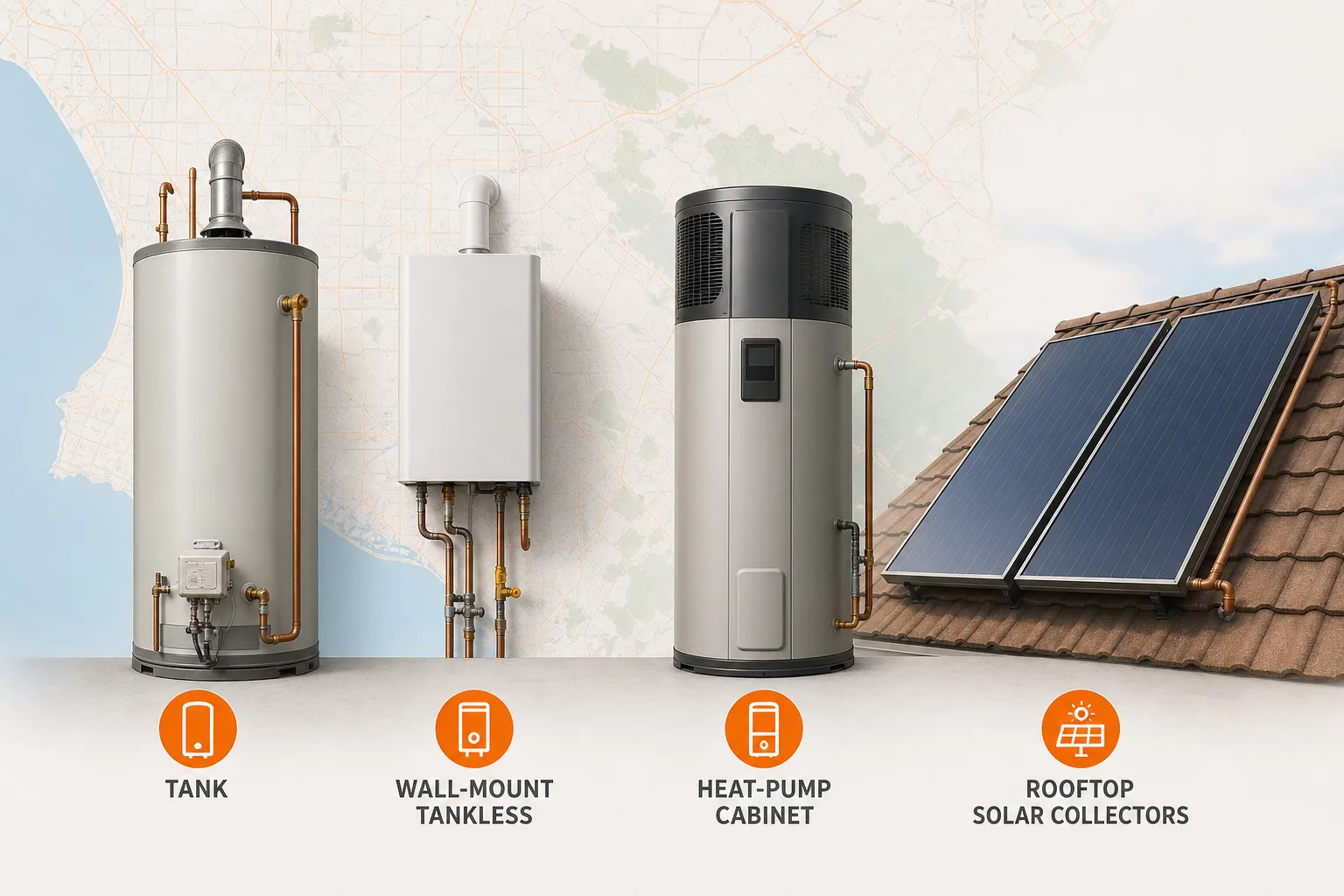
Below is a quick matrix that lines up the four families against the factors most homeowners care about.
System Type | Typical UEF / COP | Space Needed | Noise Level | Best For |
BOSCH Electric Mini‑Tank Water Heater | Not provided | Point-of-use installation | Not provided | Point-of-use applications such as kitchen islands or distant bathrooms |
Tankless (Gas) | 0.93‑0.98 | Small wall‑mount | Low‑moderate (brief ignition clicks) | Homes with existing gas line, high demand |
Heat‑Pump | 3.0‑3.5 (COP) | Large cabinet, needs 750‑1,000 ft³ air space | Noticeable humming | Eco‑focused owners with space for a unit |
Stiebel Eltron Tempra 20 Trend | Not provided | Indoor installation | Not provided | Medium‑sized households |
When you weigh these numbers against your home layout, the picture becomes clearer. For a small condo in Laguna Niguel, a wall‑mount gas tankless unit often wins. For a larger house in Mission Viejo with a sunny roof, a heat‑pump water heater can pay for itself in under a decade.
Remember to check local rebate programs; eligibility and available incentives vary, which can tip the economics in favor of the greener option.
Step 3: Check Fuel, Electrical, Venting, and Space Requirements
Fuel type drives the whole install plan. Gas-fired water heaters need venting appropriate for the installation. There are three main venting styles: atmospheric, direct‑vent, and power‑vent. Atmospheric vents rely on buoyancy and need a vertical chase, while direct‑vent units pull fresh air from outside and can terminate horizontally.
Electric water heaters skip venting entirely but may require adequate electrical service. Some electric tankless water heaters may require an electrical panel upgrade. If your panel is under‑sized, a professional upgrade will be part of the install cost.
Space matters too. A heat‑pump cabinet needs clearance for airflow, at least a foot on every side, and a location where the unit can draw ambient air without heating or cooling the living space too much. In tightly sealed, energy‑efficient homes, a gas water heater with power venting may be appropriate.
Before you sign off, ask yourself: Do I have a gas line that can be extended? Does my electrical panel have spare capacity? Is there a wall or closet that can accommodate a 4‑foot‑wide heat‑pump unit? If any answer is “no,” you’ll need to factor in additional work.
Step 4: Estimate Operating Costs and Long‑Term Value
Running costs depend on fuel price, efficiency, and how you use hot water. Operating costs vary by household, equipment, utility rates, and whether the system is paired with other energy equipment. Those savings can add up over a 10‑year horizon.
Available rebates and incentives may reduce the upfront price of qualifying heat-pump water heaters. Stacking incentives can lower the net cost and shorten the payback period, depending on eligibility, installation requirements, and local program availability.
Beyond the bill, think about lifespan. Tankless units often last 20 years, heat‑pump models 12‑15 years, and other water-heating systems have different service lives. When you multiply the annual energy saving by the expected life, the long-term value of a heat‑pump can be greater than that of other water-heating systems.
Don’t forget maintenance. Even the most efficient unit loses performance if sediment builds up. A yearly flush can keep a tank’s efficiency within 5 % of its original rating.
Step 5: Confirm Installation, Maintenance, and Repair Support
Choosing a system is only half the battle. You need a contractor who can finish the job right, keep it running, and show up fast when something goes wrong. Primewest Plumbing offers a 15‑year warranty on labor for many installations, and they schedule annual service visits that include a full inspection, component check, and a sediment flush.
When you sign a service agreement, ask for a written scope that lists the exact model, venting type, and any required permits. That document protects you if the installer forgets a code‑required clearance.
For gas‑fired units, a venting checklist helps verify that the flue material, termination height, and clearances meet local code. Skipping that step can lead to carbon‑monoxide hazards.
If you prefer a local partner for ongoing care, check out San Juan Capistrano Water Heater Repair | Primewest Plumbing . Their technicians carry common replacement components for routine repairs.
Another handy resource is Rancho Santa Margarita Water Heater Repair | Primewest Plumbing , which outlines a step‑by‑step maintenance plan that homeowners can follow between service calls.
When the unit finally reaches the end of its life, Primewest will haul away the old heater and help you recycle metal components, keeping your home’s environmental footprint low.
For those in the Mission Viejo area, the team also offers Mission Viejo Water Heater Repair | Primewest Plumbing as part of a bundled maintenance contract that includes priority scheduling for emergency repairs.
Frequently Asked Questions
What is the most energy‑efficient water heater for a small home?
For a small home, compare the available water-heater types based on fuel availability, installation requirements, household demand, and available space. A professional can help identify the practical options for your home.
Do I need a new gas line to install a tankless gas heater?
Yes, most high‑flow tankless gas heaters require a dedicated gas line sized for the unit’s BTU demand and must meet venting codes for direct‑vent or power‑vent installations.
How much can I expect to save with a heat‑pump water heater?
Savings vary with utility rates, hot-water usage, climate, and the condition of the existing system. Ask for an estimate based on your home’s actual energy use.
Are there rebates for solar water heating in California?
Utility-level incentives may be available for qualifying solar or heat‑pump systems. Check current program requirements before including a rebate in your project budget.
How often should I have my water heater serviced?
Schedule a professional inspection at least once a year; if you have hard water, a six‑month flush helps prevent mineral buildup that hurts efficiency.
Installation requirements depend on the water-heater type. Gas-based tankless units require venting or condensate drains, while most electric tankless and heat-pump models require professional installation. Primewest Plumbing offers water-heater installation across Orange County.
Pick the system that fits your home’s fuel availability, space, and budget, then let Primewest Plumbing handle the paperwork, permits, and installation. Call the team today for a free on‑site estimate and start saving on hot water right away.


Comments