


How Long Do Water Heaters Last?

A water heater often fails at the worst time, right before a shower or while guests are staying over. A conventional tank water heater usually lasts about 8 to 10 years, while a tankless model can average around 20 years. Use the steps below to check your heater's age, spot trouble, and decide what to do next.
Table of Contents
Step 1: Check the heater type
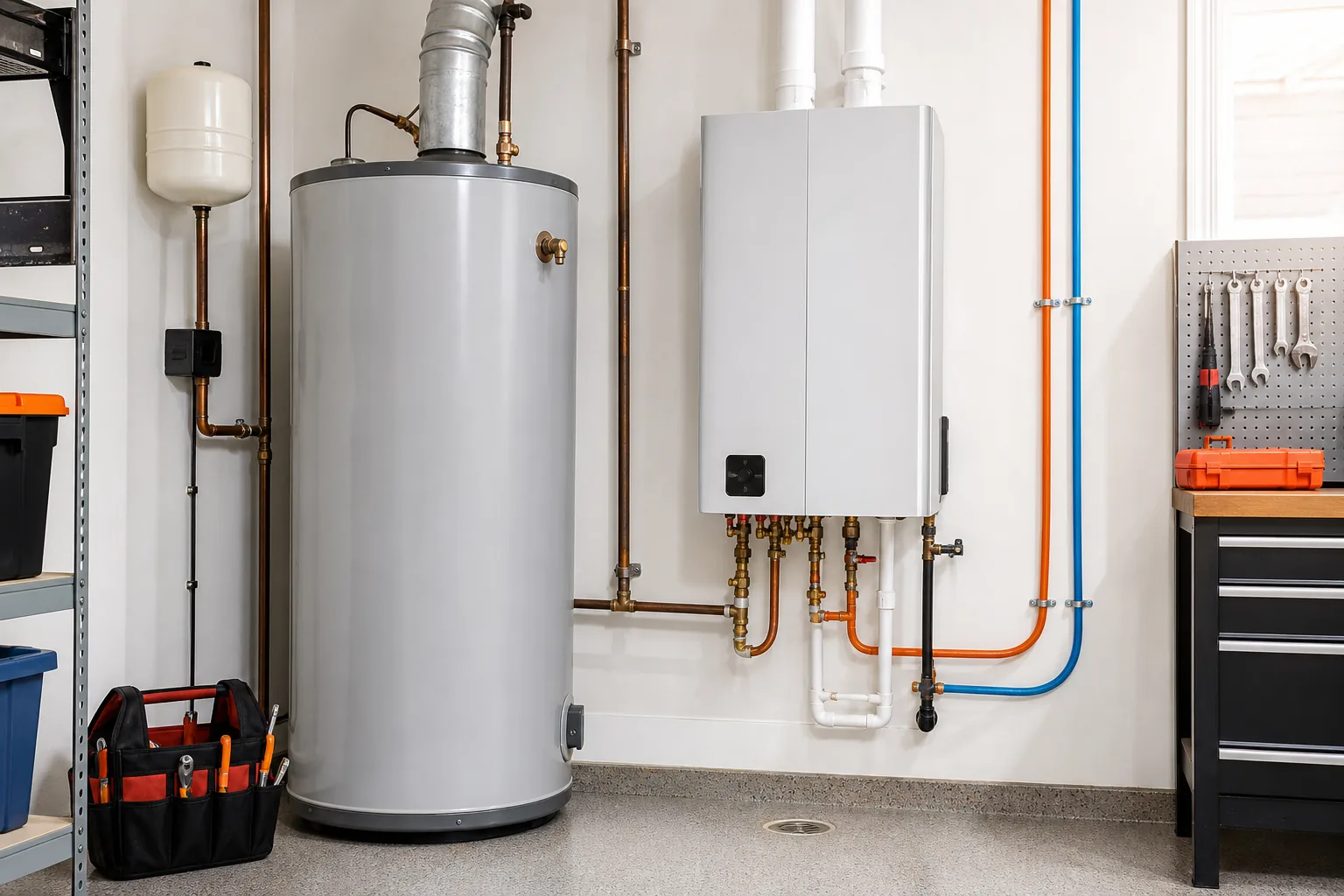
Start by checking whether you have a storage tank or tankless unit. A conventional tank stores hot water in a large cylinder. A tankless heater warms water as it flows through the unit.
Conventional tank water heaters often last 8 to 10 years. Tankless systems average about 20 years, though copper heat exchangers may last 12 to 15 years.
Gas and electric models can both work well. Local water quality, heat, pressure, and service history often matter more than the fuel type.
Step 2: Find the manufacture date
To learn how long your water heater has been in service, look for the data plate near the top or side of the unit. It may show a month and year, a week and year, or a serial code.
Serial codes vary by maker, so don't guess from the first two numbers. Write down the model and serial numbers, then check the manufacturer's age guide or ask a licensed plumber to confirm the date.
If the tank is close to eight years old, start planning. A planned replacement is easier than an emergency leak.
Step 3: Check maintenance and water quality
Maintenance affects how long water heaters last. Sediment can settle in a tank and make it work harder. Hard water can also leave mineral buildup inside tankless parts.
Flush a tank once a year when the system and drain setup allow it. Tankless units need an annual flush as well. In hard-water areas, professional service may be needed every year instead of every few years.
An anode rod protects many tank heaters from corrosion. A plumber can inspect it and replace it when needed. Primewest Plumbing's water heater maintenance checklist can help you plan these tasks.
Step 4: Look for failure signs
Watch for changes in hot water, sound, and the area around the heater. Common warning signs include:
Water that turns lukewarm too soon
Temperature swings or low pressure
Popping, banging, or other odd sounds
Rust near fittings or at the tank base
Puddles or active leaks
A sudden rise in energy use
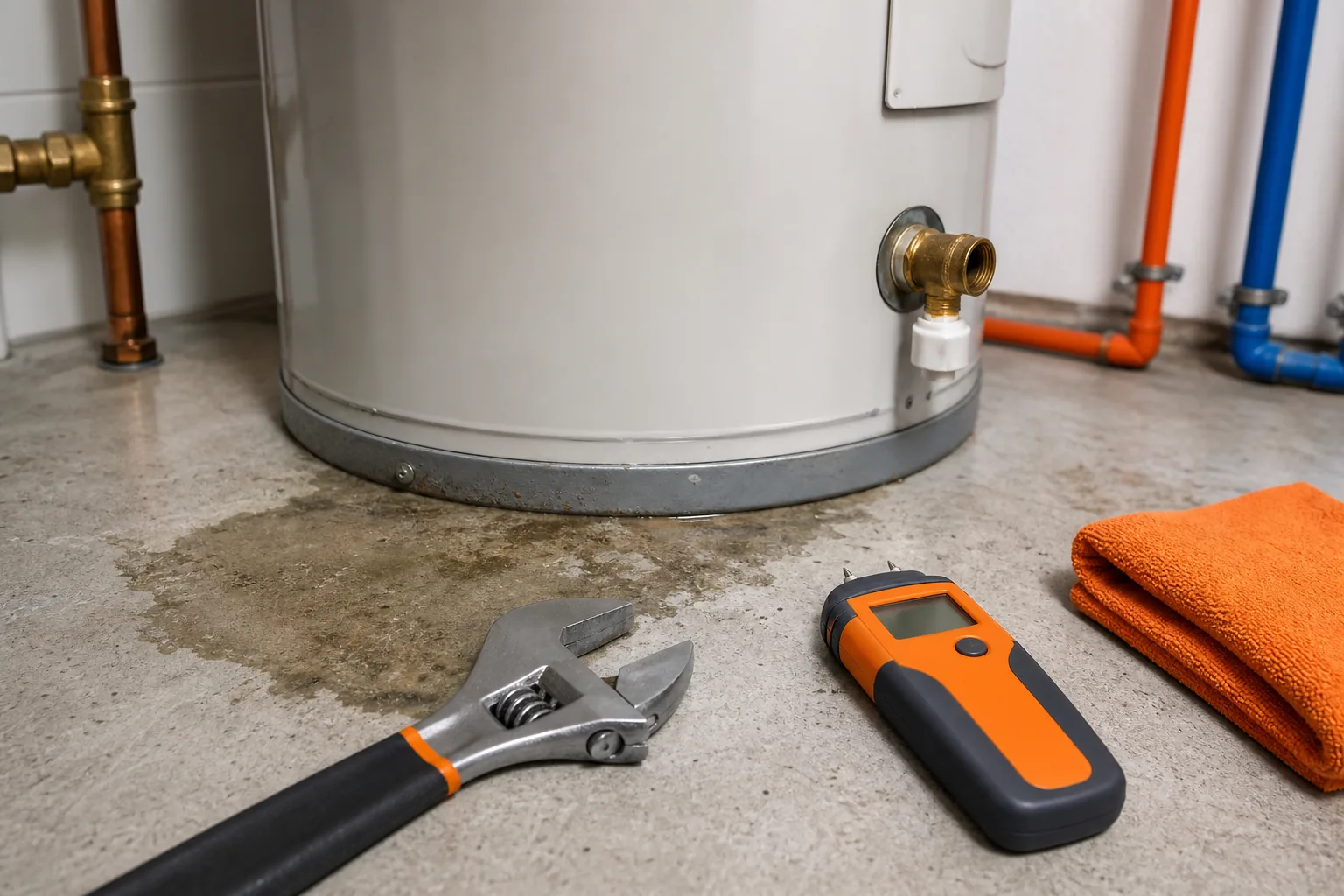
Tankless units can also shut down or show repeated performance problems. A leak from the tank itself usually means replacement, not a small repair.
Step 5: Decide between repair and replacement
Repair may make sense when a newer heater has one failed part, such as an electric element, valve, or control. First, shut off power or gas if you see an unsafe condition. Then keep the area dry and arrange an inspection.
Replacement is often the better path when the tank leaks, has heavy rust, or is near the end of its expected life. Primewest Plumbing can assess water heater repair or replacement needs for homes and rental properties in Orange County.
Step 6: Check the warranty and total cost
A warranty is not the same as a service-life promise. Many tank heaters are sold with five-year tank or parts coverage, but a unit may fail sooner or last longer.
Find the original paperwork if you have it. Check what parts are covered and whether labor is excluded. Also ask about installation changes, permits, venting, and disposal before comparing replacement quotes.
Tankless heaters cost more up front in many installations, yet their longer expected life can change the ownership math. Warranty details and efficiency ratings vary by model, so confirm them before buying.
Step 7: Plan the replacement
Choose the replacement based on household demand, available space, fuel supply, and venting. A larger tank isn't always the best fit. A tankless unit may need changes to gas capacity, electrical service, or pipe layout.
For an Orange County home, ask the plumber to check water pressure and signs of hard water before installation. Primewest Plumbing's water heater replacement decision guide covers tank, tankless, fuel, sizing, venting, and permit concerns.
Plan before the old heater fails. That gives you time to compare a repair with a properly sized replacement.
Step 8: Book a professional check
Book an inspection when the heater leaks, shuts down, loses pressure, or produces poor heat. A plumber can test the unit and check connections that aren't safe for casual DIY work.
For tankless systems, repeated temperature swings may point to scale, flow problems, or another fault. For tanks, rust at the base often signals a serious issue.
A local service company can also check related gas lines, valves, and discharge piping during the visit. If you're outside Orange County, a local emergency provider such as a separate emergency plumbing provider is an example of a company serving urgent plumbing needs in its own market.
FAQ
How long do water heaters last?
Most conventional tank water heaters last about 8 to 10 years. Tankless models average around 20 years, though heat exchanger material changes the range. Water quality, installation conditions, pressure, and maintenance can move a unit toward the lower or higher end.
Can a water heater last 20 years?
Yes, a tankless water heater can average about 20 years. A conventional tank may last that long in rare cases, but it is beyond the usual range. Annual flushing and periodic professional service give the system a better chance of reaching its expected life.
What are the signs a water heater is failing?
Common signs include less hot water, temperature swings, leaks, rust, odd noises, low pressure, and higher energy use. Tankless units may also shut down. Primewest Plumbing's water heater replacement warning signs can help you compare what you see at home.
Should I repair or replace my water heater?
Repair a newer unit when one replaceable part has failed and the tank remains sound. Replace it when the tank leaks, shows heavy corrosion, or is near the end of its expected life. A professional inspection can help weigh repair cost against the risk of another failure.
Does hard water shorten water heater life?
Hard water can shorten water heater life by leaving mineral buildup inside tanks and tankless heat exchangers. Annual flushing helps remove sediment and scale. In areas with hard water, ask a plumber about more frequent service or appropriate maintenance for your home.
Use the age and warning signs together, not age alone. If your heater is older, leaking, or losing heat, arrange an inspection with Primewest Plumbing before a small problem becomes water damage.


Comments