


How to Choose Bathroom Fixtures for Your Orange County Home

Picking the right bathroom fixtures can feel like a puzzle, but the pieces fit together once you follow a clear process. Below are six usable steps that take you from a vague idea to a finished bathroom that works for you and stays reliable.
Table of Contents
Step 1: Assess Your Bathroom, Household, and Plumbing Needs
Start by noting who uses the bathroom and how. A family with toddlers needs child‑proof handles, while a master suite might call for a high‑end bidet. Write down any accessibility concerns, grab bars, higher toilets, or lever‑type faucets can make a big difference.
Next, inventory what already exists. Are the current valves copper or PEX? Do you have a dedicated line for a separate shower? Knowing the current plumbing material helps you avoid costly retrofits later. Review existing pipe runs before choosing fixtures.
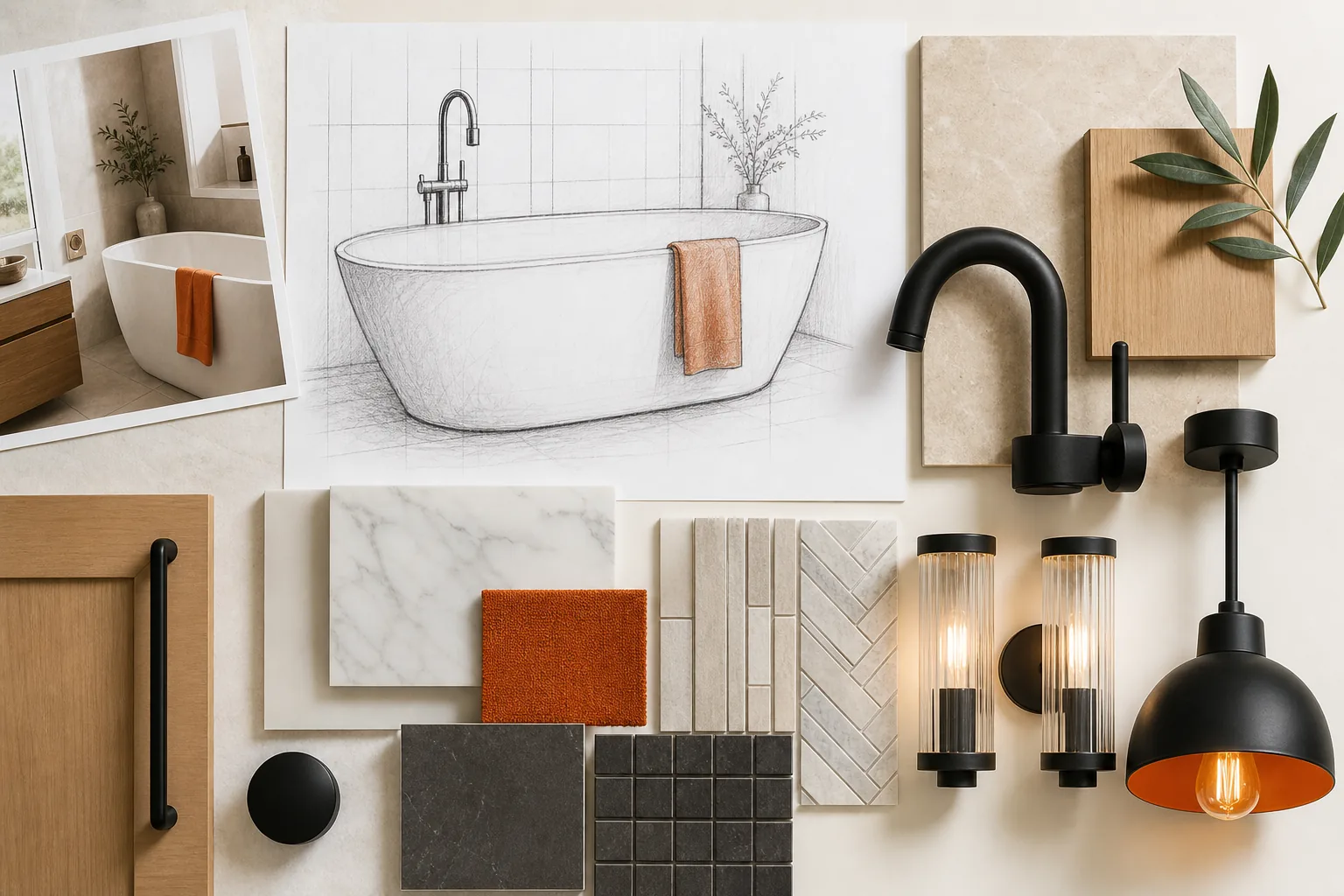
Finally, think about the vibe you want. Modern homes often use polished chrome or matte black, while a classic look leans on brushed nickel or antique brass. Your finish choice should match the rest of the house so the bathroom feels like part of the whole.
Step 2: Measure the Space and Check Fixture Compatibility
Grab a tape measure and note the width, depth, and height of the vanity, tub, and any existing fixtures. For a new toilet, you’ll need the rough‑in distance , the space from the wall to the center of the drain. A common rough‑in is 12 inches, but older homes sometimes have 10 inches.
Check door swing and clearance. A compact toilet may help in a tight room, but verify its projection against your door swing before ordering.
Match the fixture’s mounting style to your countertop or wall. A wall‑mounted faucet needs a solid wall backing, while a deck‑mounted faucet sits on the sink deck. If you plan to switch from a widespread faucet to a single‑hole model, make sure the countertop has the correct hole pattern.
Step 3: Match Each Fixture Type to Its Best Use
Different fixtures excel in different situations. Toilets with integrated bidet functions are great for master baths where comfort matters. Simple gravity‑flush toilets work well in guest rooms because they’re cheap and reliable.
Bidet seats, such as the LUXE Neo series, add a warm‑air dryer and self‑cleaning nozzle without a full smart toilet. They’re a budget‑friendly upgrade that still offers many high‑tech comforts.
Fixture Type | Best Use | Key Feature |
Wall‑mounted faucet | Modern vanities with limited countertop space | Clean lines, easy cleaning |
Widespread faucet | Traditional sinks where style matters | Three‑hole mounting gives a classic look |
Smart toilet with integrated bidet | Master suites, aging‑in‑place homes | Heated seat, warm‑air dryer |
Slide‑in bidet seat | Budget upgrades on existing toilets | Self‑cleaning nozzle, night‑light |
Raised toilet seat | Accessibility for seniors or limited mobility | Adds 3‑4 inches of height |
When you line up each fixture with its strongest scenario, the whole bathroom feels intentional instead of a random collection of parts.
Step 4: Compare Materials, Finishes, Water Use, and Durability
Materials matter more than looks. Solid brass and stainless steel resist corrosion far better than cheap chrome plating. Wikipedia explains how moisture and harsh cleaners break down lower‑grade alloys over time.
Finish choice is the next visual layer. PVD and brushed finishes hold up well in humid environments, while polished chrome can show water spots quickly. In Orange County’s sea‑air climate, a brushed nickel or PVD finish will stay cleaner longer.
Water‑efficiency is a hidden cost saver. Look for WaterSense certification or a flow‑rate rating. Without a rating, it is harder to compare a dual‑flush toilet’s water use with a single‑flush model.
Durability also ties to warranty. A fixture with a five‑year warranty usually indicates the manufacturer expects the finish to survive regular cleaning. If a product lists no warranty, plan for a replacement sooner.
Step 5: Plan for Installation, Repairs, Accessibility, and Local Code
Before you buy, check local building codes. Orange County requires a vent pipe for every fixture that drains more than a sink. A missing vent can cause slow drainage and foul odors.
Think about future repairs. Choose fixtures with easy‑access mounting plates so a plumber can swap out a cartridge without tearing out drywall. Primewest Plumbing’s guide to water pressure regulators shows why easy access matters for long‑term service.
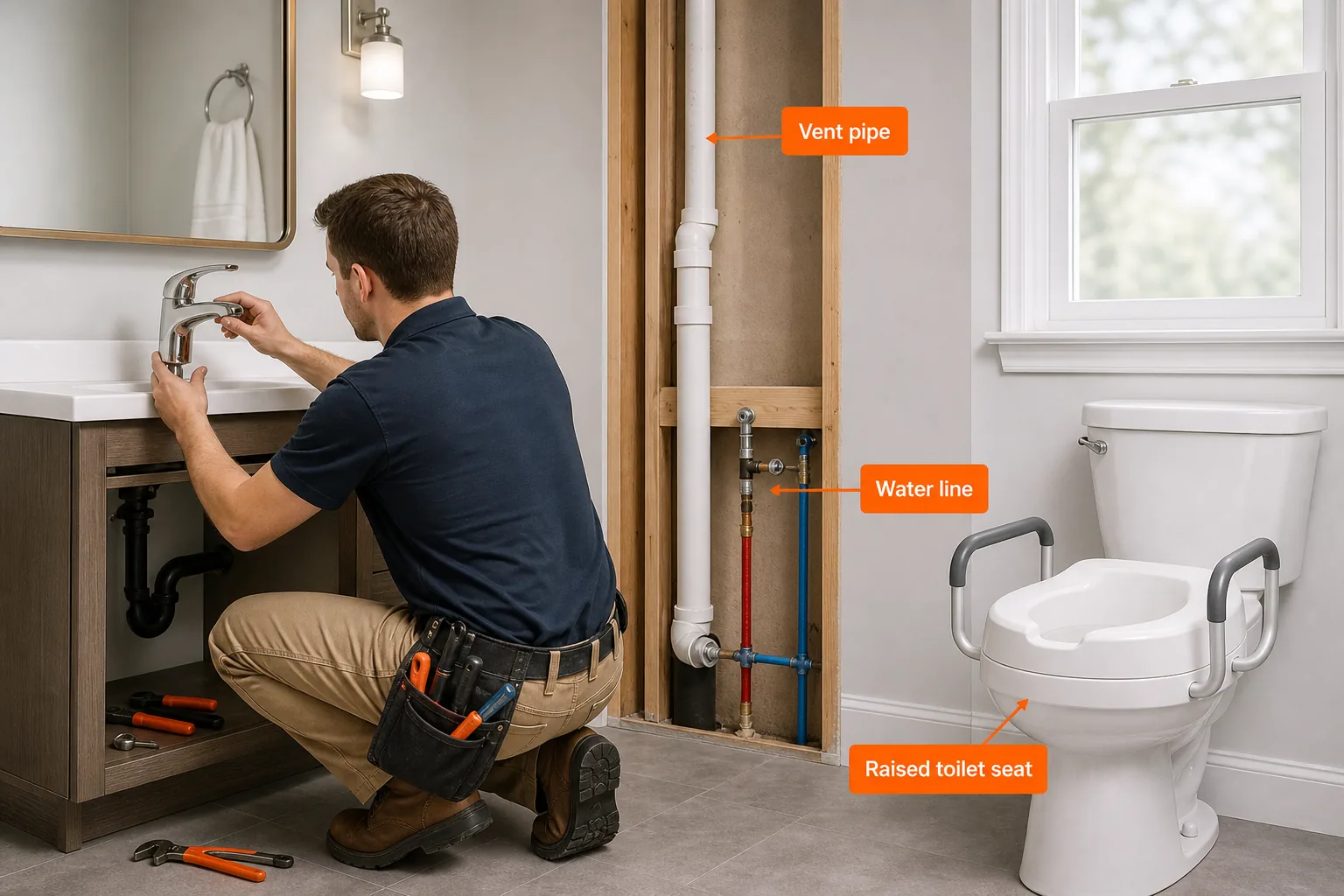
Accessibility isn’t just for seniors. A lever‑type faucet is easier to turn for anyone with arthritis. A raised toilet seat adds 3‑4 inches of height, reducing the bend needed to sit down.
Finally, schedule the install with a licensed pro. Primewest Plumbing offers leak detection and a quick turnaround, so you won’t be waiting weeks for a simple swap.
Step 6: Set a Usable Budget and Choose a Reliable Installation Partner
Start with a rough budget for fixtures, labor, and contingency. For a mid‑range remodel in Laguna Niguel, total costs vary by project scope and materials.
When you compare quotes, ask each plumber for a line‑item breakdown. That way you see if the labor cost includes removal, disposal, and any needed repiping.
Primewest Plumbing consistently ranks high for responsiveness and quality in Orange County. Their team can handle everything from a simple faucet swap to a full‑bathroom repipe, keeping your project on schedule. For additional budgeting guidance, review the available cost guide and compare it against your own numbers.
FAQ
What is the first thing I should measure before buying fixtures?
The first measurement is the rough‑in distance for the toilet or shower valve, because it determines whether a new fixture will fit the existing plumbing layout.
Do I need a permit to replace bathroom fixtures in Orange County?
Yes, most fixture swaps that involve moving water lines or vents require a permit; check with the local building department before you start.
How can I tell if a faucet finish will rust?
Look for solid brass or stainless steel underneath the visible finish; these metals resist rust better than thin chrome plating.
Are water‑saving toilets more expensive?
Not necessarily. Dual‑flush models often cost a bit more upfront but save on water bills, usually paying for themselves within a few years.
What’s the benefit of a raised toilet seat?
A raised seat adds height, making it easier to sit and stand, which helps seniors and anyone with limited mobility.
Should I hire a specialist for bidet installation?
Yes, a licensed plumber can ensure proper water‑line connections and electrical safety if the bidet has powered features.
Conclusion
Start with a quick audit of your space, then match each fixture to its strongest use, check materials and code, and pick a trusted installer like Primewest Plumbing. Contact Primewest to schedule a walkthrough and lock in your budget today.


Comments